Work-Life Balance in Workations: Boundaries
Work-life balance in workations: how to set hard boundaries, prevent burnout, and stop treating remote work as permanent on-call status — practical strategies for digital nomads.
TravelFeelings Editorial Team

The real problem is that workation pretends to be a vacation. Anyone combining full-time remote work with weeks or months at a new location is actually running two jobs simultaneously: one paying gig plus a passive project called “be here and explore.” That’s the math most people underestimate.
Sixty-eight percent of digital nomads report elevated stress after the third month of constant mobility. That’s burnout developing slowly, because you’ve given yourself 25-hour days and set only one boundary.
The Problem: Working, Traveling, and the Silence After
Workation sells you this: work from Lisbon, Medellín, or Bangkok, explore the city, spend less, stay flexible. What it doesn’t mention: your brain has to run two shifts, and without hard boundaries between “I’m working” and “I’m exploring,” it becomes a loop with no exit.
A standard office setup has clear physics: 8:30am commute to office (signal: work starts), 5pm drive home (signal: work ends), 7pm home, friends, dinner, sleep. That’s psychological structure. In a workation, those signals vanish. You work in the café where you drink coffee. You sit in the co-working space overlooking the beach. At night the laptop is three meters away on your desk.
This creates what amounts to “permanent reachability through geographic proximity”: because your work location and private location are spatially close, your brain gets pinged constantly. A Slack message at 8pm, a code deploy, a client question — and suddenly you’re “already here,” so you answer. That’s infrastructure inviting you to lose boundaries.
Research into remote-work burnout finds something different with location-independent workers: when working and sightseeing overlap spatially (both in the co-working café or hostel common room), your brain can’t switch modes properly. That’s cognitive load that compounds.
Setting Boundaries: Four Non-Negotiable Rules
If you want to prevent this, you don’t need motivation or better planner apps. You need four non-negotiable boundaries you define before the workation and then actually enforce, even when it feels rigid.
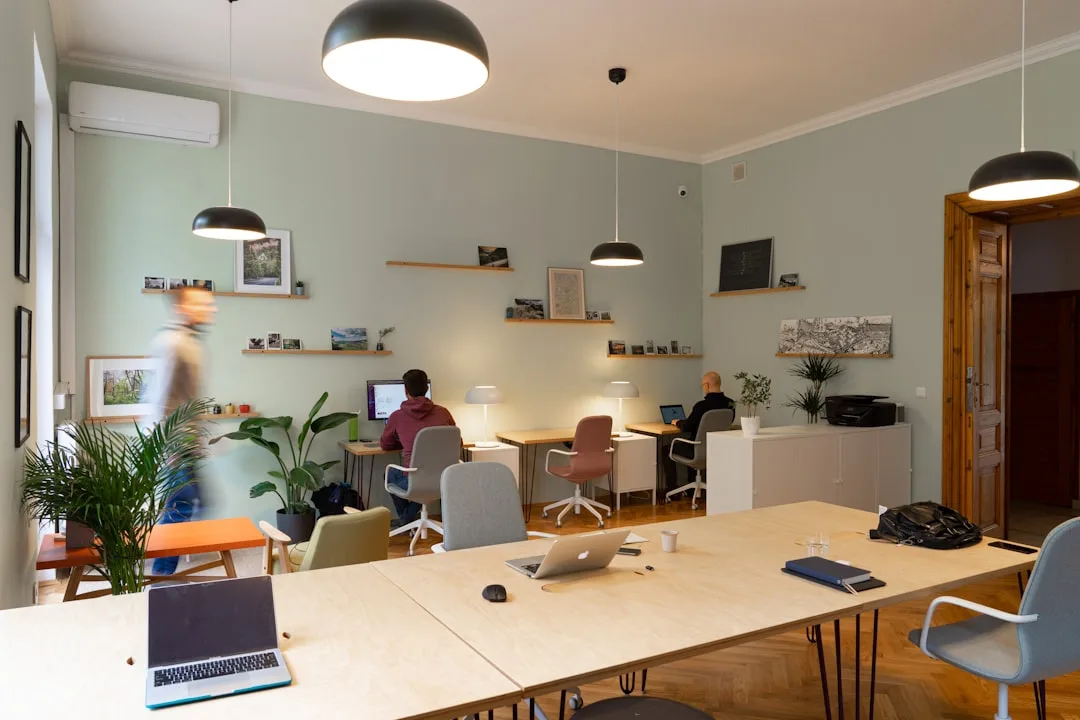
Rule one: Workspace separation is not optional. Not “I work at the café table” and later “I sit at the same table with wine and friends.” That’s the same brain signal. You need either two physical locations (co-working space for work, café for leisure) or two distinct times (mornings 8am–5pm apartment desk, evenings elsewhere). Anyone saying “I’m flexible, I work everywhere” — that’s wrong. You need at minimum one place where only work happens. Not even breaks. Not even a Slack message from your personal phone.
Rule two: Work hours are non-negotiable. Not “I work when I feel like it,” but “Monday to Friday 8:30am–5pm, Saturday and Sunday zero hours.” These times aren’t optional because your team needs them (if sync work matters) or because your brain needs the structure (if async is possible). A common mistake: “I’ll work nights and explore days” — sounds flexible, but it’s a path to burnout. Human chronobiology isn’t negotiable. Work against your sleep cycles and you pay with immunity and focus.
Rule three: After 5pm (or your end time), no work tools are accessible. That means laptop off, phone on silent or in another room. That also means no “quick Slack check” at 8pm. The reason is calibration. Your brain needs a clear signal: “This machine is off, so I’m not in work mode.” Apps and notifications are quiet signals. A powered-down laptop is a loud signal.
Rule four: Exploration time is scheduled, not spontaneous. Working and exploring whenever you feel like it becomes cognitive chaos. Instead: “Wednesday 2–6pm I explore,” “Saturday full day exploration,” “Sunday private, no planning.” This structure prevents two failures: it stops you from sneaking “just one more hour of work” into exploration time, and it stops you thinking about code reviews Saturday morning at 8am.
This sounds rigid. It is. In workation contexts, that rigidity is your insurance against burnout.
Financial Security as Psychological Buffer
There’s one factor almost nobody mentions: financial security cuts work pressure dramatically.
Someone working with three months of runway can say “no” to bad projects. Someone thinking “I need this client to pay rent” works 55+ hours weekly and is losing money and health. That’s financial necessity forcing you to abandon the boundaries you just set.
Digital-nomad research shows: nomads with at least three months emergency savings have 40 percent fewer stress symptoms than those without a buffer. That’s systems design. When your existence doesn’t hang on the next client project, you can set rational boundaries.
It also shapes job choice: pick remote work where losing internet or hardware temporarily doesn’t threaten survival. This is why long-term nomads migrate toward stable roles: they recognize, “I don’t want to chase the next client forever.”
Breaks as Active Projects
Here’s where it gets concrete: what do you do in free time so it doesn’t become work compensation?
A common mistake is defining free time as “hours I’m not working” — but not defining what you actively do. That leads to what psychologists call “passive recovery”: you sit in the hostel common room, scroll your phone, and at 9pm realize your brain is still in work mode because you gave it no alternative.
Active recovery means doing something other than “not working.” It could be sport (30 minutes daily measurably drops cortisol 20 percent), language learning (your brain uses different circuits than code-writing), cooking, a dance class. The point: your brain needs a different activity, not just absence of work.
Digital nomads explicitly taking a language class Tuesday nights or hiking Saturdays report better sleep quality and fewer work thoughts after hours. That’s neurochemistry.
The Base-City Strategy: Less Motion, Better Balance
By 2026 we’re seeing a shift from “different place every month” to “three to six months in one location.” This strategy measurably works better for balance and output.
The reason is simple: every move costs two to three days. Packing, travel, apartment hunting, furniture setup, testing a new co-working space — that’s overhead that subtracts. More: you don’t know the new city yet, you know no one, infrastructure is unfamiliar. Psychologically that’s expensive, even if it’s not “work.”
After three months in one place, you’ve built actual friendships (not just hostel acquaintances), know the best route to co-working, understand where the good grocery store is, can order in the local language. This cuts “environment stress” massively and gives you mental capacity for other things.
More important: over three to six months you can actually develop local rhythm. That means: Wednesday is dance-class night, Saturday is hiking with local nomads, Sunday is rest. That’s routine, and routine is anti-burnout medicine.
Sleep and Circadian Rhythms
This gets overlooked: digital nomads have poor-sleep issues 2.5× higher than baseline. Timezones, new beds, and constant low stress (“Is this place safe? Did I book the right hostel?”) shatter your circadian rhythm.
The fix is fixed sleep windows even while traveling. That means: sleep 10:30pm to 6:30am, not “whenever tired.” Your body is a clock. Reset the clock constantly and it breaks.
Also: no screens two hours before bed. Yes, you’re nomadic, your apartment is small, laptop sits next to the bed — that’s exactly the problem. If possible: laptop in another room at night, or spend $100 (approx. EUR 95) on a room divider so it’s not “I’m in apartment with laptop” but “I sit at one end, sleep at the other.”
Mental Health: Meditation and Structure
Here’s something interesting: digital nomads report meditation as disproportionately helpful once they start.
Why: meditation is a tool to redraw the boundary between “work-mode” and “private-mode.” Ten to twenty minutes in the mornings, your attention rests on your breath, not on Slack notifications. That’s a signal shift, not an app setting. Same reason why a powered-down laptop beats “I’m using Do-Not-Disturb”: psychology needs physical and mental signals, not just digital tricks.
Nomads meditating daily report:
- 30 percent fewer work-related thoughts after hours
- Better sleep quality (measured via tracking)
- Fewer burnout symptoms after four months
That’s neuroscience.
Social Connection: Your Biggest Buffer Against Isolation
Here’s a paradox: you’re in a tourist city with thousands of people but feel deeply alone. That’s because tourist acquaintances aren’t sticky. People arrive, stay two weeks, leave — perpetual goodbye instead of a network.
Nomads explicitly investing in nomad communities (co-working space meetups, nomad Slack channels, dance groups, sports clubs) report:
- 50 percent fewer loneliness feelings
- Better psychological stability over months
- More motivation to stay longer (which paradoxically creates better balance)
It comes down to this: your brain needs two or three regular people for deeper conversation, not 30 surface nomad-network contacts. Two, three real friendships. That’s your burnout buffer.
Checklist: Before Any Workation
-
Financial security: Do you have at least three months in savings? If not, delay. That’s risk management.
-
Work hours defined: Monday–Friday 8:30am–5pm? (Or your timezone + team requirements?) Written down? If not, do it before you leave.
-
Workspace physically separated: Co-working space + apartment? Or two distinct times at two locations? If not, that’s 50% of your burnout risk.
-
Active leisure planned: Dance class, sports club, language exchange, minimum three hours weekly? If not, book before arrival.
-
Sleep time set: When do you sleep, when wake? If “flexible” is the answer, you’re raising burnout risk 300 percent.
-
Meditation practice: Minimum five minutes mornings? If not, try an app like Insight Timer (free, 10-min sessions).
-
Base-city or move plan: Stay 3–6 months? Or pack up every four weeks? This decides much of your mental load.
These are the factors that separate “I had a great workation experience” from “I was completely burned out after three months.”
The biggest lesson from tracking this pattern across digital nomads: work-life balance in workations is a systems problem you solve through physical and temporal boundaries, not a mindset problem you hack. That sounds less inspirational than “listen to your body,” but it’s the only thing that actually works.