Review
All-Inclusive vs. Self-Catering: Which Booking Model Fits?
Which accommodation type makes financial sense for a beach holiday depends on travel style and duration. A comparison without hype.
TravelFeelings Editorial Team7 min.
Spain · Balearic Islands
Mallorca offers family-friendly beaches, Palma's landmarks, and the Serra de Tramuntana—with direct flights, solid infrastructure, and realistic prices.
Palma de Mallorca, with 400,000 residents, is the economic and cultural hub. The old town rewards exploration on foot — narrow streets lined with shops, restaurants, and cafés. The harbor district (Paseo Marítimo) has transformed from an industrial waterfront into a well-maintained promenade destination over the past decade. The Almudaina Palace (open year-round, $6 admission) was historically the seat of government; today the Spanish royal family resides there during summer months. The exterior is impressive; the interior is only partially open to tourists.
The Cathedral of La Seu is Palma’s landmark — a Gothic masterpiece from the 13th–17th centuries featuring one of Europe’s tallest church naves (44 meters). A defining feature is the great rose window above the main altar, one of the largest in the Gothic world; the interior also holds a monumental ceramic mural by Mallorcan artist Miquel Barceló (completed 2007). Admission is $9 (approx. €8); the cool interior is a relief during summer heat.
Castell de Bellver, a 14th-century circular castle, sits 112 meters above the harbor. The panoramic view over Palma’s bay is unmatched, especially at sunset. The uphill walk takes 20 minutes (steep road with little shade in summer). Admission $4 (approx. €4).
The Serra de Tramuntana is a 90-kilometer mountain range in the northwest with cliffs descending directly into the sea. The range is a UNESCO World Heritage site (since 2011) and attracts hikers, climbers, and cyclists. The highest peak, Puig Major (1,445 meters), is closed to tourists (military zone). Accessible alternatives include a hike to Puig de l’Ofre (approximately 2 hours, 1,093 meters) or a cycling route from Sóller to Deià.
The Dragon Caves (Cuevas del Drach) in Porto Cristo on the east coast house Europe’s largest underground lakes. The system extends 4 kilometers, with about 700 meters open to tourists. Lake Martel (175 meters long, up to 40 meters deep) is crossed by boat while classical music plays (10 minutes). The visit takes roughly 90 minutes; admission $16 (approx. €15). The caves open daily but fill quickly in high season — arriving early is essential.
Valldemossa is a mountain village (600 meters elevation) in the Tramuntana range, known for the Royal Carthusian Monastery, a 14th-century cloister. The composer Frédéric Chopin spent winter 1838/1839 here with his partner George Sand. The monastery is now a museum (admission approximately $6). The village itself is small with narrow stone streets, cafés, and art galleries. It draws heavy day-trip traffic, and prices run high.
Sóller is a harbor town on the west coast (13,000 residents), accessible via a narrow-gauge “Red Train” railway (1 hour from Palma, $17 (approx. €16)). The train ride itself is the attraction, passing through orange valleys and mountain scenery. Port de Sóller has fish restaurants and is less crowded than Palma. A visit typically makes for a half-day excursion.
The Sóller train is a classic day trip: take the railway from Palma to Sóller (2–3 hours exploration), optionally continue to the harbor by tram (10 minutes), and return either by train or car over the Tramuntana pass (35 km, 1.5 hours, spectacular but winding roads — not for those uncomfortable with mountain driving). Tickets run $17–20 per person.
The Cabrera Islands form a protected nature reserve south of Mallorca (35 km from Palma). Daily boat tours depart from Colònia de Sant Jordi (approximately 50 km south). The crossing takes 90 minutes; then 3–4 hours on the island (snorkeling, hiking, historic fortress). Tickets cost $54–65 (approx. €50–60 per person) and must be booked in advance — only 300 visitors daily are permitted (conservation policy). A full-day outing.
The Arta Caves (Coves d’Artà) near Canyamel on the east coast (roughly 70 km from Palma, in the Capdepera municipality) offer an alternative to the more famous Drach Caves — less crowded and known for vast chambers with dramatic stalactite and stalagmite formations rather than boat-navigable lakes. Admission $14 (approx. €13). Nearby Capdepera has a hilltop medieval castle, and the resort town of Cala Ratjada sits a short drive away — additional options for the day.
Evening boat tours: Many Palma operators offer sunset and full-moon harbor cruises (approximately $32–54 per person, 2–3 hours). The journey shows the city from the water and suits couples well.
Tramuntana hiking: Several marked circular hikes (2–4 hours) depart from villages like Estellencs or Banyalbufar. Focus areas include mountain scenery, terraced olive groves, and local villages. A hiking map is advisable.
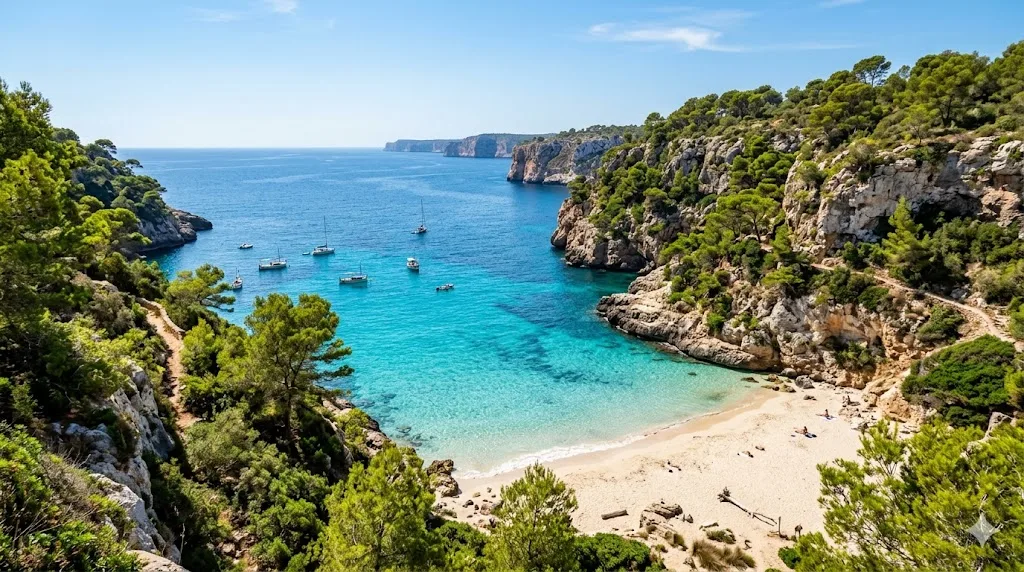
Cala Mesquida in the northeast is a gentle sandy bay sloping gradually into deeper water — ideal for families with young children. The calm waters and gradual depth make this cove among Mallorca’s safest swimming areas for young visitors. Unlike Cala Millor or the overcrowded south, the beach is wider and quieter. The dune landscape remains relatively intact. Small family-run hotels sit directly on the beach.
Playa de Muro (north) stretches 5.5 kilometers and is wider than many southern beaches. Water is shallow and calm. Water sports abound (kayaking, windsurfing, snorkeling). A coastal hiking trail connects Playa de Muro with neighboring Playa de Alcúdia — perfect for extended beach days.
Mondragó (southeast, near Santanyí) is a small cove adjacent to a nature reserve. The beach is tiny and undeveloped, with dunes and pine trees. A 3-kilometer walking trail loops through the reserve. The location is harder to reach (small parking lot, roughly 70 km from Palma), meaning fewer tour groups. Ideal for nature-focused travelers seeking solitude.
Deià is an artist village on the west coast (Tramuntana, 30 km northwest of Palma), known for galleries, antique shops, and a literary crowd (writer Robert Graves lived here). The village is pricey but authentic. A private swimming cove sits just 15 meters below the village, offering swimming without a beach. A cultural outing for art enthusiasts.
Artà (harbor town east coast, 60 km from Palma) sees significantly fewer tourists than Palma or Sóller. The harbor is small; restaurants cater to locals rather than tour groups. The old town retains original architecture. A half-day excursion for travelers seeking the “real” Mallorca — an ordinary working town rather than a photo backdrop.
| Jan | Feb | Mar | Apr | May | Jun | Jul | Aug | Sep | Oct | Nov | Dec |
|---|---|---|---|---|---|---|---|---|---|---|---|
| Low | Low | Low | Sweet Spot | Sweet Spot | Peak | Peak | Peak | Sweet Spot | Low | Low | Low |
15° 8° | 16° 8° | 18° 10° | 20° 13° | 24° 17° | 28° 21° | 31° 24° | 31° 24° | 28° 21° | 24° 17° | 19° 13° | 16° 9° |
April to May is ideal for family travel: temperatures climb from 13 to 24 degrees Celsius. Most European schools aren’t on break yet, so hotels are cheaper than June. Water becomes swimmable (roughly 18–20°C). Rain is rare but possible. Sun-damage risk is already present — SPF 50 sunscreen is essential.
June marks the transition to peak season. Temperatures rise to 21–28°C; water reaches pleasant swimming temperature (approximately 23–24°C). European schools start summer holidays — first peak-season weeks. Prices rise but don’t reach August levels. Travelers seeking fewer crowds should book early June.
July and August are peak season with 24–31°C temperatures, very dry (minimal rain), and water around 25–27°C — ideal for swimming. Beaches are extremely crowded; accommodations cost 30–50% more than May; flights often sell out. Families with school-holiday constraints face this reality, but flexible travelers should avoid it.
September offers a “golden month”: temperatures drop to 21–28°C; water remains warm (approximately 25°C). Peak season ends; prices normalize; beaches clear. This is among the best travel times for adults — perfect for hiking and fewer beach masses.
October is changeable: temperatures fall to 17–24°C. Rainfall likelihood rises (historically the wettest month at 68mm average), though individual days can be sunny. Water cools (approximately 22°C) but remains swimmable. Not ideal for pure beach vacations.
November to March is low season. Temperatures hover around 9–19°C — not for swimming but pleasant for hiking. Rain is common (November and December are rainy). Hotels cost 40–60% less. This period suits travelers seeking cultural sights, hiking, and freedom from beach-tourism crowds.
Mallorca maintains a distinct Catalan identity, separate from Spain. Catalan is the official language — since the return to democracy (1975) following Franco’s dictatorship, Catalan has been re-established in schools. The Majorcan dialect differs from Barcelona Catalan but is mutually intelligible. German visitors shouldn’t be surprised seeing signs in Catalan. Many locals speak German (especially older generations who encountered German tourists since the 1960s tourism boom), but Spanish is the lingua franca for visitors.
Local festivals matter. Festa de Nostra Senyora (August) is a multi-day festival in many towns featuring processions and local cuisine. Sant Francesc (May 1) celebrates with animal blessings and processions. These events target locals but welcome visitors.
Siesta culture persists: many small shops close midday (13–17 hours). Restaurants often shut Monday or Tuesday. Restaurant hours: lunch 13–16 hours; dinner 20–23 hours (late dinner starts are standard). Checking websites before visits saves disappointment.
Dress code: beach attire is standard at the shore. Nudity is legal on designated FKK beaches (Cala Llombards) but isn’t expected in tourist areas. In restaurants and cafés, shirt-wearing is social norm. Mallorcans aren’t prudish but respectful dress is expected.
Tipping (Propina): 5–10% is customary but not automatic like in the US. Many simply round up. No shame in paying exact change. Contactless payment terminals sometimes prompt for tip percentage.
Local food: Sobrasada is a spicy Majorcan raw sausage, traditionally eaten raw or cooked at breakfast. Ensaïmada is a sweet spiral pastry dusted with powdered sugar — a souvenir staple. Pan con tomate (toasted bread with tomato and olive oil) is everywhere. Arròs brut is a local rice dish with meat and vegetables. Harbor restaurants (especially Sóller, Portocolom) serve local catches (branzino, sea bream, tuna).
Playa de Palma and S’Arenal (the German party zone): This beach district targets German tourists with sausage-and-beer cuisine (Bierkönig disco). Nighttime noise dominates (music until 6 AM). Organized crime is present (beachside drug dealing). Completely unsuitable for families. Hotel pools are the compensation.
July and August underestimated: Booking early July for family relaxation means crowds, not peace. Hotels hit 95% capacity; prices jump 30–50% versus May. Anyone seeking quiet books these months or rents a private villa with a pool.
Planning without a rental car: The public bus network connects Palma to larger towns, but stops may sit 1–2 kilometers from your destination. A bus ride to a nearby town often takes 1–2 hours (numerous stops, narrow roads). A rental car at $27–43 per day (approx. €25–40) saves enormous time and frustration.
Superficial tourism: staying all-inclusive at a resort and knowing only Playa de Palma means missing real Mallorca (Tramuntana, villages, local markets, authentic restaurants). A short guided tour or rental-car excursion is worthwhile.
Pickpocketing in Palma: the old town and harbor are hotspots for organized theft gangs. Carry backpacks in front (not behind); keep wallets in inside pockets. After dark, travel in groups of two or more, not alone. Harbor nightlife is risky for solo visitors.
Unmarked restaurant prices: harbor-area and tourist-zone restaurants often don’t display prices — sit down and unknowingly order $27 (approx. €25) drinks. Request a menu with prices before ordering. Unmarked purchases can turn ugly.
Wrong opening times: many museums and minor attractions close Monday or Tuesday; siesta 13–17 hours is standard. A quick Google Maps or website check prevents wasted trips.
Palma de Mallorca airport (PMI) is one of Spain’s busiest and a European hub for Mediterranean tourism. Direct flights connect from nearly every major German airport (Frankfurt, Munich, Düsseldorf, Berlin, Hamburg, Cologne, Stuttgart). Flight time is 2–2.5 hours. In peak season (June–August), 20–30 daily departures leave Germany.
Airport to central Palma: The Aerobus (airport shuttle, line A1) costs $5 (approx. €5) and takes 25 minutes to downtown (final stop Plaça d’Espanya). A taxi runs $27–38 (approx. €25–35) with fixed rates at the desk outside the terminal. Rental-car desks sit directly in the terminal; online advance booking saves 30–50%.
Rental cars: Supply is extensive (Avis, Europcar, Sixt, Hertz, budget operators). Costs range $27–43 daily (approx. €25–40) for an economy hatchback (Renault Clio, Fiat Panda); more for SUVs or automatics. Pre-booking online is 30–50% cheaper than booking on-site. Fuel prices are similar to the US (approximately $1.50 per liter). Traffic rules follow Spanish norms: right-hand traffic, 90–120 km/h on regional roads, 40–50 km/h in towns. Traffic enforcement is regular; speed cameras are posted. Road infrastructure is good.
Public transit: EMT buses (Palma) and TIB (Balearic network) connect towns. Single tickets cost $2–5 (approx. €2–5); day passes $6–7 (approx. €6); weekly passes around $32 (approx. €30). Buses are reliable but slow — mountain-pass routes can be stop-heavy. A smartphone app (MobiPalma) offers digital tickets.
Taxi and Uber: Taxis are everywhere; pricing is regulated (minute charge + base fee). A ride from Palma to a hotel runs roughly $16–22 (approx. €15–20). Uber operates in Palma and often undercuts taxis. The app displays fares upfront.
Parking: free spots in central Palma are rare and hard to find. Paid lots ($1–2 per hour) are standard. Beach parking is free but fills by 10 AM in high season; paid lots are the fallback. Beware of tow-away zones — illegal parking gets expensive.
EU citizens need a valid national ID or passport — no visa. The ID/passport must be valid beyond your stay (Schengen standard).
Entry process: a brief passport control occurs at the airport (EU fast-track). No customs formalities required. An entry stamp is placed in your document but isn’t mandatory — request one if desired.
Children: every minor under 18 needs their own travel document (child passport or parent-passport entry — the latter hasn’t been accepted since 2023). A child passport costs roughly $14 (approx. €13) and is obtainable at your local town hall. Minors traveling without parents require parental authorization.
Pets: dogs or cats require an EU pet passport, microchip is mandatory, rabies vaccination must be at least 21 days old. Ferry lines to Mallorca (e.g., from Barcelona) transport pets for a fee.
Customs: no customs checks for goods from EU countries. The freedom-of-movement agreement permits personal items and limited quantities (e.g., up to 200 cigarettes per person for personal use). Alcohol and tobacco imports have quantity caps.
Sustainable tourism tax: the Balearic Islands levy an eco-tax (ecotasa) on overnight stays — roughly $1–4 (approx. €1–4) per person per night depending on accommodation category, reduced by about half outside the summer peak and after longer stays. Hotels and holiday rentals collect it separately from the room rate.
Work and long-term stays: Germans staying beyond 90 days must register at the local town hall (Padrón). This is a bureaucratic registry, not a permit.
Vaccinations: none are mandatory for Mallorca. Standard immunizations (tetanus, polio, diphtheria, whooping cough, measles) should be current as in Germany. Malaria is absent; dengue has appeared in isolated cases in southern mainland Spain since 2022 but not on Mallorca.
Tap water: sourced from deep wells and safe to drink. Restaurants routinely serve it (free, on request). Bottled water is also widely available.
Sun and UV protection: Mediterranean sun is intense. April–September, UV index reaches 8–11 (very high). SPF 50+ sunscreen is daily essential, even on cloudy days. Midday rest in shade (11–16 hours) is wise — southern sun shouldn’t be underestimated. Hat and sunglasses are necessary.
Beach water quality: regularly monitored. Enteroviruses or E. coli are rare but possible in peak season (millions in the water). Ear drops are handy (ear infections are possible).
Mosquitoes and ticks: summer evenings (June–September) see mosquitoes, inactive during daytime. Insect repellent is sensible. Ticks inhabit forest areas (Tramuntana) but are uncommon. Shower briefly after hikes and inspect your body.
Sea currents and water safety: most beaches are safe. The Dragon Caves area (Porto Cristo) has currents — swimming is only safe under lifeguard watch. A flag system warns: red = no entry, yellow = caution (currents).
Medical care: public hospitals (Hospital Universitari Son Espases) and private clinics (Clínica Rotger, Clínica Juaneda, Quirónsalud Palmaplanas) provide modern medicine. German-speaking medical staff isn’t guaranteed. Travel health insurance with international coverage is advisable. Dental work is pricey; routine cleaning runs $86–162 (approx. €80–150).
General safety: Mallorca is safe. The German Foreign Office issues no travel warning. Spain’s terrorism alert level stands at 4 of 5 (the maximum is 5) — in place since 2015 and reaffirmed after the Barcelona attacks (2017), yet Mallorca remains statistically low-risk for tourists. Pickpocketing in Palma is the top tourist risk.
Which accommodation type makes financial sense for a beach holiday depends on travel style and duration. A comparison without hype.
Which European beaches truly welcome dogs, and what rules apply? A guide to the best beaches for a holiday with your four-legged companion.
Discover underrated European family destinations away from tourist crowds—with practical tips for school holidays, budgets, and mixed ages.
How to travel with teenagers without everyone hitting the breaking point – strategies for shared moments and necessary independence.