Family Beach Vacations: Where Kids Thrive
The best beach destinations for families with kids – from the Baltic to Mauritius. Practical tips for choosing a destination and realistic pricing.
TravelFeelings Editorial Team
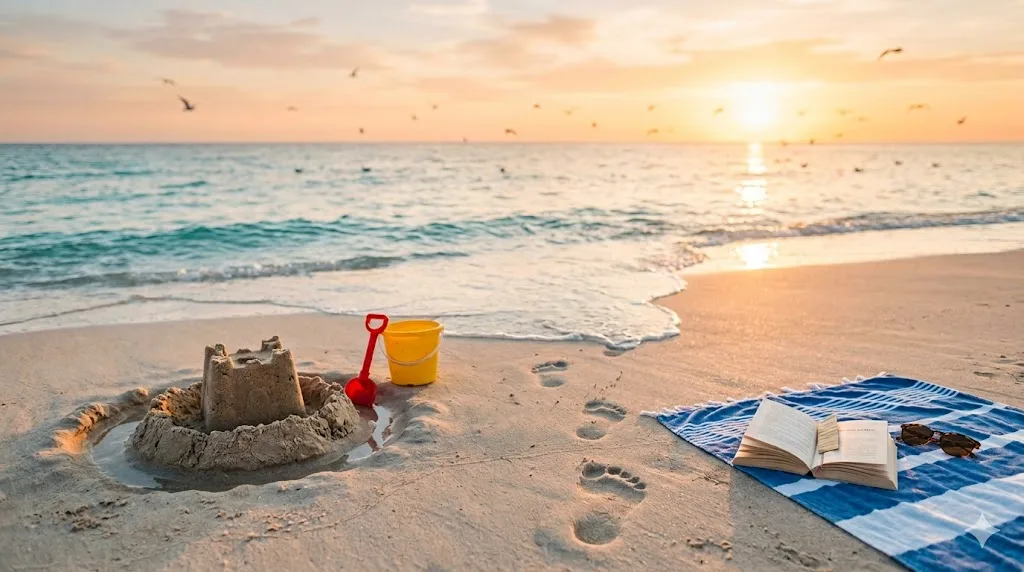
For most families with children, the beach is the centerpiece of the summer holiday. Water keeps kids occupied without exhaustion, sand captivates them for hours, and the slower pace benefits everyone. But not every coastal destination works equally well for families — some are too hot for toddlers, others lack safe bathing areas, and many require grueling travel times.
Every destination here is judged by one simple standard: would a family actually relax there with their own kids? Only the ones that pass make the cut. The ten that follow all clear that bar.
What Makes a Beach Destination Family-Friendly?
Before the destinations, it helps to understand what actually makes a beach suitable for children. The obvious factors — flight time, temperature, safety — are only the beginning.
Flight duration and arrival logistics matter most. With children under four, flights shouldn’t exceed four hours. Beyond that, jet lag, cabin restlessness, and sleep disruption compound quickly. With older kids (ages six and up), long-haul flights become manageable if you choose the right departure time (ideally a morning departure) and secure window seats for sleep.
Water temperature and swimming comfort rank second. Seawater below 18 degrees Celsius feels uncomfortable to children. The sweet spot is 22–26 degrees — warm enough for splashing without hypothermia concerns. Always check average water temperature for your travel month before booking.
Lifeguards and safe bathing areas are essential. A beach without lifeguard supervision is risky for families. Good destinations have stationary lifeguards during peak season, often with colored buoys marking safe bathing zones. That security matters.
Shallow entry zones for small children can’t be overlooked. An ideal family beach has at least fifty meters of water where children up to four feet tall can stand safely. It sounds basic, but you’d be surprised how rare it is.
On-site infrastructure makes a real difference. Toilets within reasonable distance, fresh-water showers, at least one or two beachside restaurants or cafés — these prevent constant frustration. Playgrounds or beach volleyball courts are nice-to-haves.
Travel timing and school holidays affect both costs and crowds. Some destinations are mobbed and expensive during summer holidays. Others, like the Algarve, are cheaper and far less crowded during Easter or autumn breaks. Think about where you can be flexible.
The Ten Best Beach Destinations for Families
1. Baltic Sea and North Sea (Germany)
Germany’s coastline is the go-to for German families for solid reasons. No flights needed, children don’t need passports until age twelve, and beaches are often shallow and secure. The Baltic coast, particularly Rügen Island or Bad Doberan, has fine sandy beaches with lifeguards and strong infrastructure. The North Sea islands of Norderney and Langeoog are equally strong — kids learn about tidal shifts, and mudflat hikes are educational.
Water temperature even in August is only 17–18 degrees Celsius, noticeably cooler than the Mediterranean. Many families pack wetsuits for their children. Family hotel stays on the Baltic coast run from about $42–209 per night depending on standard. The Strandkind family hotel in Lübeck Bay costs roughly $206 per person per night but includes 35+ hours of supervised kids’ activities weekly.
Best travel window: May through September (school holidays peak).
2. Croatia (Dalmatia and Islands)
Over the last decade, Croatia has become a quiet favorite for families. The Adriatic coastline offers warm, clear water (approximately 24 degrees Celsius in summer), small islands with shallow beaches, and reliable infrastructure. Here’s the bonus: many beaches are free, without all-inclusive resort pressure.
Hvar Island, the Dalmatian coast near Trogir, or Brac Island are realistic family options. Most accommodations are private apartments, which suits multi-child families well (and enables self-catering). Accommodation costs roughly $58–139 per night (around 377–900 kuna), depending on standard.
A practical advantage: Croatia is EU, so healthcare meets European standards. Flight time from Germany: approximately two hours.
Best travel window: June through September (July/August gets crowded and very hot).
3. Portugal (Algarve)
Portugal is often overlooked as a family destination, yet the Algarve is outstanding. Beaches are golden, cliffs dramatic, and July water temperature sits around 23 degrees Celsius. A major bonus: Portugal is cheaper than Spain or Croatia.
Towns like Lagos and Albufeira have family-friendly beaches, numerous family hotel options, and long sandy stretches. Wave conditions are moderate, milder than the Atlantic swells further north. Accommodation ranges $46–174 per night.
Flight time is roughly two-and-a-half hours, and the Algarve shines during Easter and autumn holidays — cheaper, less crowded, and temperatures are pleasant (around 20–22 degrees, versus the brutal 35 degrees of peak summer).
Best travel window: April, May, September, October.
4. Greece (Islands)
Greece remains the classical family beach destination. Islands like Crete and Rhodes have long, shallow sandy beaches, crystalline water, and cultural depth that appeals to older children (ruins, history, traditional villages).
Crete is larger and more varied — you’ll find beaches like Platania or Kalami that are exceptionally kid-friendly, with restaurants within walking distance. Rhodes offers similar advantages and feels politically more stable to some travelers. Summer water temperature: 24–25 degrees Celsius.
A double room runs $70–209 depending on location and season. Flight time: approximately two-and-a-half hours.
Best travel window: June through September (July/August very crowded).
5. Spain (Balearic and Canary Islands)
Mallorca, Menorca, and the Canaries are reliable classics. Mallorca has the densest infrastructure — hotels, restaurants, playgrounds everywhere. The Canaries (Tenerife, Gran Canaria) stay warm year-round with less seasonal variation than the Balearics.
Both destinations are highly touristed and can feel noisy and pricey in high season. A family room runs $139–290. Flight time: roughly two hours (Balearics) to four hours (Canaries).
Best travel window: April to June, September to October (outside summer holiday peaks).
6. Montenegro (Kotor Bay)
Montenegro remains relatively unknown as a family destination, but it deserves attention. Kotor Bay is sheltered, water is cool (around 20 degrees), but the character feels authentic — less mass tourism than Croatia, yet similarly developed infrastructure-wise.
Beaches are smaller, often pebbled, less sandy, but the bay itself is spectacular. Many families combine a beach day with hiking in the surrounding mountains — excellent for older kids (ages six and up) willing to walk a bit.
Accommodation is cheaper than Croatia: $35–116 per night. Flight time: approximately two-and-a-half hours.
Best travel window: June through September.
7. Denmark (Baltic and North Sea coasts)
Denmark is the Scandinavian, orderly counterpart to Germany. Beaches like Skagen (north) or eastern Scania’s coast are spotless, well-equipped, and Danish culture is genuinely child-friendly. The catch: Denmark is expensive — accommodation runs $174–348 per night.
The Lego House in Billund is a cultural bonus that fascinates older children. Flight time: approximately one-and-a-half hours.
Best travel window: June through August.
8. Turkey (Southern Coast, Side and Beyond)
Turkey’s south coast is the paradise for all-inclusive family holidays. Resorts offer round-the-clock childcare, water slides, buffets, and a place for parents to sit. That’s realistic for families prioritizing parental rest over pure adventure.
Side and the Antalya region have wide, shallow sandy beaches. Summer water temperature: 26–27 degrees. An all-inclusive resort runs roughly $90–$170 per person per night (easily $400+ for a family of four).
Flight time: approximately four hours. One practical risk: Peak summer (July/August) hits 35 degrees Celsius and above — uncomfortable for young children.
Best travel window: May, June, September, October.
9. Mauritius
This is a long-haul destination, but it pays off for families with time and budget. Mauritius is politically stable, healthcare is excellent, and the island offers everything: beaches, hiking, snorkeling, zoos, cultural diversity. Water temperature stays above 22 degrees year-round.
A mid-range family hotel costs roughly $170–$340 per night. Flight time: approximately 11–13 hours (with connection). This is a trip best suited to older children (ages eight and up).
Best travel window: November through April (dry season, coral-friendly).
10. Bali and Maldives
These are the exotic options for families with budget and patience. Bali has varied beaches, cultural attractions (temples, rice terraces), and family resorts that are numerous and cheaper than European luxury equivalents. The Maldives are pure beach and snorkeling — no substantial mainland, but unbeatable for water enthusiasts.
Flight time: approximately 12–14 hours. A family resort runs $230–$570 per night. Both Bali and the Maldives require solid preparation: vaccinations, time zone shifts, extended travel. Ideal for families with older children (ages ten and up).
Best travel window: Dry season (Bali: April to October; Maldives: November to April).
Hotels and Accommodations on German Coasts
If you stay within Germany, the Familotel network on the Baltic coast has proven reliable. These are certified hotels with specialized offerings: childcare, age-appropriate activities, often separate children’s menus, and babysitting services. The Strandkind hotel near Timmendorfer Strand is one example — roughly $206 per person per night with half-board and childcare.
Alternative model: vacation apartments. These are often cheaper (starting $55–110 per night for two bedrooms, around €50–100) and offer space. The downside is you manage meals yourself — not ideal when exhausted. That sounds worse than it is: most German beach towns have supermarkets within walking distance, and kids are often happier when they help prepare dinner.
A hidden gem is small pensions near the beach, often family-run. These are personal, cheaper, and operators understand what families need.
What to Check Concretely When Comparing Destinations
Every family is different. Here are three scenarios:
Young children (ages 2–4): Short flight times are non-negotiable, shallow beaches with lifeguards are essential, and infrastructure (changing tables, toilets nearby) is critical. Best choices: Germany, Portugal, or Croatia. All-inclusive resorts in Turkey warrant consideration if you need constant supervision.
Children ages 5–10: You have latitude here. These kids typically swim decently but still need security and activity. Greece, Spain, Croatia are ideal. Combining beach time with snorkeling plus short hikes works well.
Older children (ages 11+): They want more than just sand. Destinations with cultural elements (Mauritius, Bali, Greece with archaeology) make sense. Flight duration matters less.
Budget-conscious families: Portugal, Croatia, Denmark, and Montenegro. Best savings strategy: avoid school holidays (Easter, autumn breaks are cheaper), choose vacation apartments over hotels, and eat at local restaurants.
The Right Destination for Your Family
There’s no universal “best” beach destination for families. It depends on your children’s ages, your available time and budget, and your tolerance for travel stress. A pragmatic approach is starting with a safe, nearby destination (Germany, Croatia) and expanding based on experience.
Here’s the lesson that matters most: the best trip is simply the one where you and your kids are relaxed. The beach ideal — kids playing, parents reading — rarely happens 24/7. But if you hit that moment three or four times during your trip, it was a good holiday.
Choose a destination that fits you. The Baltic Sea can be as magical as Mauritius when you’re unhurried.