Trend
The 7 Biggest Travel Trends for 2025
Slow travel, AI trip planning, and hidden alternatives to overcrowded hotspots – these trends define travel in 2025.
TravelFeelings Editorial Team6 min.
Indonesia · Southeast Asia
Bali packs Balinese-Hindu temple culture, tropical highlands, and varied coastline into one dense destination. Here's what to know before you book.
Tanah Lot is Bali’s most-photographed landmark: a Balinese-Hindu temple on a sea rock, 20 km west of Seminyak. Admission 60,000 IDR (approx. $3.70). Best light for photography at sunset (17:30–18:30) — predictably crowded at that time. Weekday mornings are significantly quieter.
Pura Besakih is Bali’s largest temple complex, on the slopes of Mount Agung at 1,000 meters elevation, 70 km northeast of Denpasar. Admission 150,000 IDR (approx. $9.20). Unsolicited guide offers at the entrance are persistent — not mandatory, but occasionally useful (tip 50,000–100,000 IDR / approx. $3–6). Clear skies in the morning; cloud cover typically moves in by early afternoon. Bring a layer — noticeably cooler at elevation.
Tegallalang Rice Terraces are 10 km north of Ubud. Entry to the area itself is free; viewing platforms on private land cost 10,000–30,000 IDR (approx. $0.60–1.80). Best light 08:00–11:00. Peak visitor time: 10:00–14:00.
Sacred Monkey Forest Sanctuary (Ubud) houses approximately 1,300 long-tailed macaques in a forest-temple complex. Admission 150,000 IDR (approx. $9.20). Macaques are habituated and bold — keep food, sunglasses, and loose bags out of reach. Biting incidents are documented, rare but possible.
Uluwatu Temple stands on a 70-meter limestone cliff at Bali’s southern tip. Admission 50,000 IDR (approx. $3) plus sarong rental if needed. Kecak fire dance at sunset daily from 18:00: additional 150,000 IDR (approx. $9.20). Macaques near the entrance will grab loose items — secure valuables before entering.
Seminyak and Kuta are Bali’s most built-up tourist zones with surf beaches, restaurants, and nightlife. Seminyak is the more upmarket option; Kuta is cheaper and younger. Neither has standalone cultural sights — for Balinese culture, travel to Ubud. The visitor pressure building in both areas is part of a wider pattern that Travel Trends 2026 examines through the lens of overtourism regulation.
Tirta Gangga is a royal water palace 90 km northeast of Denpasar, built in 1946 by the Raja of Karangasem. Admission 50,000 IDR (approx. $3). Tiered ponds, fountains, and carp pools via stepping stones. Less visited than Ubud — pleasantly quiet on weekdays.
Mount Batur Sunrise Trek (Gunung Batur, 1,717m) is 60 km north of Ubud, approximately 2 hours by car. Departure at 02:00–03:00; summit arrival at sunrise (05:30–06:00). Package price including mandatory guide, summit breakfast, and transfer: 350,000–500,000 IDR (approx. $21–31) via local operators. Guides are officially required. Fitness level: moderate — no technical climbing. Dry season April–October offers the most reliable weather.
Nusa Penida is an island 45 minutes by fast boat from Sanur (departures from 07:30). Round trip approximately 250,000 IDR (approx. $15). Key sights: Kelingking Beach (200-meter cliff viewpoint), Broken Beach, and Angel’s Billabong. One day covers the three main spots — motorbike rental on-site (100,000–150,000 IDR/day, approx. $6–9) or organized tours available.
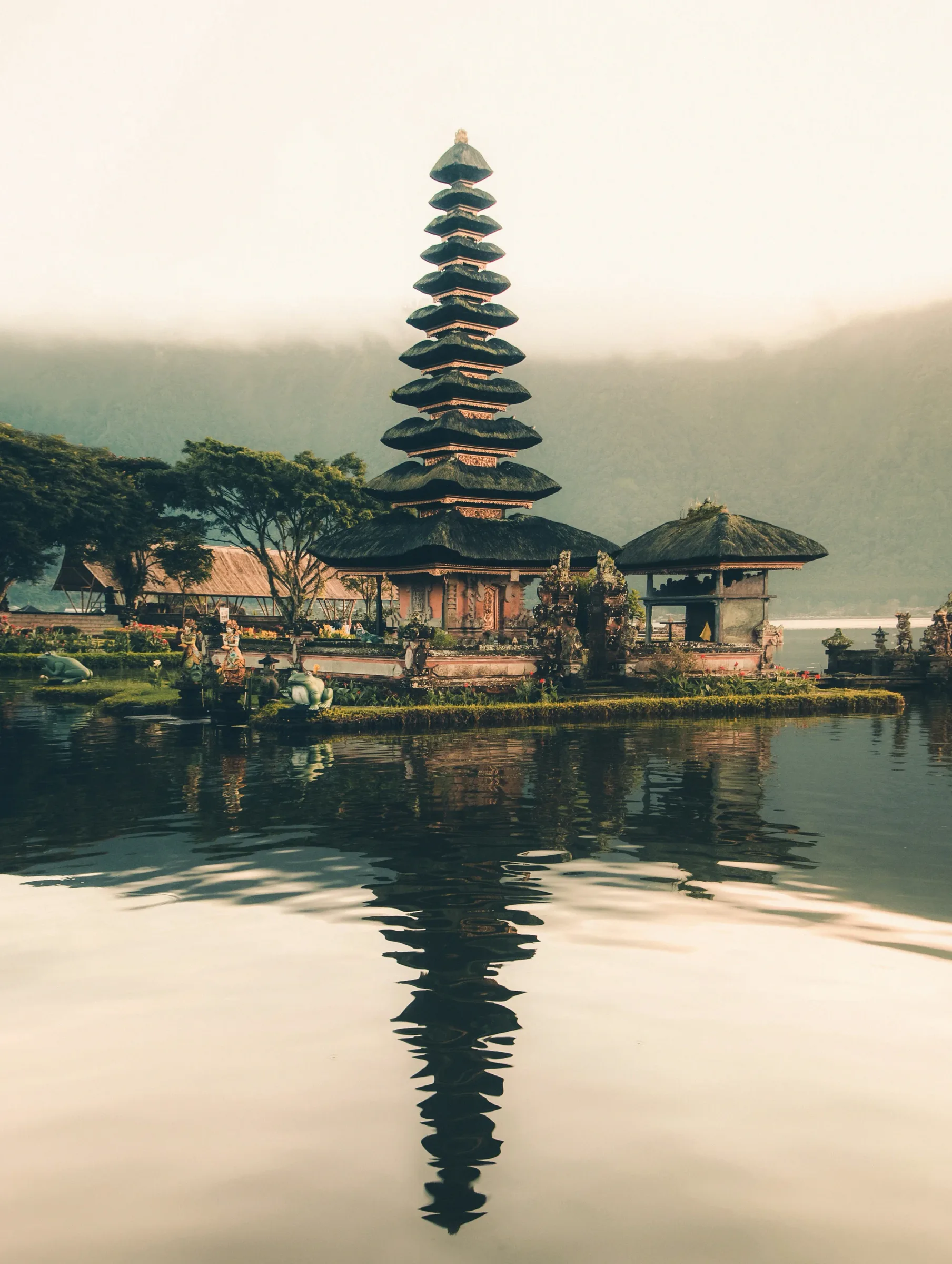
Munduk and Bedugul are in Bali’s central highlands (1,000–1,500 meters), 90 km north of Denpasar, 2 hours by road. Temperatures 18–24°C — significantly cooler than the coast. Pura Ulun Danu Bratan (lake temple): admission 75,000 IDR (approx. $4.60). Jatiluwih rice terraces (UNESCO World Heritage): admission 50,000 IDR (approx. $3).
Nusa Lembongan is smaller than Nusa Penida, 30 minutes by fast boat from Sanur (from 100,000 IDR/trip, approx. $6). Known for mangroves, snorkel sites with good visibility, and a calmer atmosphere than Nusa Penida.
Sidemen Valley lies 75 km northeast of Denpasar, largely off the tourist circuit. Rice fields, river courses, and views of Mount Agung — comparable landscape to Ubud without the tourist infrastructure. Budget accommodation runs 250,000–400,000 IDR/night (approx. $15–25). Cycling tours through the valley are available.
Amed is a fishing village on Bali’s east coast, 110 km from Denpasar. Limited tourist development, black volcanic-sand beaches, and calm snorkel and dive conditions directly in front of the village. Japanese Shipwreck (1941 cargo ship) in 30 meters depth: accessible for certified divers.
Penglipuran is a traditional village 45 km north of Denpasar that has preserved its Balinese settlement structure. Admission 40,000 IDR (approx. $2.50). Open 08:00–17:00. Less visited than the Ubud temples; adjacent bamboo forest suitable for a short walk. Travelers combining Southeast Asian temple culture with urban intensity should consider Tokyo — roughly five flight hours from Bali and the sharpest possible cultural contrast.
Bali has two primary seasons: dry season (April–October) and rainy season (November–March). The dry season delivers consistently clear daytime conditions, low humidity, and little rain. July and August are the busiest tourist months — European summer holidays bring fully booked hotels and crowded beaches, particularly in Seminyak and Kuta. April to June and September to October offer the same weather quality at lower prices and with fewer visitors.
The rainy season brings daily showers, typically in the afternoon (14:00–17:00), and significantly higher humidity. Temperatures remain constant at 24–30°C. Cultural travel to Ubud and temple visits are workable during the rainy season — beaches, however, are unattractive due to rough sea and poor snorkeling visibility. December and January see high bookings despite rain, driven by Christmas and New Year tourism. For further coastal destinations with comparable climate profiles, the beach holidays overview provides additional alternatives.
| Jan | Feb | Mar | Apr | May | Jun | Jul | Aug | Sep | Oct | Nov | Dec |
|---|---|---|---|---|---|---|---|---|---|---|---|
| Low | Low | Low | Sweet Spot | Sweet Spot | Sweet Spot | Peak | Peak | Sweet Spot | Sweet Spot | Peak | Peak |
30° 24° | 30° 24° | 30° 24° | 30° 23° | 29° 22° | 28° 21° | 28° 21° | 28° 21° | 29° 21° | 30° 22° | 30° 23° | 30° 24° |
Balinese Hinduism shapes daily life completely. Morning offerings (Canang Sari) are placed before homes and businesses — small woven palm-leaf trays with flowers, rice, and incense. They are intended for deities and must not be stepped on.
Temple dress code: A sarong (hip wrap) is mandatory at every temple. Knees and shoulders must be covered. Sarongs are available for loan at temple entrances, free or for a small fee. Menstruating individuals are not permitted to enter certain temples according to Balinese-Hindu custom — signs are posted.
Purnama and Nyepi: Full moon ceremonies (Purnama) occur monthly and can temporarily close streets. Nyepi (Balinese New Year, Day of Silence) falls on the first day after the new moon in March — the airport closes, streets are sealed, electricity is restricted. Travelers arriving or departing around Nyepi need to choose a different travel day.
Greeting: Hands pressed together (similar to Namaste) is more respectful than a handshake in formal or religious contexts. Western greetings are accepted.
Do not step on Canang Sari (offerings). The small woven trays placed on sidewalks and outside doorways are stepped over, not on.
Do not enter temple grounds without a sarong. A hip wrap is required — no exceptions, not even for brief visits.
Do not use the left hand to hand over objects or food. The left hand is considered unclean in Balinese and Indonesian context. Use the right hand or both hands.
Do not behave loudly or impatiently during ceremonies. Religious events can occur spontaneously and block pathways — wait quietly.
Do not touch an adult’s head. The head is considered sacred in Balinese culture.
Do not purchase antique stonework or historical artifacts. Exporting cultural objects is prohibited and can result in arrest at the airport.
Arriving: Ngurah Rai International Airport (DPS) is 12 km south of Denpasar. Direct flights from major European hubs are seasonal; year-round connections with 1–2 stopovers (Singapore, Kuala Lumpur, Doha). Direct flight time: approximately 14–15 hours. Via hub: 18–22 hours depending on layover.
Airport transfer: Fixed-price taxi counters at arrivals: Seminyak approx. 100,000–150,000 IDR ($6–9), Ubud approx. 300,000–400,000 IDR ($18–25). Grab (ride-hailing app) from the parking deck is cheaper — drivers wait outside the terminal zone, as private ride pickups inside are officially prohibited.
On the island: Bali has no tourist-oriented public bus network. Options: motorbike rental (80,000–100,000 IDR/day, approx. $5–6) — recommended only for experienced riders with a valid license; Grab app, cheaper than street taxis; chartered driver with car by the half-day or full day (350,000–600,000 IDR/day, approx. $21–37).
Bluebird Taxis are Bali’s most reliable licensed cab company. Metered, no overcharging. Available in Kuta, Seminyak, and Denpasar. Order by phone or flag from the street — no app.
German citizens receive a Visa on Arrival (30 days) at Ngurah Rai airport — no advance application required. The VoA costs 500,000 IDR (approx. $28), payable by card or cash on arrival, or online as an e-VOA beforehand. Requirements: return or onward flight ticket and proof of sufficient funds (no fixed amount; occasionally checked). Extension by 30 more days: another 500,000 IDR (approx. $28) at the Kantor Imigrasi in Denpasar. Since February 2024, all foreign visitors must also pay a mandatory Bali Tourism Levy of 150,000 IDR (approx. $8) via the official Love Bali portal (lovebali.baliprov.go.id) — pay online before departure to skip the airport queue.
Paper landing cards have been fully replaced. Since October 2025, everyone arriving in Bali must complete the mandatory digital “All Indonesia” arrival card (allindonesia.imigrasi.go.id) within three days before landing — it bundles immigration, customs, and health declaration into one free QR code shown on arrival.
Customs and drug policy: Possession of any controlled substance in Indonesia carries penalties from imprisonment to the death penalty. No gray areas, no exceptions. Prescription medications must be accompanied by a doctor’s letter and original packaging.
Return travel: No COVID requirements since 2023. Standard baggage screening applies.
Vaccinations: Basic immunization (tetanus, diphtheria, hepatitis A/B) recommended before departure. Dengue fever is prevalent on Bali — no vaccine available for short-stay travelers; mosquito repellent (DEET or Icaridin) is mandatory. Japanese encephalitis may be relevant for extended stays in rural areas — consult a travel medicine specialist.
Rabies: Street dogs and macaques on Bali and Nusa Penida are potential rabies vectors. Any bite wound: clean immediately and seek medical attention. Pre-exposure rabies vaccination is recommended for adventure travelers and stays over four weeks.
Water: Not drinkable from the tap. Buy bottled water or bring a filter. Ice in tourist restaurants is generally made from treated water — use caution outside tourist zones.
Medical facilities: BIMC Hospital Kuta and Kasih Ibu Sanglah (Denpasar) are the most reliable hospitals for tourists, with English-speaking staff. Medical evacuation to Singapore is required for serious cases — costs can reach $55,000–165,000 (approx. 897 million–2.7 billion IDR). Travel insurance with evacuation coverage is essential.
Sea conditions: Strong rip currents at Kuta, Seminyak, and Uluwatu beaches are responsible for drowning incidents annually. Swim between the flags only. A red flag means swimming is prohibited — enforcement is not always consistent.
Slow travel, AI trip planning, and hidden alternatives to overcrowded hotspots – these trends define travel in 2025.
Which accommodation type makes financial sense for a beach holiday depends on travel style and duration. A comparison without hype.
Which European beaches truly welcome dogs, and what rules apply? A guide to the best beaches for a holiday with your four-legged companion.
With proper gear and technique, beginners can get comfortable fast. This guide covers breathing, equalization, and common mistakes.