Travel Trends 2026 — Regulation Meets AI Booking
Overtourism caps, autonomous AI bookings, and regenerative tourism define 2026. Yet every trend masks a deeper tension.
TravelFeelings Editorial Team
Regulation, Not Romance: How Destinations Finally Act
Venice, Florence, Capri: no longer mere destinations groaning under visitor weight, but laboratories for what must come. 2026 is the year overtourism shifted from trend-talk to regulatory reality.
Rome introduced a mandatory ticket system at the Trevi Fountain in February 2026. Florence banned all new Airbnb listings in the city center outright. Capri capped tour groups at 40 people maximum. And tourism taxes have shot upward: Cultural heritage cities like Rome, Venice, and Florence now charge up to $13 per night (€12), a fourfold increase since 2019.
The paradox? It isn’t working.
In February 2026, Italian hotels hit 85 percent occupancy, a historical high. Tourism Minister Daniela Santanché projected over 100 million overnight stays for the first four months alone. These numbers reveal that taxes and ticketing generate revenue, but they do not reduce visitor volumes. Travelers still come, because financial penalties alone have no impact without structural capacity limits.
The problem is structural. Real regulation, as practiced by Bhutan, the Galápagos, or parts of Norway, requires daily visitor caps. That means accepting economic losses. Or phrased differently: economic transformation without romantic narratives. Italy pursues a middle path and it is failing.
The Fragile Night Train Renaissance
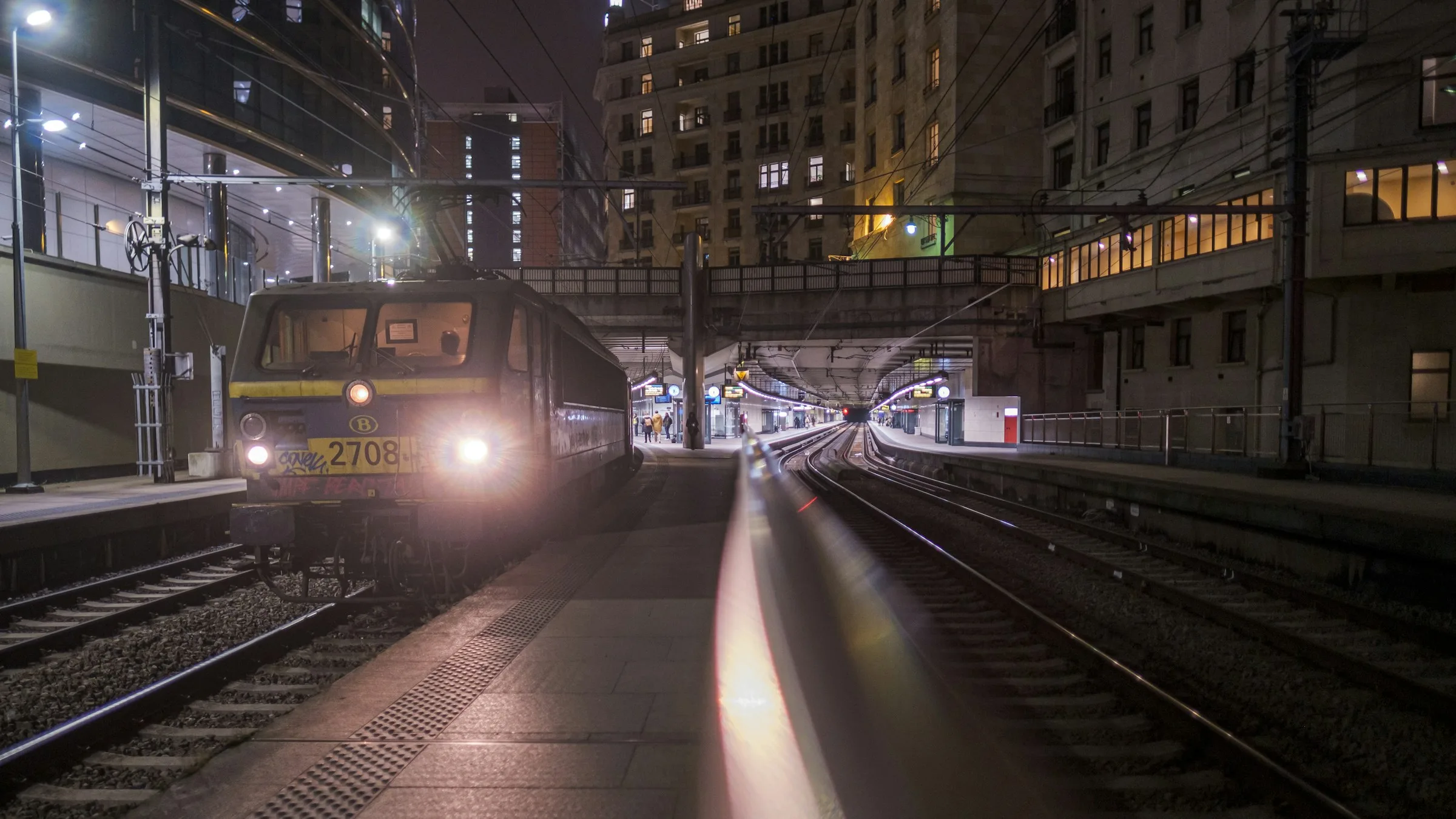
A video has circulated through travel networks since May 2026. Someone sits in a dining car of a new Nightjet running Vienna to Amsterdam, the Alps rolling past, and it feels like a dream from the 1960s. Night trains are back.
Yet the reality beneath that image is complicated.
Austrian Federal Railways (ÖBB) is pouring over $540 million (€500 million) into 24 entirely new Nightjet trains, complete with modern sleeping cabins, private bathrooms, and showers: firsts in European night train design. Starting in December 2026, the first will run Amsterdam to Zurich. European Sleeper, a private operator, is reviving the Paris-Brussels-Berlin route in March 2026, with three departures per week.
For climate-conscious travelers, this is a win: night trains emit 80 to 90 percent less CO2 than flights. A night train journey Vienna to Amsterdam saves roughly 500 kilograms of CO2 per person versus flying. That is measurable.
But the economic reality is far more fragile than the marketing narrative.
France cut state subsidies for night trains in 2025, forcing ÖBB to abandon the profitable Vienna-Paris line. Switzerland withdrew funding for a planned Basel-Copenhagen route after tickets had already sold. Stockholm-Berlin will run only every other day starting 2026, not daily. Infrastructure is aging: most European night trains still use rolling stock from the 1950s-70s; they cannot run on high-speed tracks. Only ÖBB’s new trains meet modern standards.
Here lies the core fragility: night trains are carbon-efficient and experientially compelling, yet without structural transportation transformation and reliable state financing, they are not economically viable. The renaissance is real. But it is not secured.
Regenerative Tourism: From “Do No Harm” to “Leave Better”
2026 marks a turning point in how tourism frames sustainability. Anyone still speaking of “sustainable travel” as “minimizing footprint” sounds passé. The new wave is regeneration: not damage mitigation, but active destination restoration.
The numbers are striking: the regenerative tourism market is forecast to grow from $8.2 billion (2024) to nearly $29 billion by 2033. This is no longer a niche.
What has concretely shifted? According to The Tourism Space’s analysis, seven core trends are driving this in 2026:
First, trust as a differentiator. Sixty-seven percent of travelers no longer trust unverified sustainability claims. They demand standardized certifications: Green Key, EU Ecolabel, Science Based Targets. The EU’s Consumer Empowerment Directive (EmpCo), arriving September 2026, makes greenwashing illegal: claims of “eco-friendly” and “climate-neutral” must now be substantiated, not merely offset-mythology resting.
Second, supply chain transparency. Seventy to ninety-five percent of a hotel’s carbon footprint originates not in operations (energy, water) but in the supply chain: food, furnishings, textiles. Hotels tallying only operational emissions are essentially lying. In 2026, this becomes the central conflict between guests and hotel chains.
Third, destination-level impact measurement. Success is no longer measured per property, but per destination. A organic-certified hotel in an exhausted national park helps no one. Regeneration means coordinated destination-protection strategies, not lone-hero narratives.
Fourth, biodiversity and community. The opposite of “we cause no harm” is “we actively help restore ecosystems and communities.” Concretely, that means funding local ecosystem restoration, cultural projects, community investment, not simply more hotels.
The paradox remains: regeneration sounds wonderful. But without visitor caps and without decoupling from growth (more nights = more regeneration?), regeneration is still just managing the same problem.
AI Booking as a New Power Relationship
Since May 2026, Google has been testing agentic AI (autonomous artificial intelligence) for hotel bookings. This means: you tell an AI “budget-friendly hotels in Barcelona next week, vegetarian breakfast options,” and the AI independently navigates dozens of websites, compares prices, reads reviews, checks availability, and books, all without you touching a browser.
This is not planning. This is execution.
Expedia and Booking.com are rushing to catch up, developing similar systems. Marriott International and IHG are opening their inventory APIs to these agents. Major hotel chains now accept that the next reservation wave will flow through AI agents, not humans.
The implication is subtle but profound. While we still talk about AI-powered trip planning (ChatGPT write my itinerary), the industry has already moved to AI-powered commerce (the AI books for me). That rewrites the power dynamics between traveler, platform, and destination.
Consumer adoption remains cautious: most travelers do not yet trust AI with credit card access and reservations. But 2026 is the year the infrastructure became ready.
Digital Nomads: Visas as Competition
Sixty-six countries now offer digital nomad visas. Bulgaria, Slovenia, and Moldova launched programs in 2026. This is no longer niche policy. It is competitive positioning.
The logic is transparent: digital nomads carry purchasing power (averaging $3,000–$5,000 monthly budget), spread spending over months, and do not stress mass-tourism infrastructure. For Lisbon, Spain, or Malta, a nomad is economically three times more valuable than a conventional tourist.
Spain leads the rankings, combining stable internet, high-quality healthcare, and urban design appeal. Close behind: Malta, Portugal, Germany, Hungary.
Income thresholds have dropped dramatically: Colombia accepts $750 monthly; Moldova, $600. This means a freelance translator or designer can legally spend 18 months in Romania for $20/month in visa costs. These visas become tools of labor arbitrage: European living standards, Eastern European costs.
This creates new migration routes, new communities, new real estate markets, all below the radar of conventional tourism analysis.
Experiential Travel: From Destination to Narrative
“Set-jetting” (travel to film and television filming locations) is the largest growth driver for younger travelers in 2026. Eighty-one percent of Gen Z and Millennials plan trips around screen-based settings. The industry estimates this market at $8 billion in the U.S. alone.
This is methodologically interesting because it reveals how destination marketing is breaking down. The old question was: “Where do I want to go?” The new question is: “What stories do I want to have lived?”
Other segments are shifting similarly. Farm-stays are no longer “rural holidays” but experiential nodes. Mentions of farm experiences in Vrbo reviews jumped 300 percent between 2025 and 2026. Salvaged Stays (conversions of schoolhouses, train stations, banks into hotels) experienced booming demand. Literary retreats (book club escapes) saw Pinterest search-term spikes of 265 percent.
The underlying logic is this: travel is not landscape consumption, but narrative participation. This is not new conceptually, but in 2026 it became quantifiable and investable. The narrative shift is particularly visible in city travel, where cultural and literary landmarks are developing new gravity for younger travelers.
The Core Tension
Every single one of these trends shares a common origin: reaction against dissatisfaction with mass tourism. Regeneration as reaction to ecological decline. Slow travel as reaction to destination-hopping. Digital nomad visas as reaction to conventional holidays. Set-jetting as reaction to guidebook monotony.
The problem: each trend grows while base capacities remain unchanged. Rome attracts more tourists despite Trevi ticketing. Night trains expand but are systemically fragile. Regenerative tourism grows so long as total visitor numbers do not shrink. Digital nomad visas multiply long-term mobility without capacity limits.
2026 is the year the tourism industry spells “transformation” while meaning “growth.” That will not work.
Exchange rate references reflect May 2026 levels (1 US-Dollar ≈ €0.93).
Which of these trends surprised you most? Let us know. We’re tracking how they evolve.