Guide
Vienna's Architecture of Deceleration
Vienna is not merely about music and history – it is a system of deceleration. How to understand this imperial metropolis in three days.
TravelFeelings Editorial Team7 min.
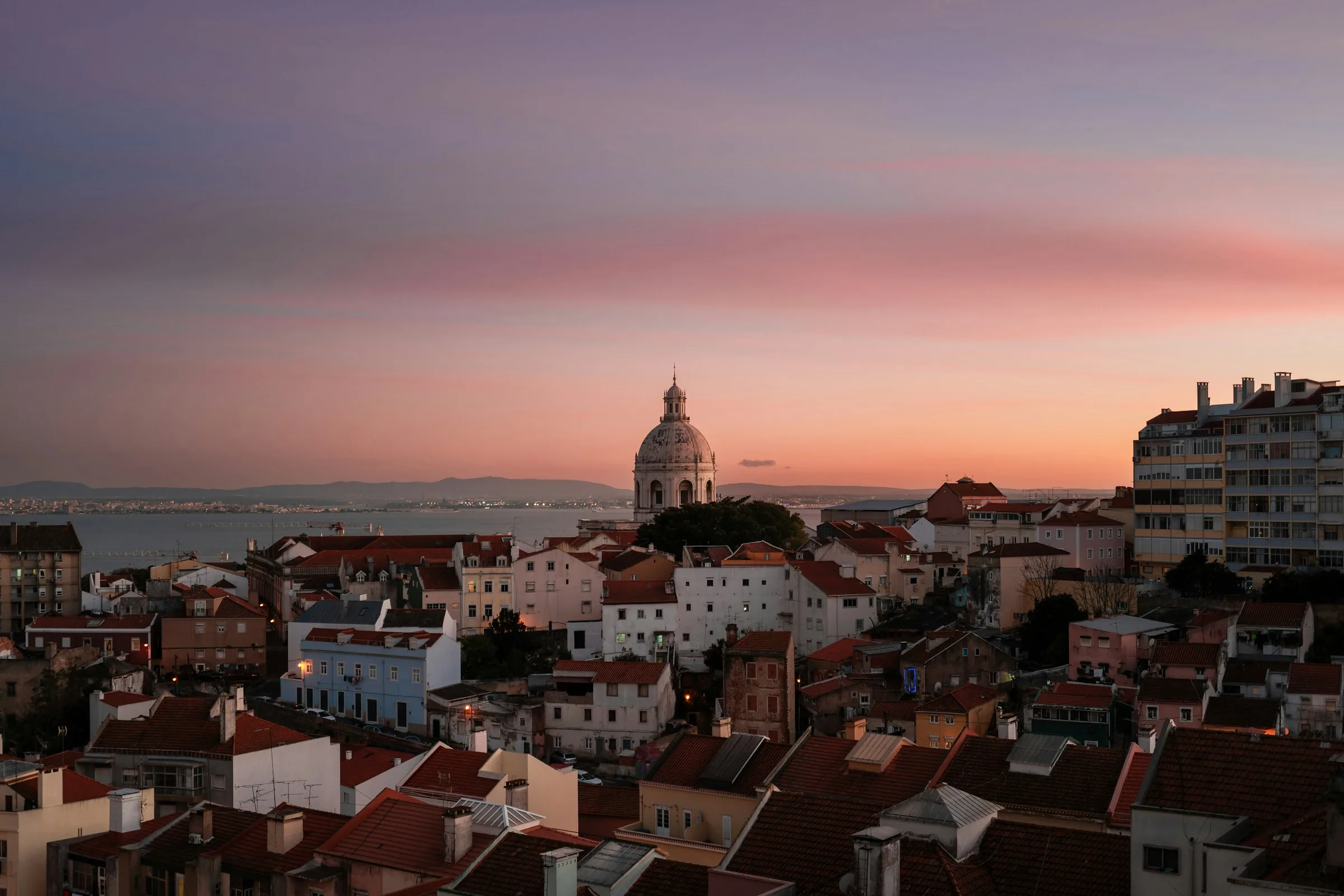
Portugal · Western Europe
Lisbon layers Moorish Alfama, Manueline Belém and post-1755 Pombaline Baixa into one compact, walkable city. What to know before you book your trip.
Castelo de São Jorge stands on the highest of Lisbon’s seven hills, above the Alfama district. Originally built in the 2nd century BCE, expanded by the Moors, and captured by King Afonso Henriques in 1147. Admission $16 (€15). Open daily 09:00–21:00 (March–October), 09:00–18:00 (November–February). Skip queues by booking tickets online in advance.
Mosteiro dos Jerónimos in Belém is the defining example of Manueline architecture — a Portuguese Gothic style incorporating maritime motifs and elements absorbed from India during the Age of Discovery. Construction began 1501; UNESCO World Heritage since 1983. Admission: cloister $11 (€10); nave free. Closed Mondays.
Torre de Belém is a six-story fortified tower from the 16th century on a Tagus rock promontory, also UNESCO-listed. Admission $6.50 (€6). Interior capacity is limited — summer queues of up to 90 minutes. The exterior view is free; for the interior, arrive early or visit off-season.
Museu Nacional do Azulejo documents 500 years of Portuguese tile (azulejo) history from the 15th century to the present, housed in the former Madre de Deus convent (16th century). Admission $5.50 (€5). Closed Mondays. Less crowded than the major sights — rarely a wait.
Museu Calouste Gulbenkian holds one of Europe’s most significant private collections: Egyptian antiquities, Islamic art, Impressionist paintings (Renoir, Monet, Degas), and Lalique glasswork. Admission $11 (€10) — covers both wings. Free on Sunday afternoons (14:00–18:00). Rarely crowded.
Alfama is Lisbon’s oldest neighborhood, largely preserved in its medieval street layout. No admission for the neighborhood itself. Key viewpoints: Miradouro de Santa Luzia and Miradouro das Portas do Sol for city panoramas. Tram 28 passes through Alfama — densely packed and a known pickpocket route; walking is safer and faster.
Praça do Comércio is the main square of the Baixa district, directly on the Tagus. Built as part of the Pombaline reconstruction plan after the 1755 earthquake. The Arco da Rua Augusta triumphal arch offers a rooftop viewing platform for $3.50 (€3).
Sintra is 40 km northwest of Lisbon, 40 minutes by regional train from Rossio station (approx. $2.50 / €2.25 per direction). UNESCO Cultural Landscape with the National Palace of Sintra ($11 / €10), Palácio Nacional da Pena ($15 / €14), and the Moorish Castle ($9 / €8). Pena Palace sells out during summer — always book tickets online in advance. Weekday visits are noticeably quieter.
Cascais is a coastal town 40 km west, 40 minutes by regional train from Cais do Sodré (approx. $2.50 / €2.25 per direction). Harbor, fish market, beaches, and the sea-spray grotto Boca do Inferno. Cascais pairs well with Sintra as both train routes diverge from central Lisbon.
Arrábida Natural Park lies 45 km south, reachable by rental car or guided day trip (from approx. $38 / €35). Limestone coastline with turquoise water and white rock formations — one of Portugal’s most scenic coastal stretches. Public transport connections are limited; a rental car is practical.
Óbidos is a fully preserved medieval walled town 80 km north, 80 minutes by bus from Campo Grande (approx. $10 / €9). The town wall is walkable, and the main street Rua Direita has local shops. Manageable as a half-day excursion.
Mouraria is the neighborhood below Alfama, historically home to Lisbon’s Moorish population after the 1147 Reconquista. Less developed for tourism than Alfama, with genuine neighborhood restaurants and a mixed local community. Largo do Intendente is the central square — breakfast at one of the cafés without the tourist surcharge.
LX Factory is a converted industrial complex in Alcântara, with independent shops, restaurants, and a weekend market (Sundays 10:00–19:00). Less known than the Belém tourist strip but well connected by Tram 15E (direct line from Praça do Comércio).
Feira da Ladra is a flea market at Campo de Santa Clara, held Tuesdays and Saturdays from 06:00 — Lisbon’s oldest market, with ceramics, books, antiques, and everyday objects. No tourist-souvenir merchandise; a genuine secondhand market.
Parque das Nações was built for the 1998 World Exposition in Lisbon’s northeast. A modern architectural district (Santiago Calatrava, Álvaro Siza Vieira), largely free of mass tourism. The Oceanarium (admission $22 / €20) is one of Europe’s largest.
Lisbon has a mild Atlantic climate with hot, dry summers and mild, wet winters. As a slow-travel destination that Travel Trends 2025 highlights for its year-round liveability, Lisbon benefits from a prolonged shoulder season. July and August are the busiest tourist months — temperatures reach 29°C, virtually no rain, hotels fully booked. Prices are significantly above the annual average.
March to June and September to November offer 17–26°C, moderate rain only in autumn, and far fewer visitors. April and May are particularly practical: the city and parks are green, temperatures are comfortable for walking the hilly neighborhoods, and summer heat has not set in. This makes Lisbon one of the most practical spring choices in the city travel segment.
Winter (December–February) brings 8–15°C, occasional rain, and substantially lower hotel rates. Museums are open, crowds are minimal, and the city remains fully operational. For a culture-focused city trip, it is a viable option.
| Jan | Feb | Mar | Apr | May | Jun | Jul | Aug | Sep | Oct | Nov | Dec |
|---|---|---|---|---|---|---|---|---|---|---|---|
| Low | Low | Sweet Spot | Sweet Spot | Sweet Spot | Peak | Peak | Peak | Sweet Spot | Sweet Spot | Sweet Spot | Low |
14° 8° | 15° 9° | 17° 11° | 19° 12° | 22° 14° | 26° 17° | 29° 19° | 29° 20° | 26° 18° | 22° 15° | 17° 11° | 14° 9° |
Fado is Portugal’s UNESCO-recognized national music heritage: a vocal tradition with melancholic lyrics about loss, longing, and the sea. Heard in authentic tascas (local taverns) in Alfama — typically as a minimum spend of $22–38 (€20–35). Commercially marketed fado shows in the Baixa offer lower quality and worse value.
Almoço (lunch, 12:00–14:00) is the main meal of the day for many Lisboetas. The prato do dia (daily special) at small local restaurants (tasca): $9–13 (€8–12) including bread, drink, and dessert — substantially cheaper than tourist restaurants. Dinner starts no earlier than 19:30; in local establishments, typically 20:00–22:00.
Pastéis de Belém: The original recipe for Portuguese custard tarts (Pastéis de nata) is produced only at the eponymous bakery in Belém — free entry, wait time 10–30 minutes. Versions sold throughout the city are imitations. For the authentic comparison, the trip is worthwhile.
Azulejo tiles: Blue-and-white tile facades on building exteriors are architectural heritage, not tourist decoration. Removing azulejos from buildings is a criminal offense — actually prosecuted in documented cases of vandalism.
Calling Portuguese food “Spanish food.” Portugal and Spain have distinct culinary traditions. The comparison is considered dismissive.
Speaking Spanish as a substitute for English. Many Portuguese understand Spanish but respond less openly than to English. When in doubt, use English.
Carrying unsecured valuables on Tram 28. The route is a well-documented pickpocket hotspot — keep bags in front and closed.
Visiting Palácio da Pena in Sintra without advance ticket booking. In summer, tickets sell out daily — a spontaneous visit is not possible. Book online before you travel.
Assuming all Pastéis de nata are equivalent. Quality varies significantly; the Pastéis de Belém original uses an exclusive recipe.
Arriving: Humberto Delgado Airport (LIS) is 7 km north of the city center. Flight time from major European hubs: 2.5–3 hours. Metro connection: Red Line from the airport, changing to the Green or Blue Line for the center (approx. $1.90 / €1.70 single ticket or $7.50 / €6.90 day pass). The dedicated Aerobus shuttle no longer operates; the Carris city bus 744 runs from the airport to Marquês de Pombal at the standard single fare.
Metro: Four lines (Blue, Yellow, Green, Red), 56 stations. Operating hours 06:30–01:00. Day pass (Viva Viagem card, $7.50 / €6.90) covers metro, bus, and tram. Single ticket $1.90 (€1.70) — requires the Viva Viagem card ($0.55 / €0.50 deposit). The card does not cover suburban rail lines (Sintra, Cascais: separate CP tickets).
Trams: Historic lines 15E (Belém), 25E, and 28E (Alfama). Line 28E is popular with tourists but chronically overcrowded and slow. Exploring Alfama on foot is faster and safer. Carris bus network covers the full city area.
Uber and Bolt are reliable across Lisbon and cheaper than taxis, particularly for airport journeys (approx. $11–16 / €10–15 from the center). Licensed taxis (yellow-green) are available with mandatory meters.
No entry formalities for German citizens beyond a valid ID document. Portugal is an EU and Schengen member; EU citizens have an unrestricted right of residence. Portugal is actively courting digital nomads; Travel Trends 2026 examines the strategy and the visa mechanics behind it. No landing card, no proof of funds required.
The European Health Insurance Card (EHIC) is valid in Portugal and covers emergency medical treatment in the public health system. Carry it and present it if needed. Supplementary private insurance for repatriation is advisable.
Return travel to Germany: EU internal market — no customs formalities. Up to 800 cigarettes and 10 liters of spirits are permitted duty-free under EU rules.
Vaccinations: No specific vaccination requirements for Portugal — standard immunizations (tetanus, diphtheria) are sufficient. No tropical disease risk.
Medical facilities: Public hospitals in Lisbon (Hospital São José, Hospital Santa Maria) accept the EHIC for emergency care. English-speaking doctors are available. Pharmacies (Farmácia, green cross sign) are widespread and well-stocked.
Water: Drinkable throughout Lisbon. EU standards are met. Mild chlorine taste is possible — no health risk.
Sun exposure: Lisbon lies at roughly 38.7°N, well south of most of Northern Europe, and gets long, largely cloudless summers that push the UV index high. Sunscreen is necessary from UV index 5 onward (from April) — frequently underestimated by Northern European visitors.
Street surfaces: Lisbon’s traditional black-and-white mosaic pavement (Calçada portuguesa) becomes slippery when wet. Solid footwear is recommended. Cobblestones in Alfama’s lanes are uneven; sandals are practical only on flat terrain.
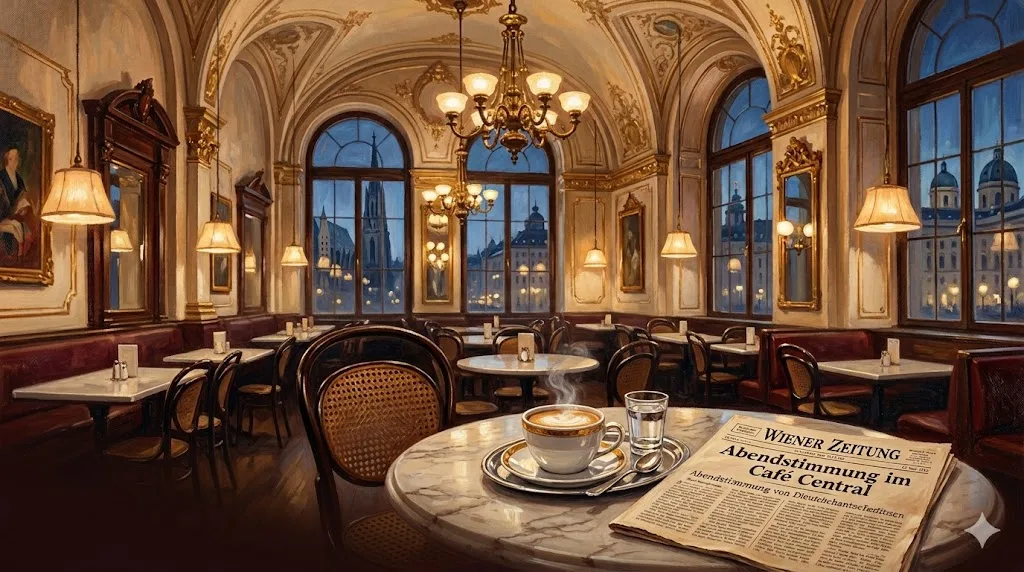
Vienna is not merely about music and history – it is a system of deceleration. How to understand this imperial metropolis in three days.
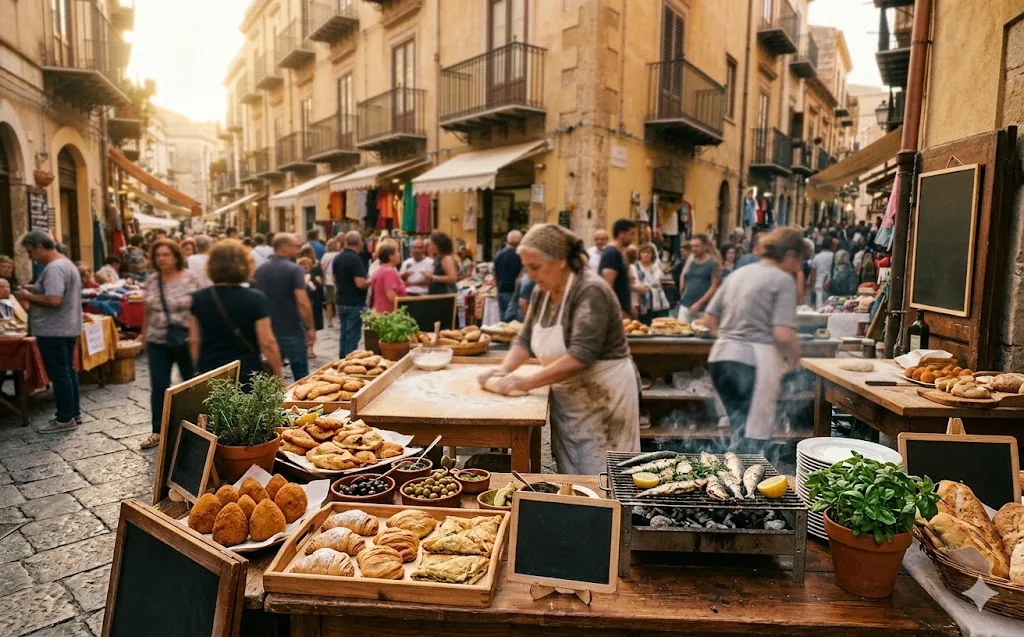
A handbook for authentic culinary food tours in Europe's gastronomic centers – from Roman suppli to Naples' street food culture.
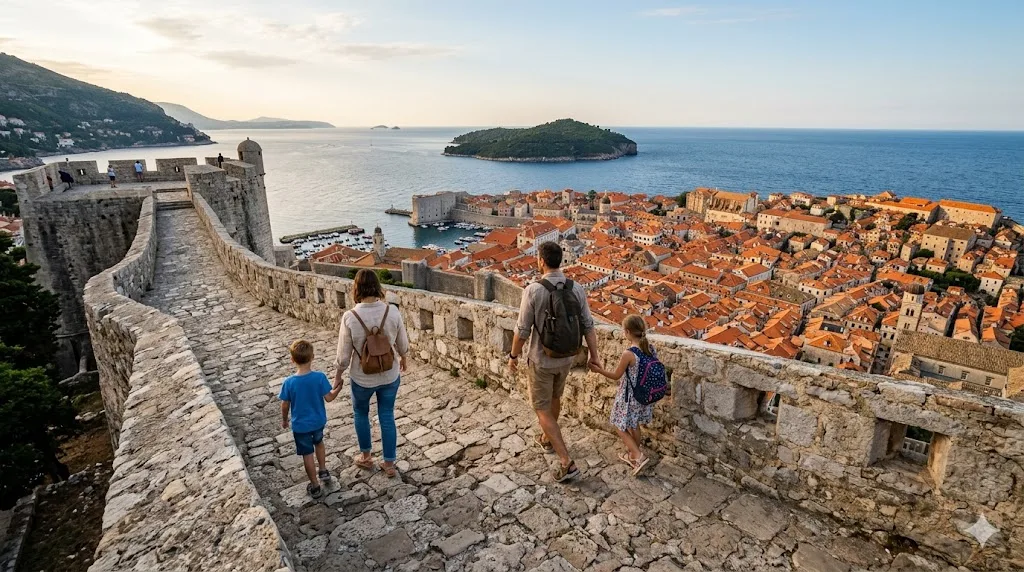
Lisbon, Naples, the Algarve – eight European destinations where summer holidays with kids actually work. Practical advice, not fantasy.
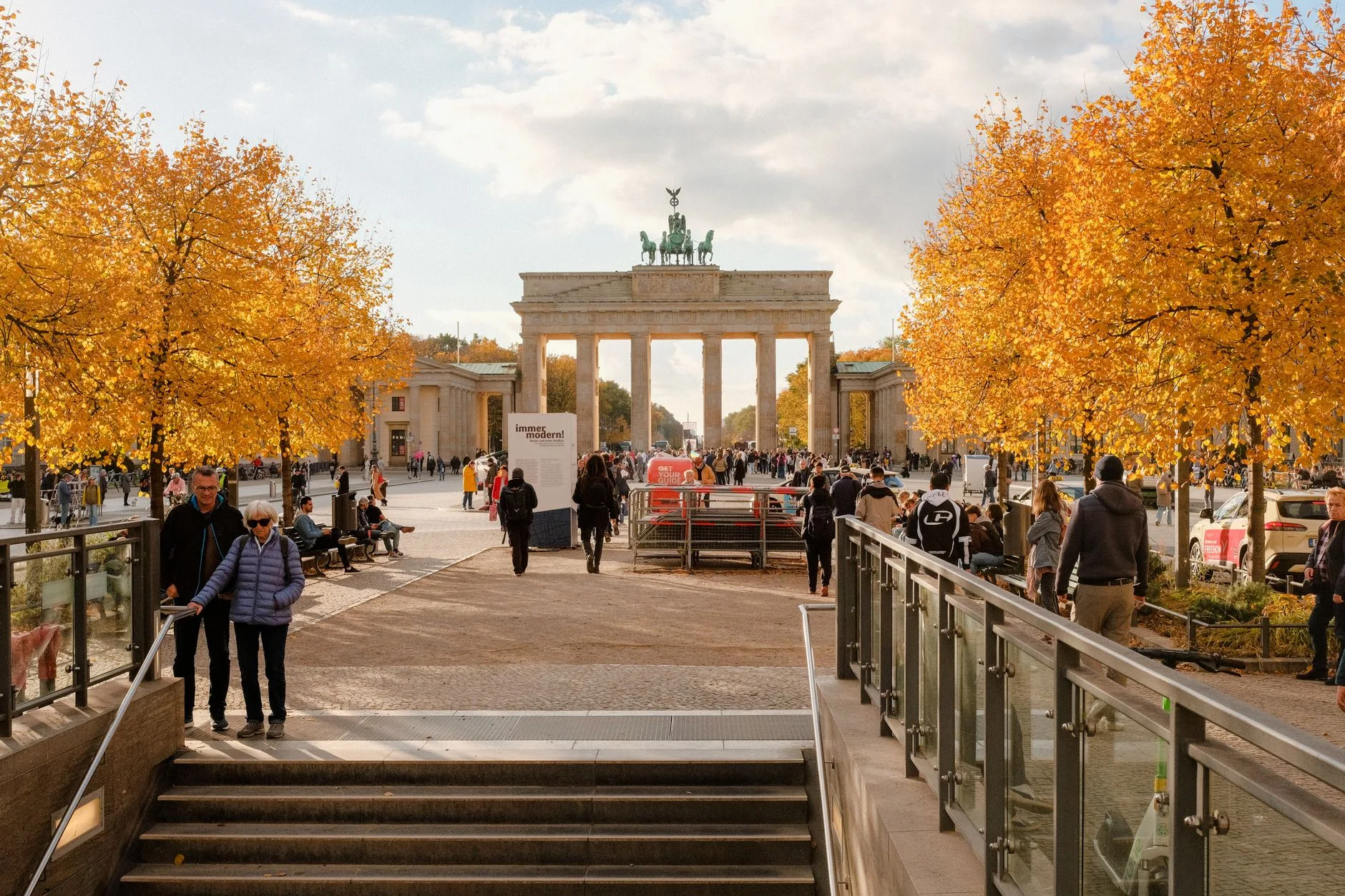
Discover Europe's cities in autumn without crowds. Architectural masterpieces and hidden gems for the culturally curious traveler.