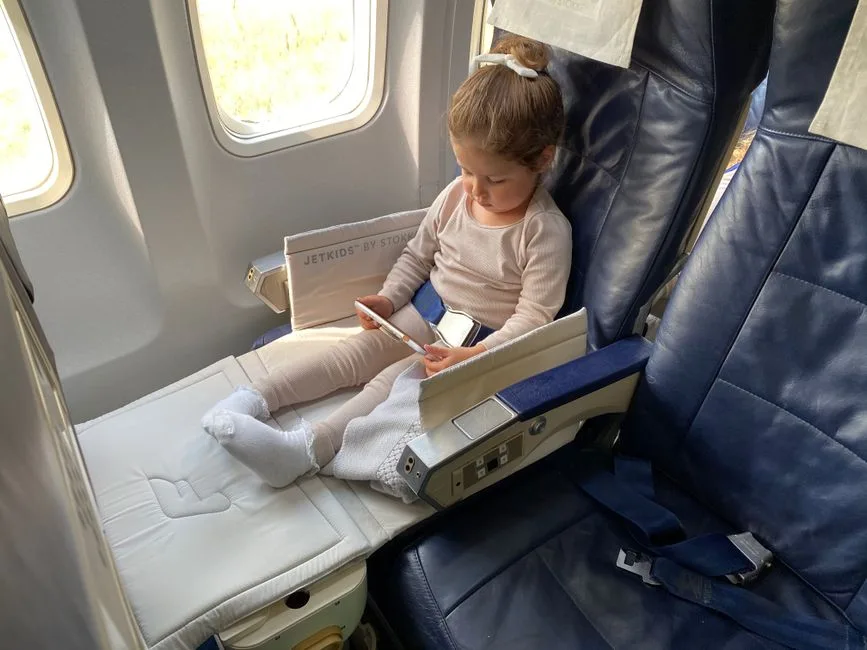
Managing Jet Lag With Kids: What Works
Jet lag doesn't have to derail family trips. With the right strategies for flight timing, light exposure, and sleep routines, families can manage time zone changes smoothly.
TravelFeelings Editorial Team
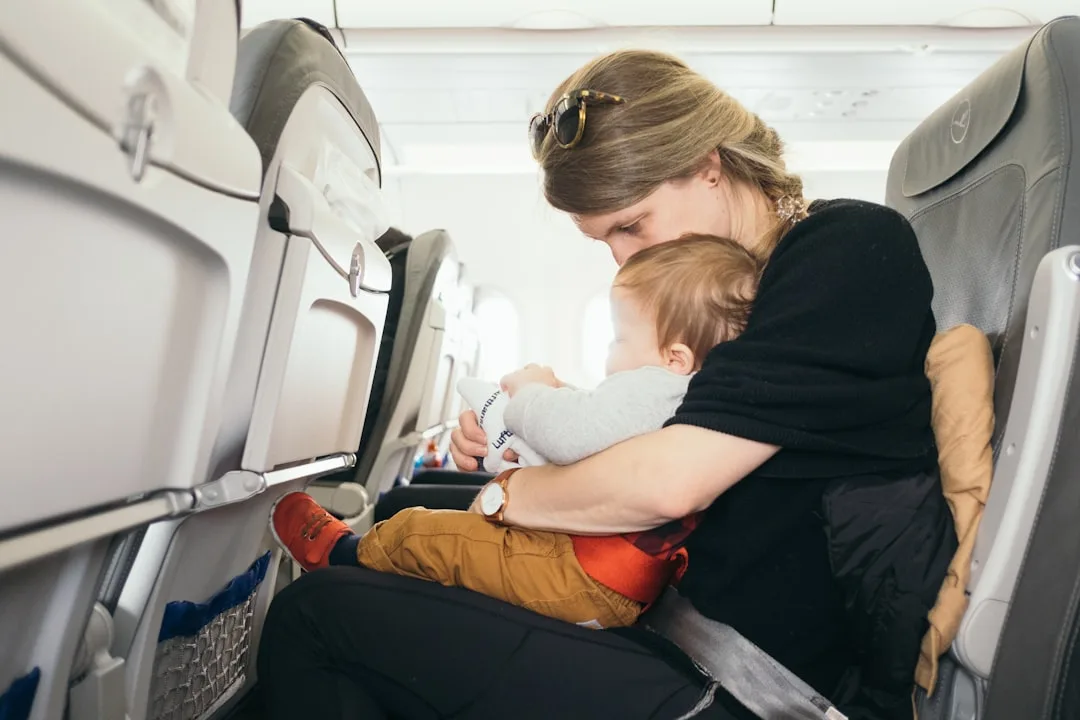
Four in the morning. The older child sits wide awake in the hotel bed, asking if it’s time for breakfast. The family landed less than 24 hours ago, and everyone is completely upside down. The younger one has slept in fragments: two hours, a nightmare at three, now back asleep. Every parent who’s crossed multiple time zones with kids knows this scenario.
The frustrating part is how unsolvable jet lag with children feels. But it isn’t. What looks like chaos actually follows biological logic—and once you understand it, you can work with it instead of against it. The goal is to make the symptoms significantly milder from the start. That’s the pattern that holds up across years of family travel through vastly different time zones.
How Jet Lag Actually Works
Our bodies follow an internal clock called the circadian rhythm. This clock tells our body when to sleep, when to activate certain hormones, when digestion should run smoothly—and it’s not based on clock time, but on light. Our brain registers light or darkness and thinks: “Ah, this is morning” or “This is night.”
In children, this system works exactly as it does in adults, sometimes even more rigidly. When a child flies from Frankfurt to Singapore, their internal clock doesn’t immediately recognize the shift. The body says: “It’s lunchtime here,” but the brain says, “No, it’s 3 a.m.” That’s jet lag — a genuine mismatch between the body’s clock and the environment’s time, more than ordinary tiredness.
The good news: This internal clock can be reset. And the more strategically you approach things before and after travel, the faster it happens.
Step 1: Choose Your Flight Time Wisely
This sounds basic, but it determines at least 50 percent of your success. And most people get it wrong.
When flying west with children (say, Europe to Central America), you’re gaining hours. An overnight flight is a blessing: your child sleeps during the flight if the time zone logic works out, and you land in the morning in an effectively dark city—time to sleep. Perfect.
Flying east is trickier. A flight from Frankfurt to Tokyo artificially stretches the day. Your child is trapped on the plane while the sun is still up. They’re supposed to sleep, but their body signals: “That’s still afternoon!” The result: thrashing around during the flight, arriving the next day, and the child hasn’t slept properly.
The trick is simple: eastbound flights work better if they arrive when it’s dark or getting dark. Westbound flights are best booked for evening departure so you can sleep during the flight.
Sometimes this means booking the more expensive flight times. But it’s worth it. Really.
Step 2: The Week Before Departure—Gradual Schedule Shifting
Instead of flipping your child’s entire rhythm on the day of departure, prepare them gently. It works surprisingly well.
Say you’re flying east across eight time zones. The internal clock needs to shift eight hours forward. A week before departure, start putting your child to bed 15 minutes earlier each day. Not dramatically, just subtly enough that they barely notice. After seven days, bedtime has shifted by about an hour and a half—a huge chunk of the necessary adjustment is already done.
For westbound flights, reverse it: push bedtime 15 minutes later each day. That way, your child doesn’t arrive completely scrambled.
This only works if your child has some flexibility. School-age kids (6, 7 and up) are fairly adaptable. Toddlers (2–5 years) can get stubborn if you push too aggressively. Here’s the rule: go easy, not forceful.
During the Flight: What Actually Helps
There’s less magic during the flight than travel guides often suggest, but a few practical measures do matter.
Make sure your child drinks plenty of water—cabin air is dry, and dehydration makes jet lag worse. Encourage your child to eat and sleep according to the destination’s time zone. If it’s midnight at your destination, try to get your child to sleep even if it’s midday back home.
The familiar blanket, the favorite stuffed animal, the regular pajamas—bring these things. They become anchor points for your child when everything else is strange.
And honestly: don’t try to make everything perfect. A child sitting in a plane for 14 hours will get restless. That’s okay. The point isn’t to keep them completely calm, but to eventually get them to sleep.
The First 72 Hours After Arrival: Where It Matters Most
The first three days after landing are the “golden adjustment window.” This is where most of the resynchronization happens—if you handle it right.
Sunlight is your best medicine — this cannot be overstated. If your child needs to sleep earlier (eastbound flight), they get maximum sunlight immediately after arrival: out of the hotel, a walk, a park, breakfast outside. Light tells the circadian rhythm: “Hey, morning is happening!” The body adjusts faster.
If your child needs to sleep later (westbound flight), be careful with morning sunlight. Darken the sleeping area deliberately—use blackout curtains.
Meal timing is underrated but important. Food is a secondary circadian rhythm regulator. If your child gets hungry at the destination’s local time, feed them—even if it’s completely different back home. The stomach will protest (“But it’s midnight!”), but it settles. Within two or three days, appetite works normally again—but only if you’re consistent about eating on local time.
Especially on the afternoon of arrival day, children should stay active. Yes, that sounds backwards when the child is exhausted. But a tired child who’s moving will regulate faster than a tired child sitting passively in the hotel room. Playground, walk, swimming—nothing extreme, just movement-rich.
If your child completely collapses, a 20–30 minute nap is fine. But a two-hour siesta at 3 p.m. will punish you at 2 a.m.—the child will be wide awake again.
The familiar sequence (bath, pajamas, bedtime story) stays the same—but you do it at the new bedtime. That gives your child stability in an otherwise chaotic situation.
Age-Appropriate Adjustments
Strategy depends on how old your child is.
There’s good news for infants from newborn to 2 months: they haven’t yet developed a circadian system and don’t experience real jet lag. They’ll seem out of sync, but that’s normal. What matters is patient parents.
Toddlers 2 to 5 years old are most vulnerable. The circadian rhythm is established, but emotionally they’re less flexible. Consistency is king: if you keep the light, food, and activity structure firm, adjustment goes faster — expect 5–7 days for full adjustment, no shortcuts.
School-age kids 6, 7 and up are the most adaptable and can even understand what’s happening (“Your body is getting used to a new time”). With clear structure and patience, they often adjust in 3–5 days.
What to Actually Expect
Honestly: the first night will be rough. You land, check in, and your child is either overtired and cranky—or unnaturally wired and ready to go all night. This is completely normal.
The rule of thumb says it takes roughly one day per time zone crossed to adjust fully. For an 8-hour difference, that realistically means 3 to 8 days before everything runs smoothly. Not sooner, not faster.
This matters for planning. If you take a week-long trip and spend three days managing jet lag, you have four days left for actual exploring. You have to accept that. Better destinations for short trips with kids are geographically closer (in the same time zone cluster).
The best thing you can do is patience. With yourself, with your child, with the situation. Jet lag isn’t failure, isn’t bad preparation—it’s biology. And biology takes time.
Patience Is Part of the Toolkit
Jet lag doesn’t have to wreck family travel. Careful flight-time selection, some pre-trip adjustment, and consistent handling of the first 72 hours speed up adaptation—and even an imperfect trip sorts itself out, because a few restless nights are normal and pass once the body re-synchronizes.
Traveling with kids is an adventure, and jet lag is part of it. With the right tools, it stays a manageable part.