Luxury Travel: Where Premium Actually Pays
Dubai, Paris, and Bali offer luxury, but their pricing logic differs vastly. We examine where premium truly delivers value.
TravelFeelings Editorial Team
The question that confronts every affluent traveler has shifted in recent years. It is no longer whether one can afford luxury, but whether one is spending it wisely. At a time when a hotel suite routinely costs between $227 and $682 per night, discernment becomes essential. Three destinations promise premium experiences. Their underlying economics, however, could scarcely differ more.
Bali: The Paradox of Becoming the World’s Top Destination
Bali officially claimed the title of the world’s most favored destination in 2026—a development that unsettles those who equate luxury exclusively with established Western cities. Yet this reveal something curious about contemporary premium travel: authentic, thoughtfully executed luxury at a fraction of European cost.
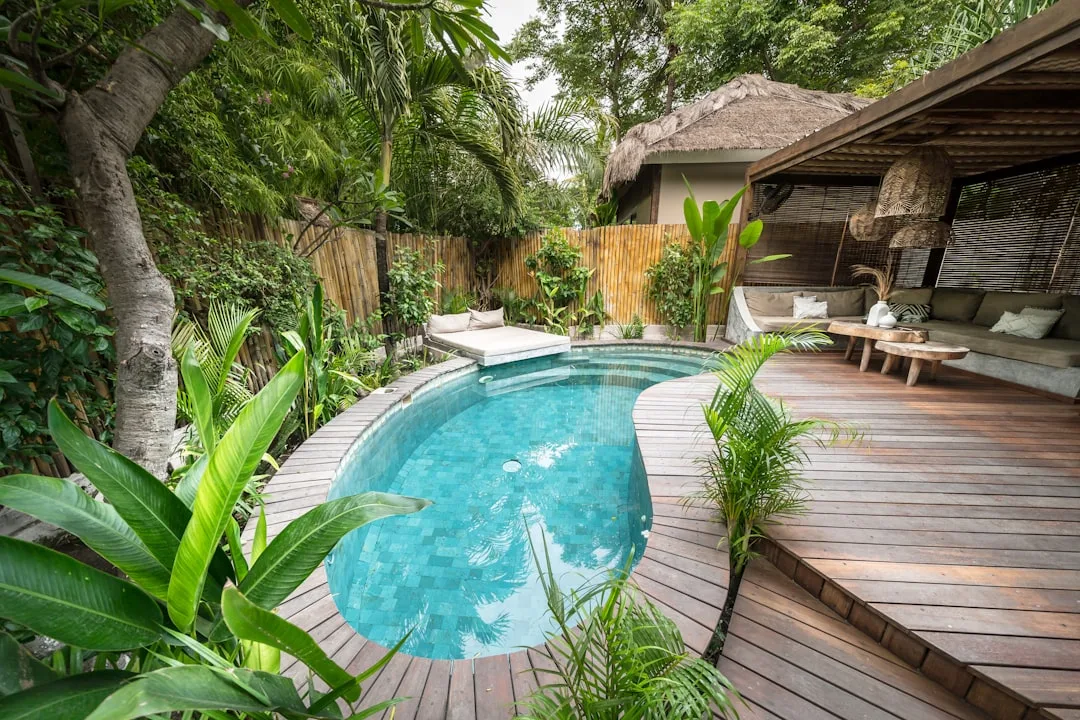
A five-star resort in Ubud averages $318 to $432 per night (approximately 5,050,000 to 6,860,000 IDR). These properties do not merely supply modern comfort alongside traditional Balinese architecture. They invest substantially in wellness programs grounded in actual local practice, not wellness theater. The general managers engage with guests substantively. Staff navigate the paradox of attentiveness without servility.
For couples willing to invest time, further sophistication emerges. Yoga at daybreak overlooking rice paddies, not in air-conditioned studios. Massage from practitioners with genuine training, not seasonal labor. Cuisine that respects local ingredients rather than attempting to “elevate” them through unnecessary refinement. This is less a question of budget allocation than of philosophy—and Bali grasps this philosophy while other destinations merely debate it.
Who belongs in Bali: Couples over 45 seeking authenticity without sacrificing comfort. Travelers who appreciate craftsmanship and occasionally choose genuine substance over ostentatious polish.
Dubai: The Business of Extremes
Dubai resists classification as a destination in the traditional sense. Dubai is a business model that has adopted the form of tourism. This is not criticism; it is observation. In 2025 alone, 5,000 additional hotel rooms entered the market. The Burj Al Arab, long the icon of Arabian luxury architecture, now competes against Atlantis The Royal, which opened in 2023 and accumulates superlatives—infinity pools, celebrity-chef restaurants—with institutional precision.
Pricing reflects rational economics. A room at Atlantis runs $352 to $442 per night (approximately 5,600,000 to 7,040,000 IDR). For this, one obtains not merely furnishings but a coherent experiential architecture. Every service shortfall is compensated with calibrated precision.
What outsiders underestimate: Dubai operates on arbitrage. The city delivers luxury experiences at internationally competitive prices because labor and operational costs remain substantially below European benchmarks. This merits respect, not dismissal. It is intelligent calculation.
For whom Dubai makes sense: Business travelers wanting luxury without calculation. Couples pairing shopping and gastronomic spectacle. Those for whom the hotel itself constitutes the destination, not merely lodging.
The critical question lingers: Do you travel to Dubai, or do you travel to an insulated environment that happens to be located in Dubai? More often, it is the latter—and that is residence in a constructed world, not a genuine journey.
Paris: The Premium of Context
Paris commands premium pricing. A four-star property—nothing palatial, no grand dame—costs $491 to $673 per night. Genuine luxury hotels—Ritz, Le Bristol, Peninsular—begin at $775 and ascend considerably.
Yet Paris is singular: these prices are historically justified. This is not inflation; it is tribute to centuries of architectural and culinary refinement. Dinner at a three-Michelin restaurant is not expensive because ingredients are rare; rather, the labor is rare. Masters of their discipline command compensation accordingly.
Herein lies the distinction between Dubai and Paris: Dubai markets the present moment. Paris markets continuity. One is operationally efficient; the other possesses substantive weight.
For couples or individual travelers valuing cultural depth: Paris justifies its expense. Realism is necessary, however—you pay for history, not superior linens. Linens are uniform at this price point; only the view across the Seine toward Notre-Dame is singular.
For whom Paris is suitable: Cultural travelers investing education expenses into geography. Individuals over 50 preferring chamber concerts to nightlife districts. Those for whom patina and context supersede contemporary design.
The Economics of Choice
The genuine question is not which destination charges most, but which delivers optimal value in relation to actual experience. Three logics emerge:
Bali offers superior price-to-quality ratios for those valuing authenticity and craftsmanship. Costs are moderate; quality is substantive. Two weeks including flight and accommodation costs well under $5,700 per person.
Dubai delivers reliability and operational certainty. You anticipate the experience; you receive it. Prices are internationally competitive if not modest. Suited for shorter stays—four to seven days—where immersive travel imposes unnecessary overhead.
Paris requires budgetary commitment; in exchange, it supplies cultural continuity unavailable elsewhere. Those understanding Paris as open-air museum plus cuisine squander nothing—they invest.
What distinguishes a worthwhile luxury stay from an expensive one? Not invoice total but whether each expense serves coherent purpose. In Bali, purpose is often subtle and technical. In Dubai, it is economic and scalable. In Paris, it is historical and intellectual. Select the logic that aligns with your own.