Michelin-Starred Restaurants: Booking, Costs, Planning
How to book the world's best Michelin-starred restaurants, what tasting menus cost, and which strategies actually work for reservations.
TravelFeelings Editorial Team
Michelin stars represent culinary excellence—yet for many travelers, the practical mechanics of access remain opaque. How do you secure a table at a three-star restaurant? Are the prices defensible? What separates genuine gourmet travel from mere status consumption? Here are the answers.
1. Understanding the Michelin System
Michelin awards stars with exacting criteria. One star denotes “very good cooking of its kind.” Two stars mean “worth a detour.” Three stars signify “worth a journey.” The judgment is reserved and precise, based on technique, consistency, and innovation.
The Michelin Guide 2026 for Germany lists 339 starred restaurants: 12 with three stars, 48 with two stars, and 279 with one star. This figure remains stable; Michelin does not inflate star distribution. That consistency is a mark of credibility.
Internationally, the map has shifted. Asia now rivals Europe in culinary prominence. Tokyo has more Michelin stars than the entire French Riviera. Contemporary gourmet travel no longer orbits Paris or Lyon—equally compelling food appears in Bangkok, Seoul, and Singapore.
2. Booking Strategies: Timing is Everything
Reservations at top restaurants are not spontaneous affairs. Leading establishments book 2–3 months in advance. The truly sought-after tables (Yoshino in Tokyo, Eleven Madison Park in New York) may require 4–6 months’ lead time.
Weekday lunches are easier to secure. Friday and Saturday dinner at 8 p.m. is impossible to obtain; Tuesday lunch often remains available. Simultaneously, serious restaurants serve identical menus at lunch and dinner—only cheaper.
Booking platforms are straightforward to use. Tock, Resy, and OpenTable dominate in North America and the UK. In Europe, OpenTable persists, but leading restaurants increasingly operate proprietary systems. Often, direct email to the restaurant’s reservation address remains most reliable.
The concierge route has advantages. Luxury hotels maintain relationships with restaurants inaccessible to the public market. A quality five-star hotel can orchestrate reservations that would otherwise be impossible. Hotels trade on their standing with restaurants to secure tables guests couldn’t get alone.
3. What Does a Michelin Menu Cost?
Pricing varies more than many assume. A one-star restaurant in German-speaking Europe costs roughly 60–100 USD for a three-course menu. Two stars run 120–180 USD. Three stars typically range from 200–350 USD, depending on location and tasting length.
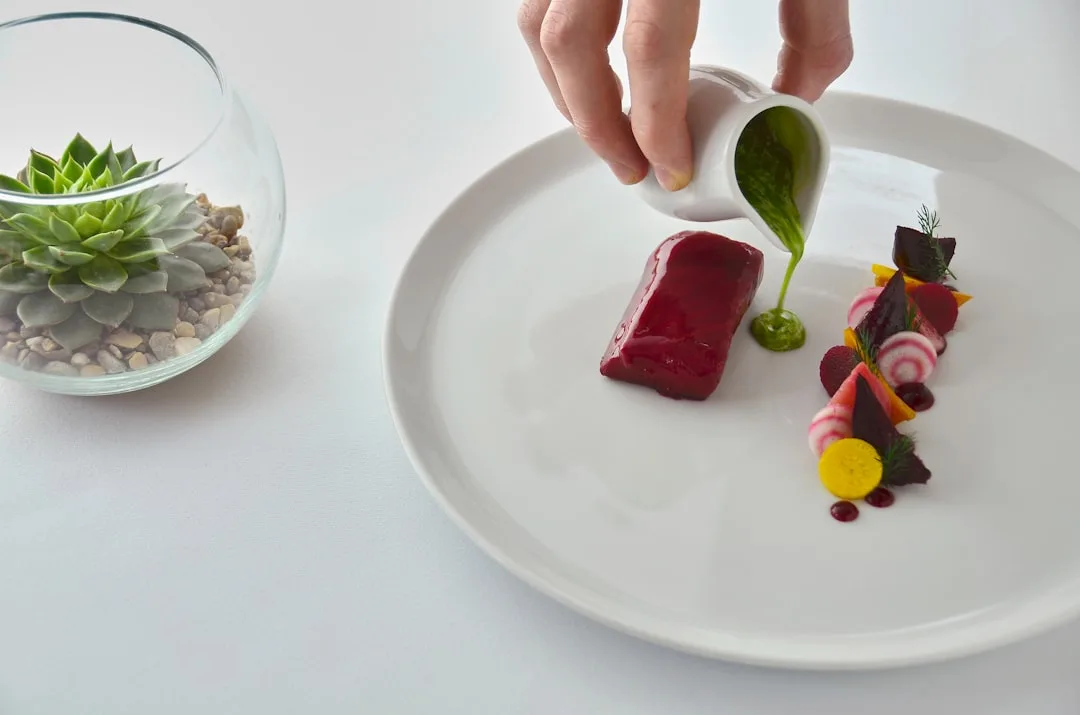
For perspective: an eight-course tasting at THE CLOUD by Käfer in Munich costs approximately 290 EUR (roughly $310 USD), excluding beverages. This is steep, but proportional to seven hours of orchestrated kitchen labor, thirty-plus staff coordination, and sourcing of rare ingredients.
Beverage pairings double the bill rapidly. Wine pairings at starred restaurants cost 80–150 USD additional. It is worth asking about water-only options without surcharge—not all restaurants offer them, but some do without penalty.
Internationally, prices vary by currency. A two-star restaurant in London runs roughly 180 GBP (approximately $225 USD), in New York $250 USD, in Tokyo 20,000 JPY (approximately $135 USD). This is the gourmet paradox: Asia is often cheaper than Europe despite identical caliber.
4. Choosing the Right Restaurant for You
Not every star suits every palate. Three-star restaurants work reductively—portions are modular, pacing is rapid, the menu is non-negotiable. If you require 2,000 calories nightly or prefer generous portions, this becomes frustrating.
A solid one- or two-star restaurant often proves more satisfying: substantial enough to feel complete, inventive enough to surprise, intimate enough to speak with the chef. Both warrant their stars, yet your experience will differ fundamentally.
The restaurant’s philosophy matters more than its star count. A two-star focused on terroir and regional sourcing (say, a restaurant on the Loire) operates differently than an experimental three-star (Noma before closure). Both merit recognition; your evening will differ.
Favor critical voices over fan reviews. A measured critic writes: “Of fourteen courses, nine are genuinely excellent, five feel contrived.” This is more useful than “LIFE-CHANGING!!!“.
5. Practical Dining Etiquette
Dietary needs should be communicated early. A serious restaurant accommodates vegetarian or allergen-free menus—only if flagged at the time of booking, ideally days in advance.
Punctuality matters. A fine dining restaurant operates with precision timing. Fifteen minutes’ tardiness disrupts the kitchen’s choreography for the entire evening. Some restaurants hold reservations for only fifteen minutes.
On dress code: “Smart casual” is now the standard, replacing formal coat and tie. Clean shirt, good shoes. Jeans and sneakers are not acceptable; a tuxedo is unnecessary.
The menu can sometimes be negotiated. Many three-star restaurants serve a fixed tasting. Some offer shorter versions. Ask politely and practically.
Gratuity customs vary regionally. In German-speaking regions, 10% is customary at fine dining. In France and the US, it is often included; check the menu. In Japan, tipping is unwelcome.
6. Planning a Gourmet Journey
A diet of fine dining becomes tedious quickly. A sensible model is 2–3 starred dinners weekly, supplemented with quality hotel cuisine and occasional meals at skilled, unstarred neighborhood restaurants.
Focus on destinations with culinary depth. Paris is canonical, but Bern, Lyon, Augsburg, and Stuttgart host surprisingly dense starred scenes. Barcelona and San Sebastián are unmatched for Spanish cuisine. Copenhagen excels in Nordic-experimental work.
The finest gourmet journey is the one where you understand a region’s culinary logic—why Marseille dominates in fish, why the Black Forest claims mushroom and game. That is context — the real substance.
7. Is a Michelin Star Worth the Journey?
Honestly: for some, yes. For others, no. A three-star restaurant is unquestionably masterful—but demanding. Eight courses across two hours, where every bite is considered, where surprise is an engineering goal. This delivers culinary intensity that demands attentive engagement.
Better is balance: one or two starred experiences, paired with regional, honest food. This is more durable, more fulfilling, and generates better memories than collecting checkmarks.