Guide
Altitude Acclimatization: Safe Alpine Trekking Strategy
Master altitude acclimatization, prevent mountain sickness, and safely summit alpine peaks with proven strategies.
TravelFeelings Editorial Team12 min.
Austria · Central Alps
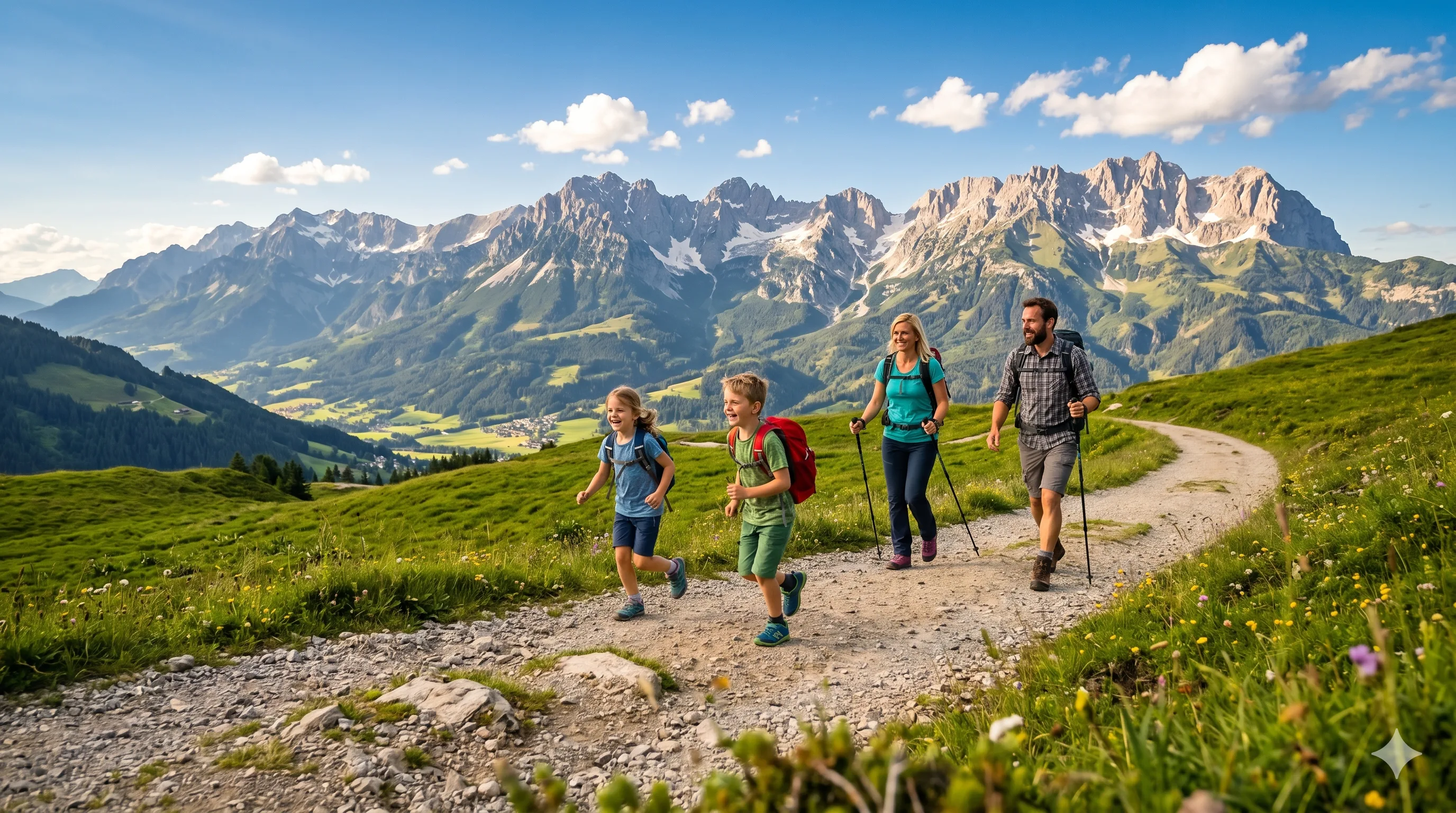
Tyrol is an ideal family vacation destination in the Alps, combining world-class winter sports, safe hiking trails, and authentic alpine culture. Planning a family trip requires understanding mountain weather patterns, alpine etiquette, and genuine high-altitude conditions—but families find Tyrol exceptionally rewarding.
Innsbruck is the regional capital and logistical hub. The Golden Roof (Goldenes Dachl) — a gilded copper roof dating to 1494 — serves as the city symbol. The Nordkette cable car ascends from downtown to 2,256 meters in 20 minutes, offering views across the Ötztal and Stubaier Glacier. Schloss Ambras is a Renaissance castle housing art and armor collections (admission $12, approx. €11). The city center is walkable in two hours. Tyrol is a classic family travel destination—the blend of cultural landmarks and alpine safety makes the region ideal for diverse travel types.
The Ötztal extends 65 kilometers as Tyrol’s longest side valley. Sölden functions as its tourism center with over 140 kilometers of ski slopes. Obergurgl, at 2,000 meters, ranks as Austria’s highest inhabited settlement. Wildspitze (3,768 m) is Tyrol’s highest peak. The valley attracts intense winter crowds but offers excellent summer hiking. Day trip from Innsbruck: 1.5 hours by car.
The Zillertal is dominated by Mayrhofen, a modern ski resort with 135 kilometers of slopes. The Zillertal Ridge Trail is a legendary three-day walking route connecting alpine huts. The “4 Alms March” is a popular multi-hour summer hike based in Hochfügen. Getting there: 1 hour from Innsbruck by train (ÖBB).
Kitzbühel is famous worldwide for the Hahnenkamm downhill race “Streif” (World Cup event in January). Its medieval Old Town features narrow lanes and half-timbered buildings. Summer transforms Kitzbühel into a hiking hub, with Kitzbüheler Horn (1,998 m) as the signature destination. Travel time: 2 hours from Innsbruck.
Lake Achensee is Tyrol’s largest lake (10 kilometers long) at 927 meters elevation. Portions of the shoreline are publicly accessible with beaches near Buchau and Maurach. Active sailing areas offer boat rentals. Ferry boats connect multiple lakeshore towns (circuit trips about $16, approx. €15). Summer water temperatures (18–20°C) allow swimming. Access: 45 minutes from Innsbruck by car or train to Jenbach, then cable car to the lake.
Stubaier Glacier is Austria’s only year-round ski area, featuring a scenic mountain road to 3,210 meters—Europe’s highest continuous driving route. Summer activities emphasize alpine experiences over skiing (glacier trekking, hiking). Access: 45 minutes from Innsbruck to Stubai Valley.
Ötztal to Pitztal: The Pitztal is a parallel valley with less tourism than its neighbor. Vent serves as the highest settlement with extensive hiking networks. Travel time: 2 hours from the Ötztal over the Timmelsjoch Pass (toll about $11, approx. €10). Note: Pass often closed in winter.
Zillertal Ridge Road: A winding mountain route connecting different alpine regions. This panoramic drive operates at leisurely pace, ideal for photo stops. Duration: 3–4 hours (65 km). Several alpine restaurants serve local cuisine.
Stubaier Glacier from Innsbruck: 45-minute drive. The mountain road reaches 3,210 meters, enabling alpine hikes without mountaineering experience. Round-trip ticket: about $52 (approx. €48, 2026).
Zillertal Alps Trail: A multi-hour or multi-day hiking route following alpine huts (overnight accommodations available). Starting point: Mayrhofen. Difficulty: moderate to challenging. Flexible as complete 2–3-day trek or individual sections.
Seefeld Plateau: A level highland at 1,200 meters with walking trails and local character (known for cross-country skiing in winter). Travel time: 1.5 hours from Innsbruck via the Brenner Autobahn.
Alpbach is a small mountain village in Tyrolean Unterland, elected “most beautiful Alpine town” in 1983. Motor traffic is largely prohibited in the village core—replaced by walking paths and traditional timber architecture. No mass tourism, instead authentic country inns with local cooking. Access: 1 hour from Innsbruck; park at the top and walk down.
Villgraten Valley is a side valley of the Puster Valley in East Tyrol’s Hochpustertal, tucked into the Villgraten Alps. Its two communities, Innervillgraten and Außervillgraten, have long committed to gentle tourism, with no large hotel complexes and no ski lifts. The valley is one of Austria’s official mountaineering villages (Bergsteigerdörfer) and among the most unspoiled corners of the Eastern Alps. Summer brings hiking across alpine pastures; winter offers ski touring and snowshoeing without lifts. Travel: roughly 2.5 hours from Innsbruck via the Felbertauern tunnel.
Zillertal High Valley: The upper Zillertal region beyond Mayrhofen receives fewer tourists. The valley fragments into side valleys (Zemmtal, Floitertal) leading to serious mountain destinations. Access by foot or mountain shuttle.
Stubaital Side Valleys: Stubaital hosts multiple side valleys (Elfertal, Habachtal) that remain relatively unknown yet offer alpine solitude. Ideal staging points for multi-day mountain treks.
Tyrol splits between two tourism peaks: winter and high summer. December through March is ski season. Snow is reliable above 800 meters, persistent at higher elevations (1,500+ m). Daytime valley temperatures reach -2 to +4°C; nights drop to -4 to -8°C. January and February offer the most reliable snow but also peak crowds. March can be unstable, alternating between snow and thaw.
July and August are the prime hiking months. Valley temperatures range 20–25°C with cooler conditions at altitude. Mountain passes are snow-free. However, mid-July to early August brings peak tourism and higher costs. Alternatives: June or September for smaller crowds and acceptable conditions.
September and October offer pleasant autumn weather (10–20°C in valleys) with fewer visitors than summer. However, snowfall can arrive in higher elevations from mid-October. April, May, and November are transitional months with unpredictable weather, temperature swings, and unreliable mountain conditions.
| Jan | Feb | Mar | Apr | May | Jun | Jul | Aug | Sep | Oct | Nov | Dec |
|---|---|---|---|---|---|---|---|---|---|---|---|
| Peak | Peak | Sweet Spot | Sweet Spot | Sweet Spot | Peak | Peak | Peak | Sweet Spot | Sweet Spot | Low | Peak |
2° -4° | 4° -3° | 9° 0° | 14° 4° | 19° 9° | 23° 13° | 25° 15° | 24° 14° | 20° 11° | 14° 7° | 8° 3° | 2° -2° |
Traditional dress and customs: Lederhosen and dirndls are everyday wear in Tyrol, not tourist costumes. Festival and Sunday dress remains an active cultural practice. Note: Tourist versions (colorful, minimal cut) differ from authentic regional dress (dark, intricate tailoring). Respect authentic dress as cultural expression, not costume.
Yodeling and brass music: Yodeling is not extinct but living dance music in alpine huts and country inns. Brass ensembles perform regularly at local festivals. Concerts are free or very inexpensive.
Alpine culture and dairy farming: Tyrol’s economy centers on alpine dairy farming—summer livestock grazing at high elevations. Alpine huts are functioning farms, not theme parks. Respect herds, avoid electric fences, stay on marked paths.
Church visits: Sunday services (9:00–10:00 AM) function as cultural gathering places. Visitors are welcome but quiet conduct and modest dress (covered shoulders) are expected. Photography inside churches is typically prohibited.
Greetings and politeness: “Grüß Gott” is the standard greeting, not religious. “Sie” (formal you) is universal, even among young people. Handshakes are standard. Direct, matter-of-fact communication is valued; small talk is less common than in other regions.
Dumpling culture: Dumplings function as a distinct main course category, not a side dish. Spinach, cheese, potato, and meat dumplings are local staples. Restaurants serve them with sauerkraut or sauce. Vegetarian options are standard. Pricing: $9–13 (approx. €8–12) in simple country inns, $16–19 (approx. €15–18) in tourist restaurants.
Mountain hikes without weather forecasts: Tyrolean mountain conditions change in minutes. Lightning strikes frequently; thunderstorms develop rapidly. Rule: return to the valley before 2:00 PM. Check daily mountain forecasts before any tour—use alpine weather apps like ZAMG (Austrian Weather Service).
Off-piste skiing without avalanche training: Avalanches kill dozens annually across Austria, with the majority of incidents concentrated in Tyrol during ski season. Off-piste skiing is not for beginners or those unfamiliar with current avalanche conditions. Avalanche airbags and buried-person locators (LVS devices) are standard safety equipment, not luxury items.
Driving without winter tires November through April: Legal requirement in Austria. Fines start at $550 (approx. €500), substantially higher if an accident occurs. Mountain passes often require chains even with winter tires installed. Carry chains in your car regardless of weather forecasts.
Entering protected areas: Tyrol designates many protected alpine flora zones. Orchid sanctuaries are clearly marked. Straying into protected areas incurs fines from $54–540 (approx. €50–500).
Noise in mountain villages after 10:00 PM: Quiet hours are taken seriously. Parties, loud music, and noisy driving violate local norms. In alpine huts, complaints from other guests can result in eviction.
Swimming in whitewater rivers without experience: Tyrolean rivers (Zillerbach, Ötzbach) feature strong currents and underwater eddies. Tourists drown annually in apparently calm waters. Swim only in designated beach areas.
Public transport is comprehensive. ÖBB (Austrian Federal Railways) connects all major towns; single tickets start at $5.40 (approx. €5, Innsbruck to Sölden about $19, approx. €18). The regional transport union (TVB) offers an “Alpine Pass” ticket (7 days about $49, approx. €45) providing unlimited train and bus travel across the region—economical if visiting multiple valleys.
Buses serve mountain villages daily; schedules are reliable. Winter weather can close mountain routes temporarily. Information available at tirol.at or local tourist offices.
Innsbruck has an international airport (INN) with flights from Berlin, Munich, Frankfurt, and Amsterdam. Alternative: Munich Airport (2 hours’ drive to the Ötztal via Brenner Autobahn).
Rental cars are necessary for remote valleys. Expect $43–65 per day (approx. €40–60). Important: All mountain passes require vignettes (highway stickers)—10-day vignettes cost $13.50 (approx. €12.50, 2026), two-month vignettes $39.50 (approx. €36.50). Purchase at gas stations or online. Driving without one incurs fines from $130 (approx. €120).
Driving rules: Speed limits are 100 km/h on regional roads, 50 km/h in towns. Radar detectors are illegal. Alcohol limit: 0.5% blood alcohol (0.1% for drivers under 20). Hands-free phones required; hand-held calls are prohibited.
Winter tires are mandatory November through April. Chains: Certain zones (Brenner Pass during critical periods) require chains as safety equipment. Not all cars have chain attachment points—verify before traveling or purchase chains separately. Tips on hiking and outdoor activities plus mountain driving appear in specialized guides.
Taxis are expensive ($5.40 pickup fee, then about $2.16 per kilometer, approx. €2). Taxi apps exist but are less dense than in German cities.
Parking: Central Innsbruck has few free spaces. Underground garages cost $2–4 per hour (approx. €2–4). Outside the city, parking is mostly free.
German citizens (and other EU/EEA residents) require valid ID cards or passports. ID cards expired up to one year ago are acceptable. Passports must be valid.
Children: Children’s travel documents or entries in parental passports are acceptable. Birth certificates are not required.
Entry is unlimited for EU citizens—no visa or residence permit necessary. Border controls follow Schengen standards (no passport checks at the border, though checks are possible).
Customs: Standard EU regulations apply (200 cigarettes, 1 liter of spirits, 2 liters of wine). Pets: EU pet passport with microchip and current rabies vaccination required.
Vehicle rules: The Green Card (international motor insurance) is mandatory for non-Austrian vehicles. German insurance typically covers Austria as standard.
Tolls and vignettes: As described above. The Brenner Autobahn (A13) requires a vignette. Stickers display on the windshield inside; validity is marked by color coding (2026 = red).
Returning to Germany: No COVID tests or quarantine required since April 2023. Standard entry regulations apply.
No mandatory vaccinations for Tyrol/Austria. The Austrian health authority publicly recommends:
Altitude sickness is possible above 2,000 meters, especially with rapid ascent. Headache, nausea, and sleep disruption are symptoms. Remedies: gradual ascent (over 2–3 days), ample water intake, and sugary beverages (glucose plus caffeine helps). Severe cases require descent to lower elevations. “Diamox” (acetazolamide) is a preventive option requiring prescription.
Tap water is drinkable everywhere—alpine spring water quality is universal. Waterborne stomach issues are very rare.
Emergency rescue: Austria operates helicopter mountain rescue services. Call 112 (international standard) or 140 (mountain rescue) in emergencies. Rescue costs are often insurance-covered, though deductibles apply. Travel insurance with mountain emergency coverage is strongly recommended (about $22–32, approx. €20–30 extra).
Medical care: Austria provides excellent hospitals. Innsbruck University Hospital leads alpine emergency medicine. Pharmacies are ubiquitous; many medications are over-the-counter (acetaminophen, ibuprofen). German prescriptions are recognized.
Security and crime: Tyrol is exceptionally safe. Pickpocketing occurs occasionally in Innsbruck or heavily touristed areas (Ötztal, Zillertal). Violent crime is rare. Solo travel in tourist areas after dark is completely normal. Nightlife: Public transport runs until 1:00 AM in Innsbruck; thereafter, use taxis. Mountain villages have no late-night transit—plan ahead with car or taxi services. Austria offers notably high safety standards among European luxury travel destinations.
Master altitude acclimatization, prevent mountain sickness, and safely summit alpine peaks with proven strategies.
Discover underrated European family destinations away from tourist crowds—with practical tips for school holidays, budgets, and mixed ages.
How to travel with teenagers without everyone hitting the breaking point – strategies for shared moments and necessary independence.
Practical tips for calm flights with kids — from seat selection strategies to proven entertainment and snacks.