Best Local Markets Worldwide: Foodie Guide
From Marrakech to Bangkok – the culinary heartlands of the world where craft, continuity, and authentic food culture reveal themselves.
TravelFeelings Editorial Team
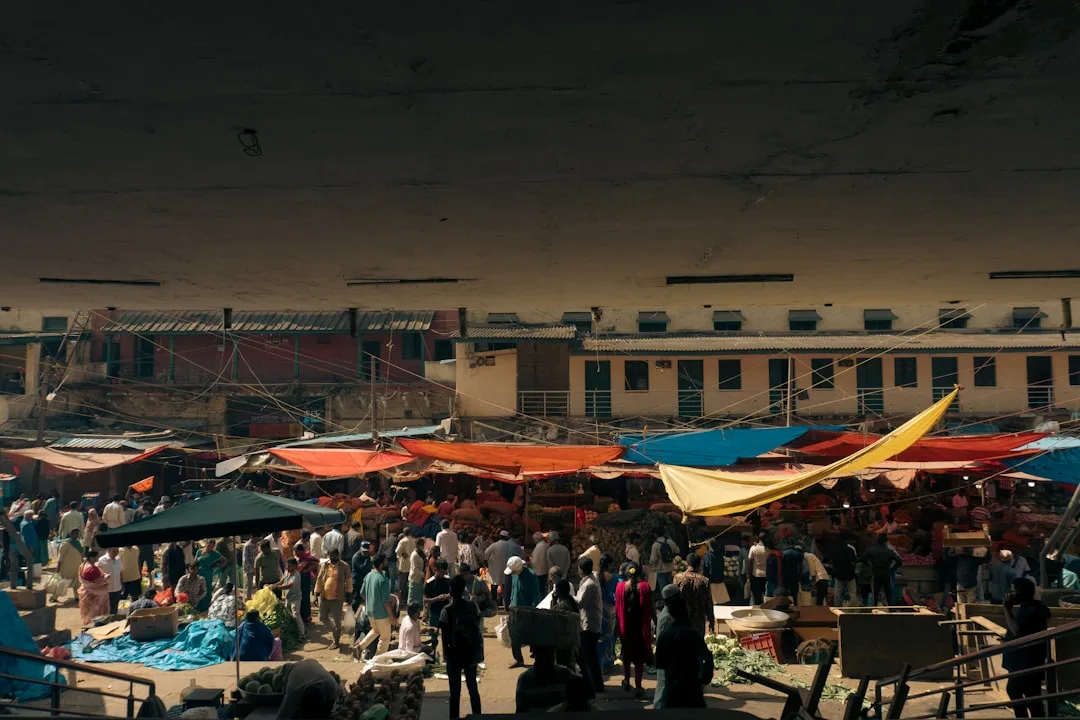
Stand for the first time in a major local market, and you’ll understand why no restaurant guide, no blog, no travel book can describe these places as well as the places themselves. A market is not simply a shopping venue – it is a cultural archive, a place where craft reveals itself and regional identity is lived. The way an orange smells, how the cheese carries its scent, how quickly the vendor folds her gozleme – these are the details that tell a region’s story.
In 2026, culinary travel experiences a boom without precedent. Eighty-one percent of modern travelers now prioritize food as a central motivation for their journeys, and the global culinary tourism market grows at 19 to 23 percent annually. Those who take this seriously cannot avoid visiting local markets. This is not a trend toward Instagram exoticism, but honest interest in genuine craft and lived continuity.
Morocco: Jemaa el-Fnaa in Marrakech
Whoever has wandered through the narrow lanes toward Jemaa el-Fnaa on a late afternoon knows how anticipation builds. The square holds UNESCO World Heritage status, yet that label means nothing against reality: here, generations of market vendors have mastered their handwork, and each evening the same transformation repeats itself.
At sunset, the plaza becomes an open tavern. Dozens of stalls set up tables and stools, grill lamb over open flames, serve tagines that have simmered for hours with a tiny flame beneath the ceramic pot. The texture of the meat fibers reveals hours of patient heat. The taste is concentrated, spiced, without aggressive burn – this is the craft of sauce development through slow dissolution of meat into broth.
The morning differs: fresh juices from oranges and pomegranates, peppers, onions, cilantro. Merchants know each other for decades, and each stall specializes. What you rarely hear is the word “standard” – each vendor makes her amlou paste (peanut butter with honey and argan oil) slightly differently, because tradition does not mean standstill but living adaptation.
Thailand: Chatuchak and Or Tor Kor in Bangkok
The Chatuchak Weekend Market is the world’s largest open-air market: over 15,000 stalls, 27,000 square meters, a labyrinth of wooden scaffolding, plastic tarps and sound. Pad Thai here is not the elegant dish from fine restaurants but the original – quickly fried in large woks, texture crispy-soft, sauce balancing acid, sugar, and fish sauce in a moment of complete simplicity.
Or Tor Kor Market is the countermovement, the elegant brother: clean, well-lit, premium produce under constant quality control. Here products are not simply sold but standards are preserved. This is continuity showing that not all modern markets descend into chaos.
What Bangkok reveals is the complex relationship between authenticity and standardization. The finest hawker markets of Southeast Asia are living arteries of local food culture – not romanticized but functional, quick, affordable, and craftsmanship-level high. A plate of Pad Thai for $0.50 is possible because the cook makes hundreds of portions daily while bringing full attention to each one.
Spain: Mercado Central in Valencia and La Boqueria in Barcelona
Valencia built its market hall in 1928, during a time when modernism was still a revolutionary idea. That is the patina showing: not all old things are better, but those that survived 98 years knew something. Light falls through glass cupolas into the hall; the architecture carries its significance visibly. Jamón Ibérico hangs in layers; the cut shows fine marbling – this is feeding and time combined. Oil from southern Spain does not smell like a single fruit but like the climate itself: green-bitter with green pepper and freshness.
La Boqueria in Barcelona has existed since the 13th century, renamed, enlarged, modernized – yet: each stall carries its character, and the energy remains unbroken. Here you buy ingredients, but you also observe how others shop, speak with vendors, witness how local chefs purchase. This is food tourism with substance.
Turkey, Japan, United Kingdom
The Grand Bazaar of Istanbul with its 4,000 shops across 61 streets is craft squared. Spices sorted not merely by taste but by origin: saffron from Iran, black nigella seeds from Turkey, dried herbs arranged by air humidity. The piles on the tables are not random – this is arrangement, a subtle form of sales craft.
Tsukiji Outer Market in Tokyo reveals a philosophy familiar also from Emilia-Romagna: perfection through repetition. Fish is cut for the fifth time that day, each cut identical, each cut precise. This is sushi not as artwork but as craft that achieves artwork-quality through consistency.
Borough Market in London is the counterpoint to grand tourist spectacle – it is manageable but intense. Cheesemongers come from Wiltshire, charcuterie specialists from Spain, oysters arrive from the same grower for twenty years. Continuity reveals itself in the fact that some stalls have been family-run for three generations.
Pike Place in Seattle and Beyond
Pike Place Market stands as America’s oldest continuously operating farmers market, a living testament to how local markets adapt and persist. Here the rhythm is different – less theater, more transaction – yet the quality principle holds firm. Farmers know their regulars by name. Fishmongers still toss their catch by hand. The coffee roasters have been experimenting with the same beans for decades, chasing extraction not as trendy craft but as genuine pursuit of consistency.
Other remarkable markets tell parallel stories. Mercato di Testaccio in Rome serves suppli al telefono, that perfect ball of fried rice with melted mozzarella inside. Queen Victoria Market in Melbourne offers a cross-section of immigrant produce – Vietnamese herbs beside Italian vegetables. Ferry Building Marketplace in San Francisco channels the artisanal food movement while remaining genuinely rooted in regional agriculture.
The Principles Underneath
What all great markets share is a fundamental truth: here selling happens not at distance but directly. Cheese is handled, fish is described, oil is tasted. These direct relationships – between seller and buyer, between producer and market – are the scaffolding upon which regional food culture stands.
Those embarking on food-focused travel will discover that genuine experiences do not happen in expensive cooking classes but where locals shop. A plate of suppli eaten standing in Testaccio, or a bowl of pho from a street vendor in Hanoi, delivers deeper cultural understanding than a guided food tour hitting three restaurants.
Markets like Mahane Yehuda in Jerusalem with over 250 vendors, Bazurto in Cartagena with exotic fruits and fresh seafood, or Marché des Enfants Rouges in Paris with its diverse food cultures – all tell the same story: that genuine food culture is lived, not merely theorized.
When You Visit a Market
Arrive early – not for the best selection (that is myth) but because the energy differs. Speak with vendors, take time with questions, buy small amounts from different stalls. Often the real discovery comes from combining products, not testing single items in isolation.
Recognize that markets are often the last places where regional food culture truly lives. Supermarkets have won efficiency, but markets preserved something else: the direct transmission of knowledge, the personal relationship between producer and consumer, the patina of craft and time.
The finest culinary journey is not one concentrating on high cuisine but one understanding that genuine food culture emerges from such places – from repetition, from craft, from the lived continuity of a hand gesture already mastered by generations before us.