Carbon Footprint of Travel: Flights vs. Trains vs. Cars
How much CO₂ does your travel really emit? A data-driven comparison of aviation, rail, and car transport—plus what offsetting actually can and cannot do.
TravelFeelings Editorial Team
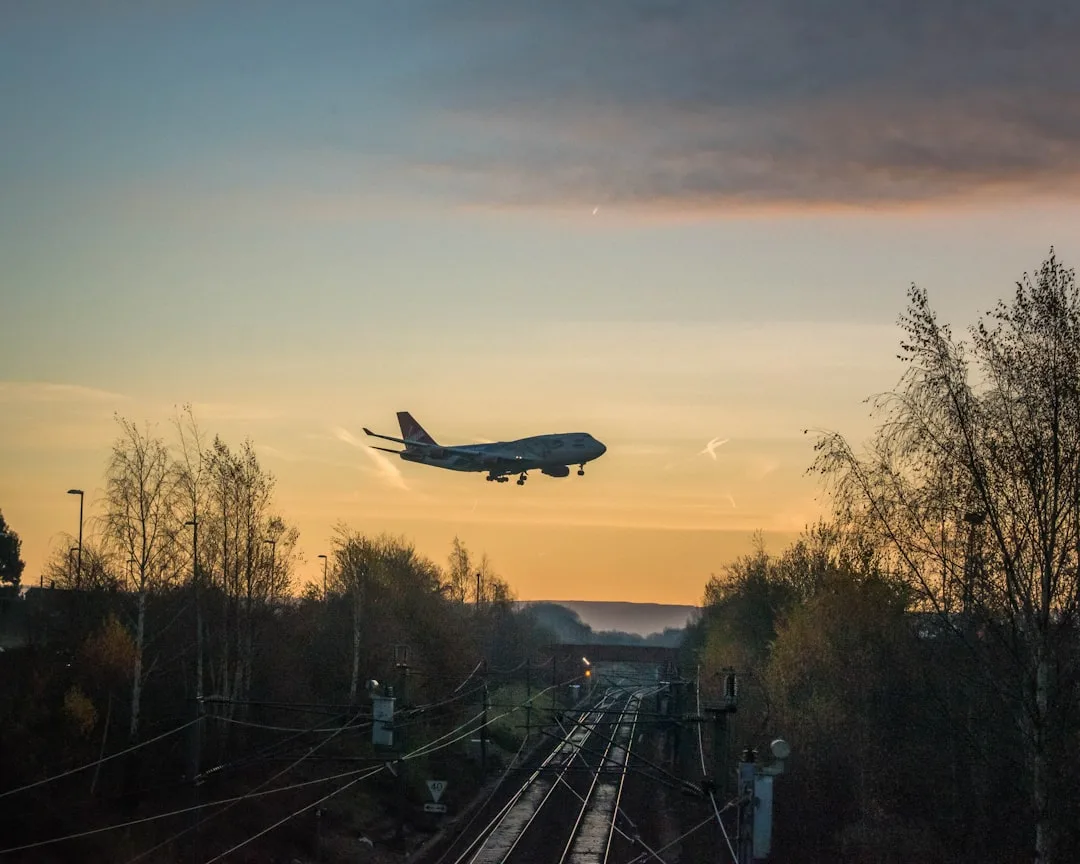
Anyone who takes air travel seriously eventually hits a sobering fact: a flight from Berlin to Nice emits 307 kilograms of CO₂ per person. The same journey by train would produce roughly 30 kilograms. The math is blunt—flying releases ten times more emissions than rail. Yet most travelers don’t know this when they book. What makes aviation so carbon-intensive? How reliable are these calculations? And can offsetting actually help?
The Raw Data: Grams per Kilometer
Let’s start with the science. The UK’s Department for Energy Security and Net Zero measures greenhouse gases per person per kilometer, expressed in CO₂ equivalents:
- Train: 35 g CO₂eq/km
- Electric vehicle: roughly 50–100 g CO₂eq/km, depending on the grid’s power mix
- Gasoline car: 170 g CO₂eq/km
- Short-haul flight (up to roughly 480 km): 154 g CO₂eq/km
- Domestic flight: 246 g CO₂eq/km
- Eurostar (London–Paris–Brussels): 4 g CO₂eq/km
These figures are instructive but immediately raise questions. Why does train travel vary so much regionally? Why does flight emissions range so widely depending on distance? The answer lies in factors that textbook comparisons often miss.
The Hidden Variables
The numbers look clean but are messier in practice. Several factors shape the real picture.
The altitude effect and RFI: Aircraft emit more than CO₂. At cruise altitude, they release nitrogen oxides, aerosol particles, and water vapor. These gases act as a multiplier on climate impact—what scientists call the Radiative Forcing Index, or RFI. Research suggests that the total warming effect is 2 to 3 times higher than CO₂ calculations alone. This explains why aviation features so prominently in climate debates: the sheer volume of CO₂ is already high, and the altitude effects amplify it.
Electricity sources and grid mix: Germany’s national rail operator uses roughly 60 percent renewable electricity in long-distance service—a real improvement. But only 60 percent of German rail lines are electrified. Diesel trains on regional routes have much higher emissions. Similarly, flight efficiency varies by airline, aircraft age, and maintenance standards. There’s no universal formula.
Load factors and capacity: A tour bus with 50 seats and 5 passengers is expensive per person. The same bus with 45 passengers becomes an efficiency engine. Research shows that modern coach services often outperform trains on environmental metrics because passenger load is consistently higher. Aircraft are well-loaded—150 to 400 people per flight—but trains can carry 500 or more. The most efficient transport is often a full train.
The Economics Shift: Why More People Could Take the Train
Here’s a hopeful trend: trains are becoming economically competitive with flights. In 2023, rail was cheaper than flying on only 27 percent of major European routes. By 2025, that figure had risen to 41 percent. Better rail infrastructure in Germany, Scandinavia, and Central Europe plays a role. So does the fact that budget airlines operate through fewer hubs, reducing point-to-point flight options. In other words, the shift to rail is becoming financially sensible on top of its environmental case.
The Offset Paradox
Here’s where it gets uncomfortable. Most airlines now offer carbon offsetting at checkout. Pay a small surcharge, and your flight gets “balanced” by a project somewhere else—reforestation, solar installations, methane avoidance. It sounds elegant in theory, but the practice is fraught with problems.
The voluntary carbon offset market operates entirely without regulation. The German eco-think tank Oeko-Institut estimates that many certificates have no measurable climate benefit and amount to greenwashing. The problems are structural.
Additionality: A solid offset project should not have happened anyway. If a solar farm in India was going to be built regardless, then claiming its CO₂ reduction as an offset is double-counting. Many credits fail this test.
Permanence: A reforested area can burn. A wetland protection project can be reversed. How long does the avoided CO₂ actually stay out of the atmosphere?
Leakage: Much of the offset fee stays with intermediaries, not the actual climate projects.
The UN Environment Programme’s guidance is clear: avoid emissions first, reduce them second, offset only when unavoidable. If you must offset, look for Gold Standard or Verified Carbon Standard (VCS) certifications, which link to the UN Sustainable Development Goals. But even these come with caveats: they’re not a license to fly guilt-free.
Alternative Strategies
Given that flights release ten times the emissions of trains, the first strategy is obvious: replace or eliminate flights.
In Europe, this is increasingly feasible. The Eurostar network (London–Paris–Brussels) emits just 4 grams of CO₂ per kilometer per passenger—equivalent to a full coach. Night trains are expanding; Scandinavia and the German-speaking countries are rolling out efficient electric regional services. The “flight shame” movement that began in Sweden has shown that cultural momentum is possible.
A second approach is slow travel—spend longer in fewer places rather than hitting multiple destinations in a short window. This reduces flight frequency and often deepens the experience. A month in Lisbon by train is both lower-carbon and often more rewarding than a series of weekend trips.
A third is honest questioning: Some flights—to family, to essential conferences, to major life events—are hard to replace. Others are habit. If you take one or two longer trips yearly instead of ten short ones, you’ve already cut your aviation emissions drastically.
What to Do Before You Book
Travel emissions aren’t mysterious, but they’re not simple either. A flight from Berlin to Paris produces roughly 244 kilograms of CO₂; the train produces 22. That gap is real. The altitude effect, variable electricity sources, load factors—these complicate precise calculation but don’t undermine the basic message.
As a traveler, it means this: research before you book. Check rail alternatives. If flying is necessary, choose direct routes without connections. Don’t assuage your conscience with a cheap offset certificate. Reducing beats offsetting on the science alone, regardless of the moral argument.
The carbon footprint of travel is best handled up front, at the booking stage, before the emissions ever happen.