Mediterranean or Caribbean: Choose Your Cruise Season
Mediterranean or Caribbean? This comparison helps you choose the right cruise season for your travel plans.
TravelFeelings Editorial Team
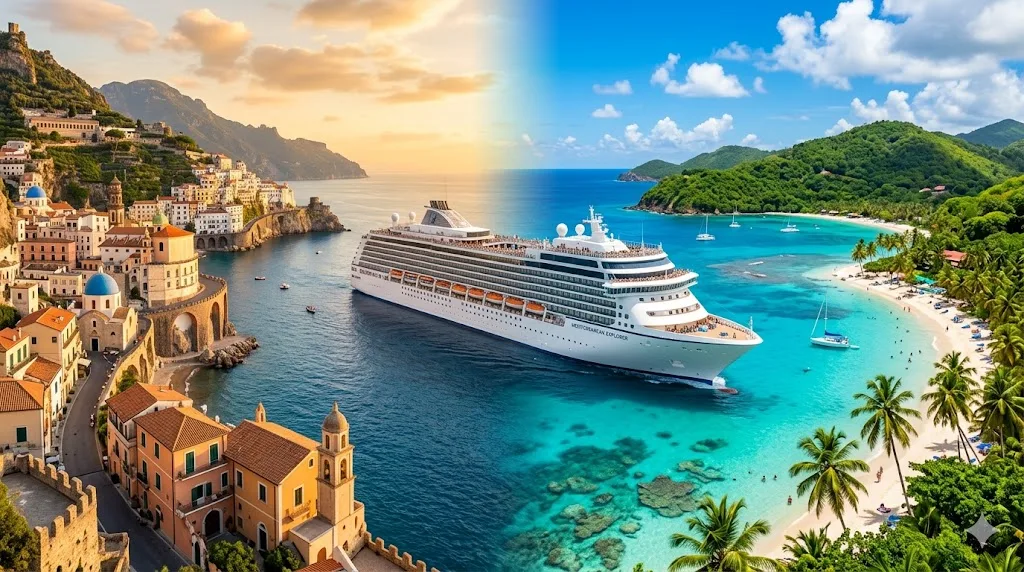
When deciding between a Mediterranean cruise and a Caribbean voyage, you’re facing much more than a geographic choice. It’s about different seasons, weather patterns, pricing structures, and ultimately: What do you want from a seaborne journey? The two destinations could hardly be more different. The Mediterranean offers cultural depth and landscape diversity, while the Caribbean promises tropical serenity and beach-focused experiences.
The Mediterranean Option: Culture Meets Predictable Seasons
The Mediterranean has a clearly defined cruise season. It runs from April through November, with most ships sailing between June and September. Weather conditions are calculable: In April and May, temperatures hover between 15 and 25 degrees Celsius (59–77 Fahrenheit). Landscapes are lush, harbor towns aren’t yet overrun with crowds. September stands out among experienced cruisers as the sweet spot—still warm (20–25°C / 68–77°F), but summer heat has subsided, and school holidays are behind us.
Average costs for a 7-night cruise run about $976 USD per person, though the range is substantial. In shoulder season (April, May, October), travelers can find fares starting at $495 USD per person. High season (June–August) climbs to an average of $1,401 USD per person.
Mediterranean itineraries fall into two categories. The Western Mediterranean connects Barcelona, Marseille, Rome (Civitavecchia), and Italian ports—ideal for cultural round-trips. The Eastern Mediterranean leads to Greece, the Adriatic (Dubrovnik, Trogir, Venice), and Istanbul. Both route types typically last 7 to 10 days.
Hurricane risk? Non-existent. That’s an objective advantage: no route changes due to storms, no diversions, no sudden port closures. If you need planning certainty, you’ll find it here. Learn more about cruise booking strategies in our early-bird guide. At sea, the Mediterranean reveals itself as what it’s always been—a well-established sailing corridor with centuries of maritime tradition.
The Caribbean Option: Tropics With Seasonal Ground Rules
The Caribbean operates differently. There’s no single-season logic. Classic high season runs December through April—warm, dry, perfect. Temperatures range between 25 and 32 degrees Celsius (77–90°F), the ocean is inviting, beaches are golden. These months are also the priciest. A 7-night cruise costs $920 to $1,380 USD per person.
Then comes hurricane season: June through November. Here’s what matters: No, you cannot simply avoid the Caribbean during these months. Yes, hurricanes exist. But no, cruise ships don’t sail directly into them. Cruise operators use satellite tracking and computer modeling to navigate around storms. Only a tiny fraction of all Caribbean cruises during these months are actually affected. The real reason the Caribbean is cheaper these months? The hurricane stigma. Price-sensitive travelers avoid it, demand drops, and prices plummet. A 7-night Caribbean cruise can cost under $575 USD per person in September or October—up to 70 percent below December rates.
The southern islands of Aruba, Bonaire, and Curacao sit far outside typical hurricane tracks and experience fewer critical weather events. These itineraries are the longest (10–14 nights) but also the most exclusive and priced accordingly.
The Comparison: What Speaks for What?
| criteria | mediterranean | caribbean |
|---|---|---|
| Best Time to Visit | May, September (warm, not overcrowded) | December–April (warm, dry); September–October bargain-priced |
| Weather | April–May 15–25°C (59–77°F); June–Aug 27–35°C (81–95°F); Sept 20–25°C (68–77°F) | December–April 25–32°C (77–90°F) dry; June–Nov warm year-round, storm risk |
| 7-Night Base Cost | $495–$1,401 USD | $575–$1,380 USD; Sept/Oct from $460 USD |
| Crowd Level | July–Aug = peak chaos; May, Sept, Oct = relaxed | December–April = high season; June–Nov = sparse |
| Typical Route Length | 7–10 nights (standard) | 7 nights (Eastern/Western); 10–14 nights (Southern) |
| Main Activities | Archaeology, history, local markets, cuisine | Snorkeling, beaches, water sports, relaxation |
| Weather Reliability | High (no hurricanes) | Medium–High (rerouting available) |
Who Should Choose Which?
Families with school-age children: If you can’t travel during official school holidays, aim for May or September in the Mediterranean. You’ll combine long daylight hours, pleasant temperatures, and manageable ports without the chaotic peak-season crowds. Shorter Caribbean routes in December are also family-friendly but carry peak pricing.
Couples with flexible schedules: September in the Mediterranean is exceptional for you. Cultural offerings are abundant, the sea is warm, prices drop noticeably, and there’s time to explore ports without jostling crowds. Discover money-saving strategies in our guide to cruise cost reduction. Alternatively: Caribbean in September or October, when low prices let you stretch your budget into longer land-based extensions.
Solo travelers: The Mediterranean provides more structure and a clearer sense of security. Port calls are straightforward, harbors are well-developed. Solo travelers find active social life aboard large vessels. In the Caribbean, the quiet stretches between islands might feel isolating.
Budget-conscious travelers: This is a clear September/October Caribbean case. The price savings are real, hurricanes are over-dramatized, and your savings fund snorkeling excursions and diving certifications. Start with our guide for first-time cruisers if you’re new to cruising. Alternatively: Mediterranean in shoulder season (April, October)—equally steep discounts without the hurricane conversation.
Luxury travelers: Caribbean December through March on small ultra-luxury vessels from Seabourn or Regent. The Mediterranean offers ultra-luxury options with Ponant or Hapag-Lloyd, but high-season pricing applies equally. Both are comparably expensive—the choice is a matter of personal taste: cultural exploration or tropical exclusivity?
A Final Word on Your Decision
The Mediterranean is a rationally well-planned journey. You plan, you know what to expect, you prepare culturally, and nature reliably delivers. The Caribbean is more emotional—islands under palms, the sea, color gradations, tranquility. Both are excellent, just for different temperaments.
If you prefer culture, history, and reliable weather planning, choose the Mediterranean. If you want beaches, snorkeling, and a dash of adventure (and you’re willing to use hurricane season intelligently), take the Caribbean. And if you truly want to save: Caribbean in October. Prices are unbeatable, hurricanes rarer than their reputation, and the islands are nearly all yours.
The best voyage at the end is not the one where you spend the most money, but the one that truly matches your expectations.