Beach Day: 5 Essential Items for Relaxation
Master your beach day with these five practical essentials. From sunscreen to power banks — everything you truly need for comfort and safety.
TravelFeelings Editorial Team
Sun Protection Done Right
Sunscreen is not optional — it is the foundational essential for any beach day. The reality is that UV intensity at the coast is substantially higher than in everyday settings. A protection factor of SPF 50 or higher is required, combined with water resistance and ideally reef-safe formulation if you plan to swim in coral-bearing waters.
Practical approach: Transfer sunscreen into a reusable container instead of carrying the original tube. This saves space and prevents leakage. Many travelers apply sunscreen even under swimwear — the skin beneath thin fabrics receives less protection than commonly assumed. Reapply after swimming. A 200-ml tube will typically last three to four beach days with consistent application.
Beyond sunscreen, after-sun lotion serves a genuine purpose. It replenishes skin hydration and relieves tightness following UV exposure. This is basic functional skincare.
The Right Beach Towel
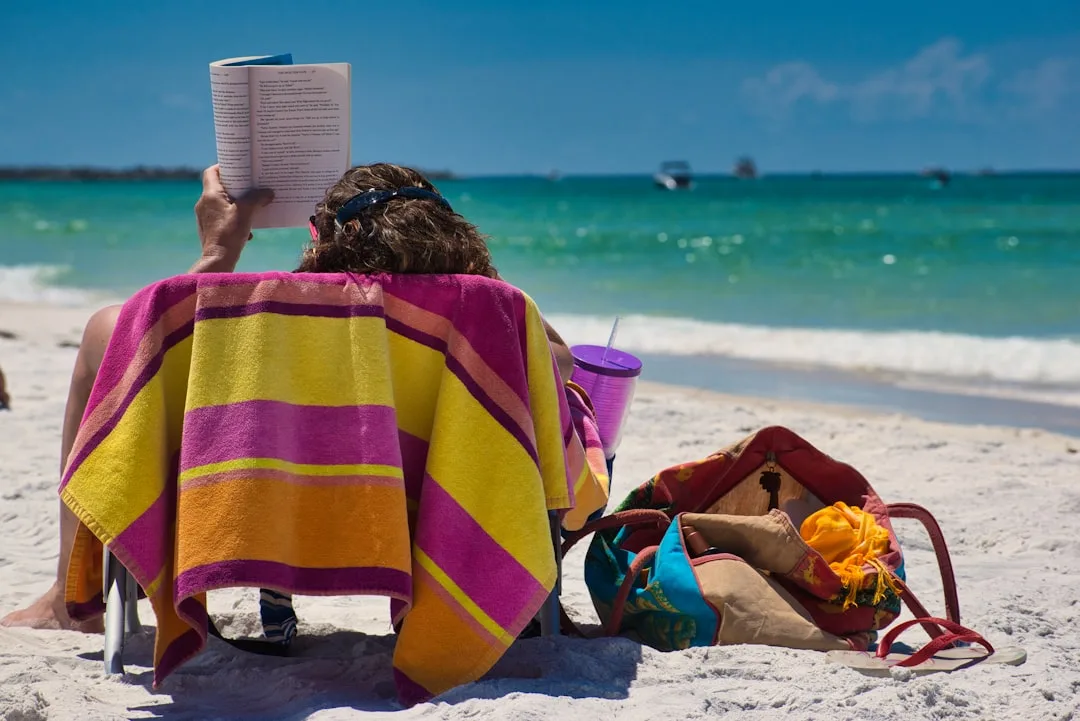
A standard cotton towel is impractical for beach use: heavy weight, slow drying, significant packing space. The second essential is a microfiber beach towel. These weigh roughly one-third of conventional towels, dry completely in 15 minutes, and resist sand adhesion far better than cotton.
When selecting: aim for minimum dimensions of 80 by 160 centimeters. Smaller versions provide insufficient coverage for comfortable drying. Higher-quality microfiber justifies the investment — budget alternatives sometimes cause skin irritation. Established manufacturers offer towels lasting multiple seasons.
A beach towel serves a secondary function as ground insulation. Direct sand contact on skin is uncomfortable, and beach loungers are not universally available.
Adequate Water and Hydration
The third essential is frequently overlooked: water. The human body loses significantly more fluid at the coast than on land — not only through perspiration, but also through salt air exposure and solar radiation. Dehydration progresses gradually, typically noticed only when headaches develop.
Standard calculation: plan for at least two liters during an eight-hour beach day. High summer conditions may require four liters, depending on activity level and sun intensity. Transport water in an insulated container or dedicated thermos. Standard plastic bottles heat rapidly in sunlight, and warm water is unpalatable.
Complement plain water with isotonic beverages, particularly if you engage in extensive swimming or snorkeling. Seawater itself is emphatically not suitable for consumption.
Waterproof Storage for Valuables
The fourth essential is waterproof containers or bags. Your phone, currency, documents, and jewelry should not rest unprotected in sand or in ordinary bags that absorb moisture and salt.
Solutions include: waterproof phone cases made from durable plastic (functional even for underwater photography during snorkeling). For currency and documents, small PVC dry bags serve as lightweight, space-efficient alternatives. A compact waterproof neoprene bag can consolidate multiple items.
Important consideration: not all waterproof containers maintain seals indefinitely. Test these in a bathtub before travel. Extended sun exposure can also damage plastic materials.
Power Supply and Entertainment
The fifth essential is a portable power bank. Beach visitors typically use smartphones extensively: photography, navigation, communication. Battery depletion accelerates compared to daily use, particularly when phones power music or podcasts.
A power bank rated 20,000 to 30,000 mAh provides adequate capacity for a full beach day with moderate weight. Look for IP67 certification, which guarantees dust protection and water resistance to one-meter depth.
As entertainment support, quality headphones or wireless earbuds enhance the experience. Many travelers find beach time without audio noticeably less relaxing. Prioritize waterproof models that maintain secure ear fit over extended periods.
Packing Checklist
- High-SPF sunscreen (SPF 50+)
- A microfiber beach towel
- Adequate water in an insulated container
- Waterproof bags for valuables
- A power bank, plus optional headphones
Additional items such as snacks, flip-flops, or sunglasses add value but rank outside the absolute essentials—they optimize the experience yet remain replaceable. The five items above are difficult to compensate for if forgotten.