SUP, Windsurfing & Kitesurfing for Beginners
SUP, windsurfing, kitesurfing — three water sports you can actually learn. What beginners really need and which mistakes to avoid.
TravelFeelings Editorial Team
Water sports at the beach look effortless from a lounge chair. When experienced athletes glide across the water, it seems simple. But when you start, you realize quickly: there’s proper technique, sensible equipment, and real safety rules involved. No magic, but not trivial either. Let me walk you through three beach water sports, what you actually need, and why I wouldn’t make certain mistakes.
Stand-up Paddling (SUP): The Most Approachable Entry
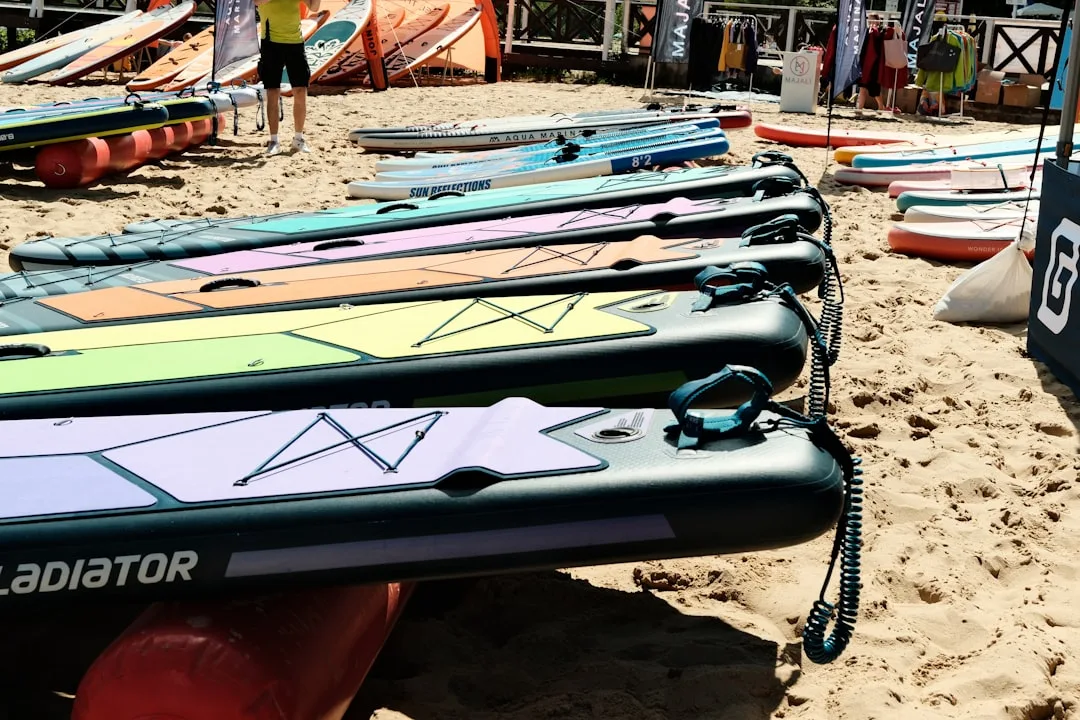
SUP isn’t sailing on a board — it’s closer to rowing while standing. You balance on a wide platform and propel yourself with a paddle. The advantage: the entry barrier is genuinely low. After about 10 minutes, you’ll manage your first strokes. After an hour, you’re covering distance without dumping yourself into the water constantly.
The most common beginner mistake is choosing a board that’s too narrow. Beginners think “more sporty equals better” and find themselves swimming sooner than planned. For learning, your board needs at least 80 centimeters of width — that width gives you the stability to actually build technique. The total volume should match your body weight plus 50 to 100 liters. A 155-pound person needs roughly a 130 to 170-liter board. It’s arithmetic, but it’s the difference between the board floating you and sinking beneath you.
The paddle is the second puzzle. Too short, and your stroke angle fails; too long, and you’re fighting leverage. The rule of thumb: your paddle should be 15 to 20 centimeters taller than your height. A six-foot person picks a paddle around 6’3” to 6’7”.
When paddling, the most common error leads straight to capsizing: many beginners try to muscle the paddle — wrong approach. You want to draw the paddle close to the board, moving backward along its edge, not away from it. Your feet stand shoulder-width apart, positioned at roughly the same distance from each rail. Anything else and your weight shifts wrong.
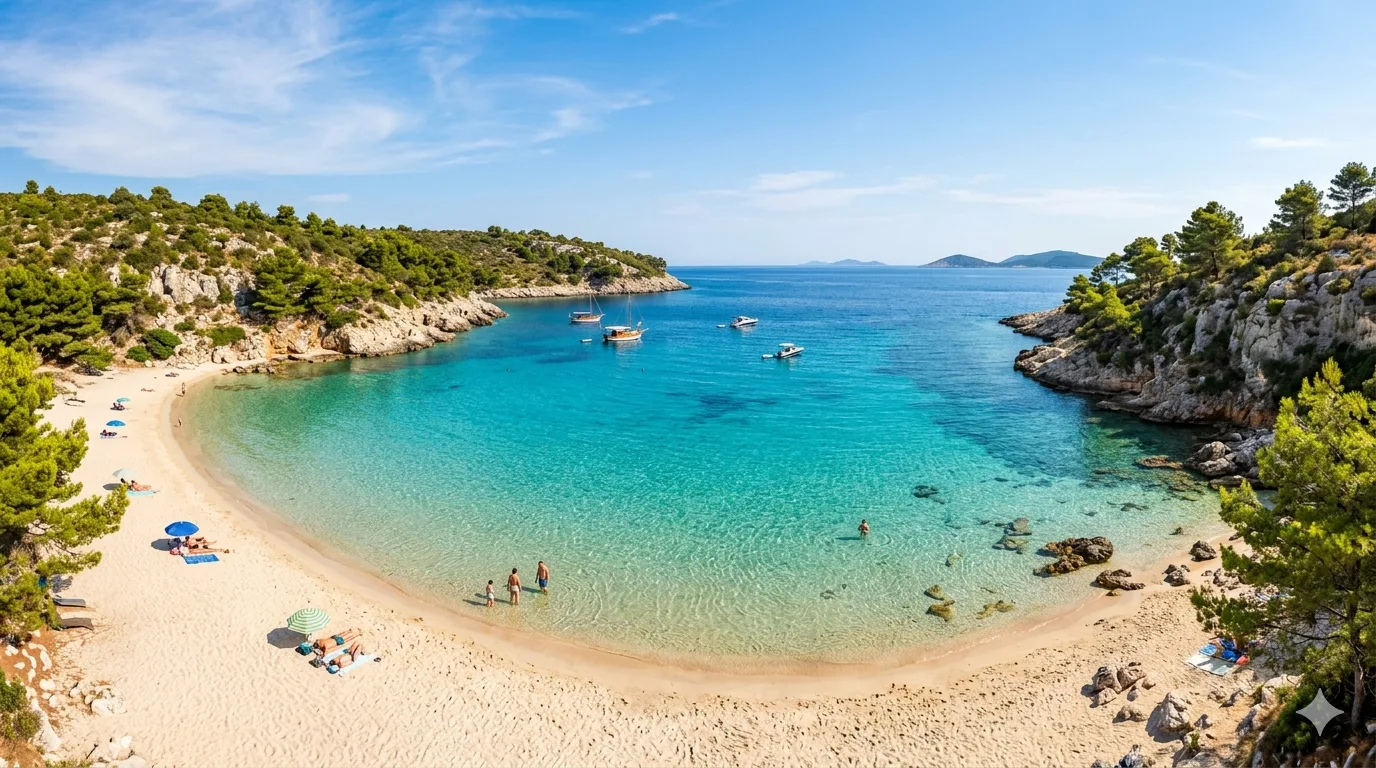
The ideal place to start is calm, flat water — a lake. No currents, no swells, you control how far you go and when you turn back. If you’re planning a beach vacation in Southern Europe, look for protected bays without strong longshore currents. For safety: always wear a leash — that cord connects you to the board so it doesn’t drift away when you enter the water.
Windsurfing: 12 Hours to Sailing
Windsurfing has a better learning timeline than its reputation suggests. You need roughly 12 to 14 hours of proper instruction to feel genuinely solid starting and sailing. That’s it. With decent conditions and steady focus, you’ll taste success in the first hour.
One requirement: you must be a confident swimmer. Given that, people from age 7 to 70 can windsurf. Not because it’s genetically simple, but because properly taught people grasp the movement sequence quickly.
The equipment looks complicated but breaks down clearly. The board (typically 180 liters for beginners), the rig (sail, mast, boom), the fin, and various small pieces like the uphaul. The uphaul is the unassuming cord that most beginners underestimate — it’s what gets your sail out of the water initially. Without it, your first water start would never happen.
Beginner sails are small, usually between 1 and 5 square meters. They’re simple to manage and forgiving — if you mistime a load, nothing dramatic occurs. Larger sails are for wind-experienced sailors. You’ll also need a wetsuit. Your body loses heat 25 times faster in water than on land — regardless of how it feels jumping in.
After a solid course, you’ll earn a VDWS Basic License. This certificate is recognized worldwide — you can rent a board and sail anywhere. A serious course combines practical elements (rigging, balance, sailing, turns) and theory (wind patterns, safety, environmental rules). The best instructors teach you how your body works — windsurfing relies on timing and weight transfer, not pure force.
Kitesurfing: Lagoons for Learning
Kitesurfing looks spectacular, but under the right conditions, beginners actually manage it. The difference from windsurfing: you’re attached to a kite (a power-inflatable wing) with a safety line, not a sail. The board is smaller, usually just 140 to 160 centimeters long.
The critical factor is wind and water state. Too little wind and you won’t generate power; too much and you’ll be dragged downwind; large swells and you can’t land cleanly. This is why lagoons work perfectly for learners. A lagoon — like Óbidos near Lisbon or Lo Stagnone near Marsala in Sicily — delivers three essentials: shallow water, steady wind, and protected zones for safe landings.
Europe’s best kitesurfing season runs April through October. The Mediterranean delivers thermal winds (midday heat creates onshore lift) and predictable patterns. Leucate in southern France is famous for reliable Mistral winds — a classic spot for over 30 years.
Kitesurfing requires instruction. Course length varies, but reputable schools teach board control, kite management, and safety systems. A major mistake is attempting kitesurfing without instruction — the risk is your kite simply blows you downwind, and you don’t know how to get back. With good teaching and favorable conditions, kitesurfing is a learned skill.
Equipment: Renting or Buying?
Beginners should always book lessons that include equipment. It’s cheaper than separate rental plus instruction, and schools know their gear. A board that doesn’t fit your needs frustrates unnecessarily.
If you’re in the water one or two times yearly, rent locally. If you’re more serious, purchasing makes sense. Beginners often jump straight to expensive gear. Decathlon has solid beginner SUP boards, VDWS-affiliated schools maintain reliable windsurfing equipment, and kitesurfing destinations have certified schools with tested rigs. Our beach vacation planning checklist includes safety gear and clothing recommendations for water sports.
Safety First
Water sports are only safe if you understand what you’re doing. That means taking a course from someone who genuinely knows the craft. Find a certified school — VDWS for windsurfing, PADI for diving, IKO-certified schools for kitesurfing. Good instruction isn’t just demonstration; it’s explanation — why your feet stand a certain distance apart, how the uphaul sequence actually works, what power in a kite means.
Always use safety gear. For SUP: a leash. For windsurfing: a wetsuit to maintain core temperature, and optionally a personal flotation device. For kitesurfing: a helmet, impact vest, and a kite line with a quick-release system.
The third rule is straightforward: don’t overestimate yourself. Windsurfing in small swells is absolutely fine. Jumping into big-wave contests in Hawaii when you’re still wobbly on your board isn’t. Same logic for kitesurfing: start in sheltered lagoons, not the rough outside break.
Water sports at the beach are within reach for anyone if the fundamentals are solid — proper training, appropriate equipment, realistic expectations. Like beginner hiking, mastering water sports requires the right gear and structured learning. After a year of regular practice, windsurfing, SUP, and even kitesurfing stop feeling like technical skills and start feeling natural. That’s when it gets genuinely fun.