Southern Europe's Best Beaches: Shallow
Southern Europe's beaches with shallow water, crystal-clear bays, and reliable infrastructure: 9 recommendations from Greece to Croatia.
TravelFeelings Editorial Team
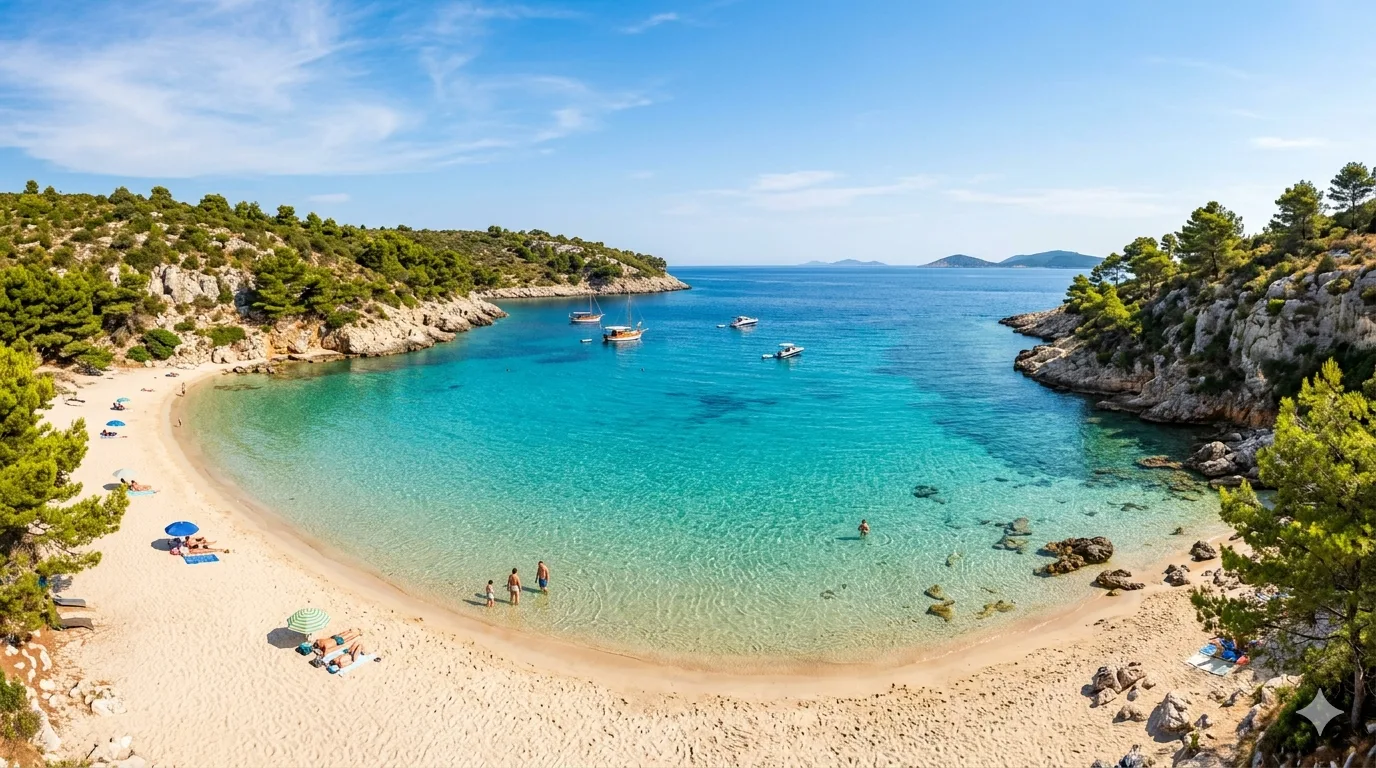
Southern Europe’s coastlines offer crystal-clear water and diverse beach environments. For first-time beach travelers and those seeking tranquility, specific criteria matter more than for experienced swimmers: gradual water depth for safe entry, established infrastructure (lifeguards, rental services), and minimal noise from party scenes. The optimal travel window spans May through September, with peak conditions in June, July, and August.
1. Elafonissi Beach, Crete, Greece
The beach measures 300 meters long and 50 meters wide, with a gentle slope into the water. The sand has a distinctive pink-white hue from coral and shell fragments. Water temperature reaches 20–21 degrees Celsius in June, rising to 24–25 degrees Celsius in August. A small island lies 500 to 800 meters offshore, reachable on foot during low tide. Infrastructure: Lifeguards from May through September, beach bar, restrooms, paid parking (approx. $5, or 4.60 EUR). Summer months bring 800 to 1,000 daily visitors. Best timing: June and September for fewer crowds; August for warmest water. Access: Flight to Heraklion (Crete), rental car for 45 kilometers to the beach.
2. Paleokastritsa Beach, Corfu, Greece
Paleokastritsa comprises several connected coves totaling roughly 600 meters of shoreline, with a mix of pebbles and sand. Turquoise water with a gradual slope—ideal for less confident swimmers. Water depths of 5 to 8 meters occur 30 to 50 meters from shore. Infrastructure: Two lifeguard stations, multiple tavernas, water-sports rentals (kayaks, snorkeling gear), paid parking (approx. $2–3, or 1.85–2.75 EUR). July and August see heavy crowds. The German Foreign Office raises no specific safety warnings for Corfu; the situation is stable. Best timing: May, June, September. Access: Flight to Corfu Town, bus or rental car 25 kilometers south.
3. Playa de la Concha, San Sebastián, Spain
A classic urban beach shaped like a shell, 1.5 kilometers long, with fine sand and gentle entry. Water temperature reaches 19–21 degrees Celsius in July and August. Infrastructure: Multiple lifeguard stations, public showers, waterfront restaurants, free parking on side streets or paid garages (approx. $1.50 per hour, or 1.40 EUR). Even in peak season (August), the beach accommodates thousands. Compared to North German or Baltic beaches, the water is noticeably warmer and clearer. Best timing: June and September. Access: Flight to Bilbao or San Sebastián (Donostia), city bus to the seafront.
4. Cala Macarelleta, Menorca, Spain
A 200-meter-wide beach enclosed by pine trees, with the finest white sand. The U-shaped bay provides wind protection. Water is turquoise and crystalline to depths of 3–5 meters. Car-free access; 15-minute walk from the parking area or boat service from Ferreries harbor. Infrastructure: No official lifeguards, but a beach kiosk operates in summer. Water depths: 1 to 2 meters for the first 20 meters, then gradual increase. Note that access is by hiking trail only. Summer months bring 500 to 800 daily visitors. Ferry from Ferreries operates seasonally. Best timing: June and September (fewer crowds, pleasant weather). Access: Flight to Menorca, rental car (or ferry from Mallorca, 40 kilometers away).
5. Es Trenc, Mallorca, Spain
A 3-kilometer-long sand beach without hotels or concrete development directly behind it—a rarity on Mallorca. Fine, pale sand; turquoise water. The bay remains shallow to approximately 200 meters offshore. Infrastructure: Minimal; two or three rental operators (loungers, umbrellas, approx. $10–15 per day, or 9.20–13.80 EUR), food stalls, portable toilets. Parking 500 meters away (paid, approx. $3, or 2.75 EUR). Note: Es Trenc enjoys protected status against overdevelopment, yet summer weekends see 2,000 to 3,000 visitors daily. Water depths: 1 to 2 meters to 50 meters from shore. Best timing: May, June, September, October. Access: Flight to Mallorca, rental car to the southeastern end (roughly 60 kilometers from Palma).
6. Praia de Benagil, Algarve, Portugal
Benagil is renowned for its sea cave, accessible during low tide. The beach itself spans 150 meters, with a mix of golden sand and pebbles. Water temperature ranges from 18–20 degrees Celsius in June to 21–22 in August. Infrastructure: Lifeguards May through September, restaurants perched on cliffs, restrooms, street parking (paid, approx. $2, or 1.85 EUR). Boat rentals for cave tours operate directly from the beach (approx. $30–45 per person, or 27–41 EUR, 1–2 hours). Important: The cave is accessible only during low tide; consult tide tables beforehand. The beach experiences significant tourist and boat traffic in high season. Water depths: Initially shallow, then rapid deepening (>2 meters after 30–40 meters). Best timing: June and September. Access: Flight to Faro, rental car 60 kilometers west.
7. Praia da Falésia, Algarve, Portugal
A 6-kilometer beach backed by dramatic red and orange-brown sandstone cliffs. The beach is wide (50–100 meters) with fine golden-brown sand. Cliffs rise to 30 meters and erode continuously—avoid shelter directly beneath them. Infrastructure: Lifeguards, rental operators, cliff-top restaurants with terraces, restrooms, adequate parking (some paid, approx. $2, or 1.85 EUR). Summer water temperature: 19–21 degrees Celsius. Water depths: Consistently shallow for the first 100 meters. Advantage: The beach’s length means quiet spots remain even in peak season. Best timing: June through September. Access: Flight to Faro, rental car.
8. Cala Goloritzé, Sardinia, Italy
A small bay—roughly 50 meters wide—surrounded by 100-meter limestone cliffs. Emerald-clear water to 5–8 meters depth, then deep blue. The beach consists of stones and fine white sand. Access is by hiking trail (45 minutes from Baunei, 4 kilometers) or boat only. Infrastructure: None; the bay remains undeveloped. A warden station operates weekend mornings in summer. Note: Cala Goloritzé is a protected area—no fires, camping, or loud music. Swimming is safe, but depth increases rapidly after 20 meters (limited shallow entry zone). The hike is not strenuous but demanding in heat. Best timing: June, September (fewer crowds). Access: Flight to Olbia, rental car 150 kilometers south, then hike or boat tour.
9. Banje Beach, Dubrovnik, Croatia
Located immediately east of Dubrovnik’s Old Town, Banje is the city’s largest and most popular beach. Roughly 200 meters long, with pebbles and sand. Clear, turquoise water with gradual slope; 2-meter depths occur 20–30 meters from shore. Infrastructure: Lifeguards, multiple restaurants and cafés, changing rooms, showers, lounger rentals (approx. $10 per day, or 9.20 EUR). Proximity to the Old Town is both advantage (history, dining) and drawback (crowded in peak season, especially August with up to 3,000 daily visitors). Note: Banje suits a cultural getaway but is not recommended as a tranquility beach. No security warnings from German authorities for Croatia. Best timing: June, July, September. Access: Flight to Dubrovnik, bus or short walk from the Old Town.
Your beach choice depends on personal priorities. For maximum infrastructure and safety, select Elafonissi, Paleokastritsa, or Playa de la Concha. To find quiet spots during summer, plan early hours (6–9 am) or visit in June and September rather than July/August. A visit to Portugal allows combining Benagil (natural spectacle) with Falésia (length and tranquility). Exploring Italy offers independence—Cala Goloritzé is the jewel of Sardinia, but multiple other beaches in the region reward exploration.