Guide
Autumn City Breaks: European Gems Away from the Crowds
Discover Europe's cities in autumn without crowds. Architectural masterpieces and hidden gems for the culturally curious traveler.
TravelFeelings Editorial Team10 min.
Italy · Southern Europe
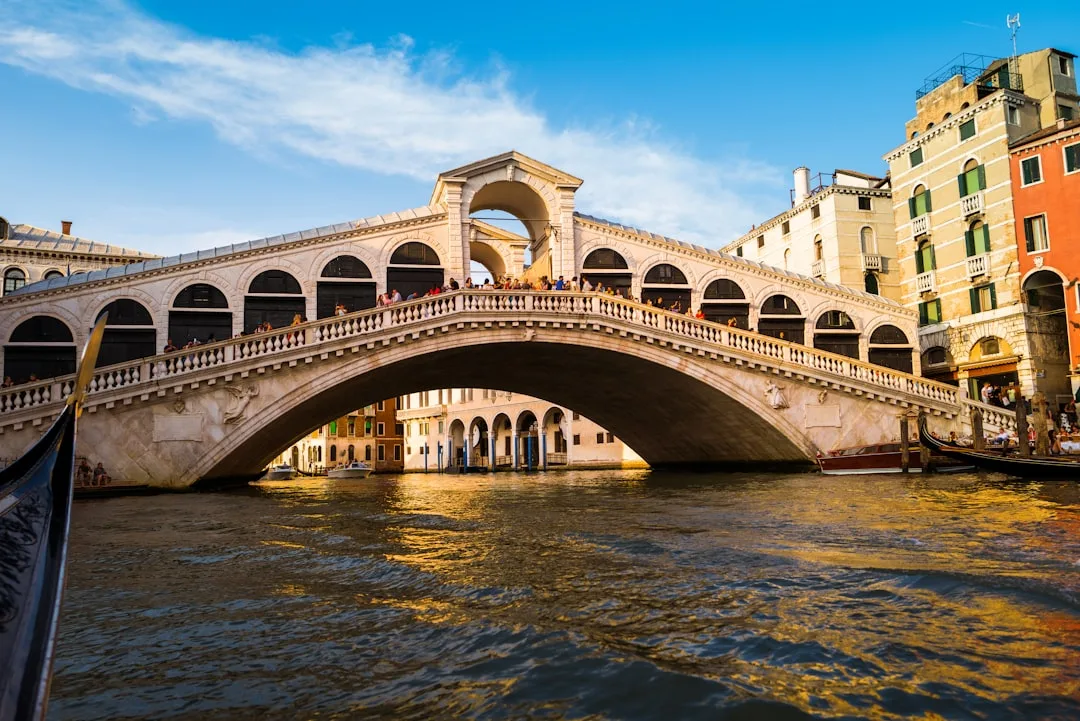
Venice sits on 127 islands in a northern Italian lagoon—for 1,500 years a city without streets. Water, architecture, and art converge here into an exceptional experience, though mass tourism and climate change are constant challenges.
San Marco Square is Venice’s nexus—home to two of Italy’s most extraordinary buildings. The Basilica di San Marco, dating to 1087, is distinguished by five copper-topped domes and glittering Byzantine mosaics within. Entry costs $13–20 (€12–18) depending on which sections you visit. The adjoining Doge’s Palace showcases Gothic architecture and rooms filled with Venetian history; entry $29 (€27), or combined tickets around $38 (€35) for both.
The Campanile (bell tower) rises 99 meters, offering an unobstructed view of the entire lagoon and, on clear days, the distant Dolomites. Entry $11 (€10). Expect queues of one to two hours during peak season.
The Rialto Bridge is Venice’s most photogenic stone arch, spanning the Grand Canal since 1591. The bridge itself is free to cross, but mornings before 10 AM are quietest. At night, the stone glows beautifully under streetlight.
Grand Canal is Venice’s main arterial waterway. A vaporetto (water bus) ride is essential—single journey $11 (€10), day pass $27 (€25). From the boat, you observe Renaissance palaces, pastel-colored facades with flower-laden balconies, and the everyday rhythm of a city built on water.
The Accademia Gallery houses Venice’s core artistic heritage: Bellini, Titian, Tintoretto. The chronological walk through rooms traces the city’s visual identity across centuries. Entry $16 (€15). Open 8:15 AM–7:15 PM (Thursday until 10 PM).
Peggy Guggenheim Collection showcases modern and contemporary art in a private palazzo facing the Grand Canal. Surrealism, abstraction, and photography are well represented. Entry $19 (€18). Thursday–Sunday 10 AM–6 PM. If 20th-century art appeals, this is a concentrated must.
Basilica di Santa Maria Gloriosa dei Frari is a massive brick Gothic church—less famous than San Marco but mercifully less crowded. Inside hang Titian’s “Assumption” and “Pesaro Altarpiece.” Entry $3 (€3). The small cloister café offers a quiet refuge.
Murano lies 30 minutes by vaporetto and is famed for glassmaking since the 13th century. Around 50 glass workshops remain operational today. Many offer brief demonstrations (though they are sales pitches) or paid workshops for $34–68 (€30–60) per person. The free museum demonstrations are theater; proper museums offer more authentic insight. Basilica di Santa Maria e Donato (free entry) showcases Byzantine architecture.
Burano, 40 minutes north, is a colorful island famous for lace and fishing culture—charming and unashamed of its commercialism. The painted houses and canal-side trattorias define an afternoon escape. Seafood mains range $23–40 (€20–35).
Torcello is the lagoon’s oldest inhabited island and now nearly deserted—fewer than 20 residents remain. The Basilica di Santa Maria Assunta dates to the 7th century, its Byzantine mosaics depicting Mary with archaic beauty. Entry $5 (€4). The bell tower ($11, €10) rewards with vistas across the lagoon. Vaporetto journey from Venice: 45 minutes.
Padua (Padova) lies 30 kilometers west by train—a Renaissance university city rivaling Venice artistically. The Prato della Valle, one of Europe’s largest squares at 90,000 square meters, is an ideal afternoon walk. The Scrovegni Chapel houses Giotto’s revolutionary 14th-century frescoes—entry $16 (€15) with mandatory time-slot reservation.
Verona, 120 kilometers west, is Shakespeare’s setting for “Romeo and Juliet.” The Roman Arena dominates the center; in summer, grand opera productions fill its stage (tickets $28–228, €25–200).
Castello is Venice’s large, understated eastern quarter where genuine Venetians live. Via Garibaldi is unusually broad for Venice—genuinely car-free and devoid of tourist excess. Riva degli Schiavoni along the waterfront is pleasant on weekdays. For a local coffee: Il Caffè offers espresso for $2 (€1.50) and an unpretentious atmosphere.
The Cannaregio Ghetto lies north of the Rialto Bridge and served as Europe’s first urban ghetto since 1516—a forced Jewish quarter squeezed into five cramped properties. Today the five operational synagogues (free entry weekdays; guided tours €12) are restored and active. The lanes remain narrow, buildings seven stories high. This is not Instagram scenery; it is historical substance and spiritual weight.
Giardini della Biennale are Venice’s parkland for the biennial art exhibition (next edition May–November 2026, entry €30 daily). Beyond Biennale season, the gardens are free and green—ideal for escaping crowds. Visit early (before 10 AM) for solitude.
Libreria Acqua Alta is an eccentric bookshop deliberately flooded during high-tide season—the name means “high water.” Books pile chaotically; the original owner Luigi returned after each flood to rebuild. Now touristy, but the charm persists. Free entry.
| Jan | Feb | Mar | Apr | May | Jun | Jul | Aug | Sep | Oct | Nov | Dec |
|---|---|---|---|---|---|---|---|---|---|---|---|
| Low | Low | Low | Sweet Spot | Sweet Spot | Peak | Peak | Peak | Sweet Spot | Sweet Spot | Low | Low |
8° 0° | 10° 1° | 15° 4° | 20° 9° | 25° 14° | 28° 18° | 30° 20° | 29° 20° | 25° 16° | 19° 11° | 13° 6° | 8° 2° |
The ideal season is April through June and September through October. Temperatures range 15–25°C (59–77°F)—comfortable for navigating narrow streets without sweating. Humidity is moderate. Rain arrives occasionally but rarely persists all day.
July and August are peak tourist months—European school holidays fill every corner. Daytime temperatures rise to 28–30°C (82–86°F); humidity climbs. Vaporetti are jammed. Venice in August is an experience, but not a restful one.
November through March is low season: rain is frequent, temperatures dip to 0–13°C (32–55°F). November and December carry the risk of acqua alta (high-water flooding), when Piazza San Marco becomes a temporary lagoon for an hour or two, and visitors wade in borrowed boots. March gradually warms and is less waterlogged than winter.
Carnival (February/March, 1–12 March in 2026) draws masked revelers globally—romantic chaos, with doubled hotel rates. The Biennale 2026 (9 May–11 November) in Giardini and Arsenale also inflates visitor numbers and accommodation costs, especially May and June.
Water is Venice’s cultural essence—not merely landscape. For 1,500 years, the city has built canals and bridges, never streets. The vaporetto is not merely transit; it is a way of life. The gondola is a wooden and silk artwork, handcrafted across generations, not mass-produced.
The Venetian Carnival tradition dates to the 11th century—historically, masks allowed social boundaries to dissolve temporarily. Today, tourism dominates, yet the historical logic endures: masks dissolve hierarchy.
The Biennale (every two years) functions as a global art event and city transformation. 2026’s theme, “Foreigners Everywhere,” reflects on artists without belonging, migration, identity, and artistic practice.
Gondolieri (gondoliers) form a specialized profession—licensed boatmen whose craft often passes through family generations. Traditionally male (the first female gondolier appeared in 2020). A one-hour gondola ride costs $91–114 (€80–100), decidedly touristy but often educational if the gondolier shares history.
Day-Visitor Ticket: As of 2026, an $11 day-use fee ($6 with advance booking) applies on approximately 60 peak days (April–July), charged 8:30 AM–4:00 PM on weekends and holidays. Book at least 3 days ahead for the reduced $6 (€5) rate. Overnight guests and children under 14 are exempt. The system is unpopular but necessary—Venice cannot absorb 30 million day-trippers annually. Buses circumvent the city if you wish to avoid the fee entirely.
Large tour groups (more than 12 people) are prohibited from walking together through the historic center—regulations protect the narrow lanes. Piazza tables are often reserved-only; sit elsewhere or place your order immediately.
Feeding pigeons on Piazza San Marco incurs fines up to $798 (€700). The pigeons are considered pests; breadcrumbs, seeds, and popcorn are forbidden, despite elderly women selling grain to tourists.
Swimming in canals is prohibited. The water, though cleaner than decades past, is not sanitary. The Lido island has designated beaches.
Sleeping on bridges, common among budget backpackers, is illegal and can result in fines. Hostels start at $28 (€25) per night.
Casual photography without respect for residents is frowned upon. Venetians do not appreciate cameras pointed at their windows or clotheslines. Venice is a lived-in city, not a film set.
Loud tourist groups with loudspeakers chasing selfies are a plague. Respectful travelers discover a different city.
Vaporetto (water bus) is Venice’s circulatory system. Lines 1, 2, 4.1, and 4.2 connect the main islands. Single journey $11 (€10); 12-hour pass $28 (€25); 7-day pass $74 (€65). Tickets at stops or tobacco shops. Boats are crowded after 9 AM. Schedules posted at stops or online (actv.avmspa.it).
Gondola is the quintessential Venetian experience for approximately $91 per hour per person (€80). Expensive but unforgettable. Gondolieri often share history and context.
Traghetto is a short-haul gondola that crosses the Grand Canal at four points—only $2 per trip (€2), lasting two minutes. A practical shortcut if Rialto Bridge is congested.
Water taxi operates like car taxis—faster, direct, but $17 minimum (€15) plus surcharge. Economical only for groups.
On foot: the best transport. The historic center spans 10 square kilometers. All sights are walkable, though getting delightfully lost is part of the experience. Lanes are steep and narrow but safe. Comfortable shoes are essential.
Marco Polo Airport lies 8 kilometers away. Vaporetto ($28, 45 minutes; €25) or Alilaguna water bus ($17, 60 minutes; €15) reach the center. Water buses are cheaper and more direct than taxis.
Venezia Santa Lucia railway station is centrally located with good vaporetto access.
EU citizens: passport or national ID card required. No visa needed. Identity documents must be valid for at least 6 months beyond your return date.
Non-EU citizens: visa requirements depend on nationality. US, Canadian, Australian, and New Zealand citizens enjoy 90-day visa-free entry. From late 2026, the European Travel Information and Authorization System (ETIAS)—an online pre-approval similar to the US ESTA—becomes mandatory; fee $23 (€20).
Travel insurance: not mandatory but recommended. International health coverage should be valid in Italy. The European Health Insurance Card (EHIC) is accepted by Italian hospitals.
Day-visitor ticket (see Cultural Considerations) is mandatory on designated peak days April–July.
Customs: personal luggage is duty-free. Returning to Germany with goods beyond personal use is generally hassle-free; no routine customs checks within the Schengen area.
Acqua Alta (high water) is Venice’s primary natural challenge. Between October and March, particularly November and December, southeastern winds, storm surge, and astronomical tides conspire. Water levels rise 30–100 centimeters, occasionally overwhelming Piazza San Marco and low-lying lanes for one to two hours. Once occurring three to four times annually in the 1950s, flooding now occurs dozens of times yearly. Winter travelers should carry waterproof shoes or purchase disposable boots (€5–10) at tourist shops.
Vaccinations: no mandatory vaccines for Italy. Tetanus and routine immunizations should be current. Malaria and yellow fever are absent.
Tap water: potable throughout Venice. Public fountains (“fontanelle”) provide fresh water—ideal for refilling bottles mid-day.
Mosquitoes: summer and autumn can bring mosquito nuisance; insect repellent (€10) is purchasable.
Heat: July and August reach 30°C (86°F) or higher. Hydration is essential. Narrow lanes offer minimal shade—apply sunscreen liberally.
Petty theft: vaporetti and crowded squares are pickpocket hotspots. Keep your rucksack in view. Avoid displaying valuables.
Medical care: Ospedale dell’Angelo on the mainland (Mestre) is the nearest hospital. Italy’s emergency number is 112. The EHIC is accepted.
Discover Europe's cities in autumn without crowds. Architectural masterpieces and hidden gems for the culturally curious traveler.
Discover Europe's best cultural museums and galleries beyond the Louvre. Essential institutions and hidden gems across London, Vienna, Amsterdam, and more.
A short trip need not be superficial. With deliberate route planning, you discover the cultural and architectural substance of Europe in three days — not merely the facades.
To truly understand a city, spend time in its markets. Street-food cultures reveal urban history, local identity, and social structures in immediate ways.