Short Trip Planner: 3-Day Routes for Europe's Top Cities
A short trip need not be superficial. With deliberate route planning, you discover the cultural and architectural substance of Europe in three days — not merely the facades.
TravelFeelings Editorial Team
To plan a short trip is to risk visiting a city rather than understanding it. The typical itinerary — photograph the Eiffel Tower, check off the cathedral, reserve a restaurant — leaves only superficiality in its wake. The distinction lies in route planning. The goal is to grasp the urban logic that makes a city what it is rather than to see as much as possible.
Three days are, paradoxically, sufficient for this ambition if you proceed strategically. The decisive factors are central accommodation, focus on two to three anchors per day, and willingness to allow empty time. Exploring one museum fully makes more sense than rushing through five.
Lisbon: Architectural Layers along the Tagus
Lisbon displays an urban palimpsest structure rare among European cities. The city consists of several steeply stacked layers that render its building history legible — from medieval Alfama through the eighteenth century to contemporary Baixa.
Day 1: Book accommodation in central Baixa-Pombalina, the district the Marquês de Pombal planned with rational geometry after the 1755 earthquake. The geometric street layout reveals planning logic: flight lines for earthquake relief, right-angled blocks, four by four street grids. Walk along Rua Augusta and observe the uniform facade heights — this is Enlightenment architecture. Afternoon: Take the funicular to Bairro Alto; from the top, look back at the city to read its topography, not just to admire the view.
Day 2: Early to Basílica da Santa Maria Maior before tourist masses arrive. The interior demonstrates how sacred space evokes spiritual consciousness. Then walk through Alfama deliberately, reading the tight alleyways as the product of medieval urban development. Late afternoon: MAAT (Museum of Art, Architecture, and Technology), a contemporary building by Tekkton Architects that opens toward the Tagus waterfront. Architecture as mediator between city and river.
Day 3: Day trip to Sintra (40 min. train) — for the architecture rather than the palace photos. The Palácio Nacional da Sintra and its formal ensemble represent a fifteenth/sixteenth-century statement about power and territorial control. Return by sunset; dinner at a local tasqueria, not in the tourist quarter.
Budget: $90–130/night central (Baixa, approx. 85–120 EUR). Museum entries $7–13 (approx. 6–12 EUR). Meals: $13–20 mid-range restaurant (approx. 12–18 EUR).
Prague: Reading Czech Medievalism
Prague is among the few European centers where medieval urban structure remains entirely legible. Unlike Paris or Rome, the medieval street logic survived destruction.
Day 1: Accommodation in the Old Town, in alleyways around the Old Town Square. The square itself is a medieval marketplace configuration, not the romantic tourist backdrop it now serves as. Surrounding buildings display all epochs: late Gothic masterwork, Renaissance murals, Baroque facades. Spend two hours reading the streetscape like an architectural biography. Evening: The Astronomical Clock — worth seeing because it documents a medieval understanding of cosmology, beyond the hourly automaton show.
Day 2: Across Charles Bridge — walk, don’t photograph. The bridge connects two districts while revealing the height differences that define the city. Ascend to Prague Castle and St. Vitus Cathedral. The cathedral’s interior reads as a spatial sequence manifesting Gothic thought, more than a treasury of artworks. Late afternoon: Jewish Quarter (Josefov) — complex, historically charged, yet essential to urban pluralism.
Day 3: Day trip to Kutná Hora (ca. 65 min. train). A Gothic settlement with mining history. St. Barbara Cathedral represents European Gothic at the highest order. Return evening; local restaurant outside Old Town.
Budget: $65–120/night central (approx. 1,560–2,880 CZK). Museum entries $4–9 (approx. 96–216 CZK). Meals: $11–17 mid-range restaurant (approx. 264–408 CZK).
Budapest: Thermal Culture and Urban Stratification
Budapest divides spatially: Buda (west, hilly) and Pest (east, flat). This dichotomy shapes everything.
Day 1: Accommodation in Pest, central. Spend Day 1 exploring Pest on foot — the broad boulevards are a nineteenth-century inheritance, from when Vienna and Budapest vied to be a European center. Andrássy Avenue is a showpiece street; read it for its urban representation strategy rather than its shops. Later: Dohány Synagogue, a statement about Jewish presence in Central Europe.
Day 2: Cross to Buda. Funicular ascends to the castle. The structure is not a single building but a stratification of medieval, Habsburg Baroque, and twentieth-century reconstruction. Understand the ruins as part of the story. Walk through Castle District; alleys bear medieval traces. Late afternoon: Széchenyi Thermal Bath — go to grasp the thermal-bath culture that defines Budapest, beyond a simple soak. These bath architectures express statements about public bodily culture.
Day 3: Cross the Chain Bridge back to Pest. Art museum or Parliament (architecturally, Parliament expresses nineteenth-century Hungarian nationalism). Later: Ruin pub (Szimpla Kert) — these DIY cultural spaces in decaying buildings represent post-1989 urban reclamation.
Budget: $50–100/night central (approx. 18,500–37,000 HUF). Thermal bath: $20 (approx. 7,400 HUF). Museums: $4–11 (approx. 1,480–4,070 HUF). Meals: $10–15 mid-range restaurant (approx. 3,700–5,550 HUF).
Berlin: Modernity and Its Shadows
Berlin is a city that does not hide its ruptures. The Wall’s path, bomb ruins, East German architecture, reconstruction — all remain visible.
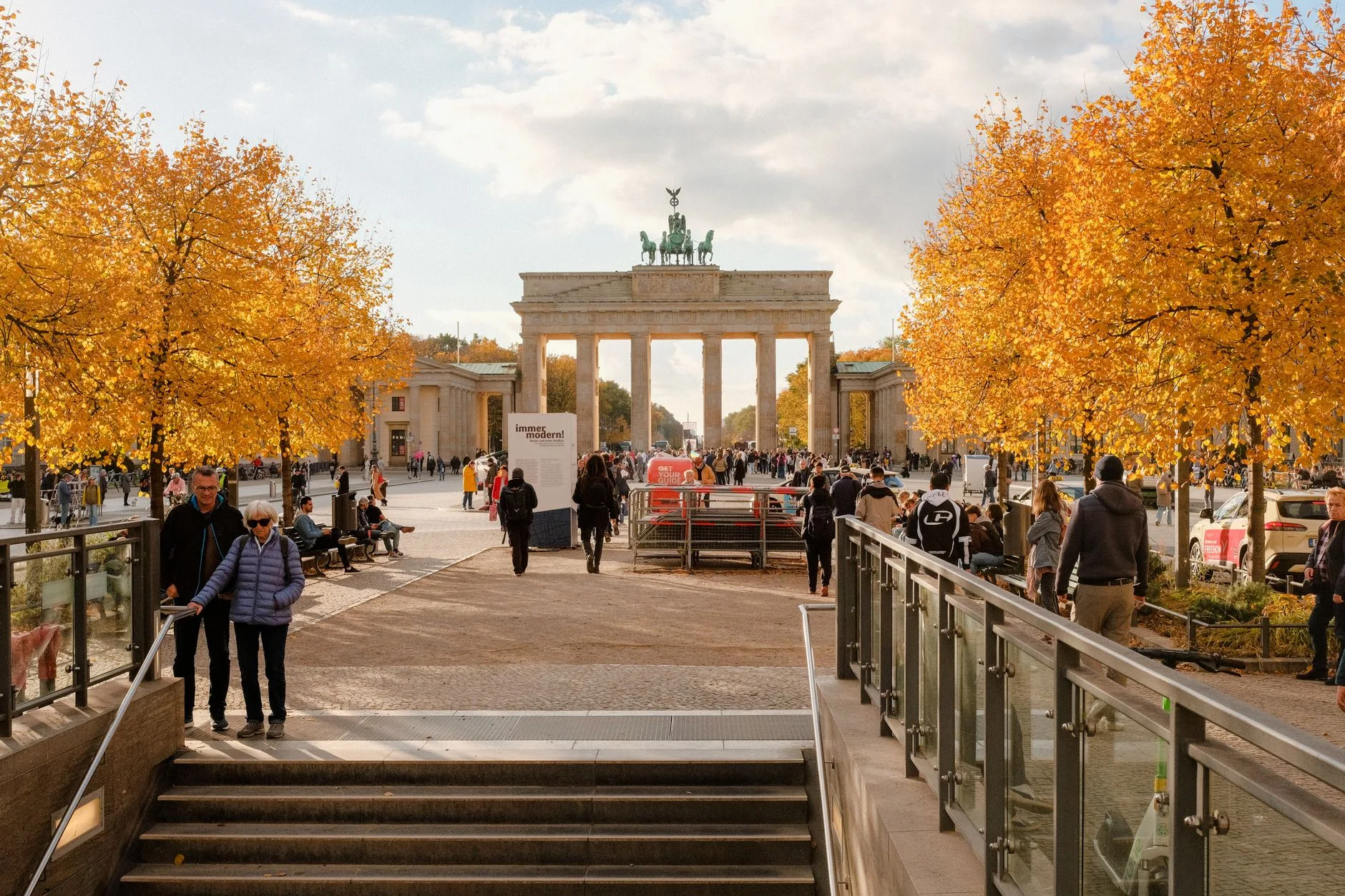
Day 1: Central accommodation (Mitte). Early to East Side Gallery — go to comprehend the Wall as a historical artifact, past the graffiti photos. Concrete as a vessel of history. Then walk through Gendarmenmarkt — French and German cathedrals and concert hall, all expressions of eighteenth-century residence-city ambition. Evening: Jewish Museum, whose architecture (Daniel Libeskind) is itself a statement.
Day 2: Museum Island — but focused. Choose one museum (Pergamon Museum for ancient spatiality, Neues Museum for Egyptian collection). Do not rush through all five. Then Reichstag interior — Norman Foster’s reconstruction expresses how Germany addresses its past.
Day 3: Charlottenburg Palace (Charlottenburg area), Baroque architecture, then modernist Weißenhof settlement (Britz district). Berlin is a laboratory for twentieth-century architectural experiments. Understand this logic.
Budget: $70–130/night central (approx. 65–120 EUR). Museums: $10–15 (approx. 9–14 EUR). Meals: $14–22 mid-range restaurant (approx. 13–20 EUR).
Vienna: Habsburg Order and Its Limits
Vienna is formal order — the Ring is a nineteenth-century planning concept. There is no accidental architecture here.
Day 1: Central accommodation (inner districts near Karmelitermarkt or Naschmarkt). Walk the Inner City and observe how streetscapes open and close, rather than checking off sights. See St. Stephen’s Cathedral as a Gothic masterpiece. Late: Kunsthistorisches Museum — one of Europe’s finest collections. Do not rush. Focus on one department.
Day 2: The Ring on foot (or by streetcar). The Ring works as a nineteenth-century education program — opera house, museums, university adjacent as a statement about culture and power — well beyond a shopping boulevard. Late: Prater and Ferris wheel, read as twentieth-century leisure culture rather than pure nostalgia.
Day 3: Schönbrunn Palace — a palace as imperial representation. Take the rooms slowly and follow the spatial sequence. Late afternoon: Naschmarkt to observe Viennese quotidian life.
Budget: $100–160/night central (approx. 95–150 EUR). Museums: $16–20 (approx. 15–19 EUR). Meals: $17–27 mid-range restaurant (approx. 16–25 EUR).
Practical Planning
A successful three-day route requires little but the right things:
Accommodation: Choose central. Don’t economize on location. A central small guesthouse beats a cheap peripheral hotel.
Mobility: Buy a day pass for public transport. Walk for short distances. A rental car brings stress.
Museums: Reserve one museum per day, maximum two hours. Quality over quantity.
Dining: Avoid tourist clusters (Old Town ring zone). Ask locals or consult local review platforms.
Season: September and October ideal — stable weather, fewer tourists, moderate prices.
Travel costs: Direct flights cheaper than connections. Direct flight plus hotel realistic at $900–1,400 (approx. 850–1,330 EUR) for two people over 4–5 days.
The Case for One City
A short trip is no failure if you accept that comprehension does not scale with volume. Pick one city, a few anchor sites, and enough unhurried time to walk and to pause. After three days you won’t know the city completely, only its inner logic — and that’s enough.