Guide
Autumn City Breaks: European Gems Away from the Crowds
Discover Europe's cities in autumn without crowds. Architectural masterpieces and hidden gems for the culturally curious traveler.
TravelFeelings Editorial Team10 min.
Austria · Central Europe
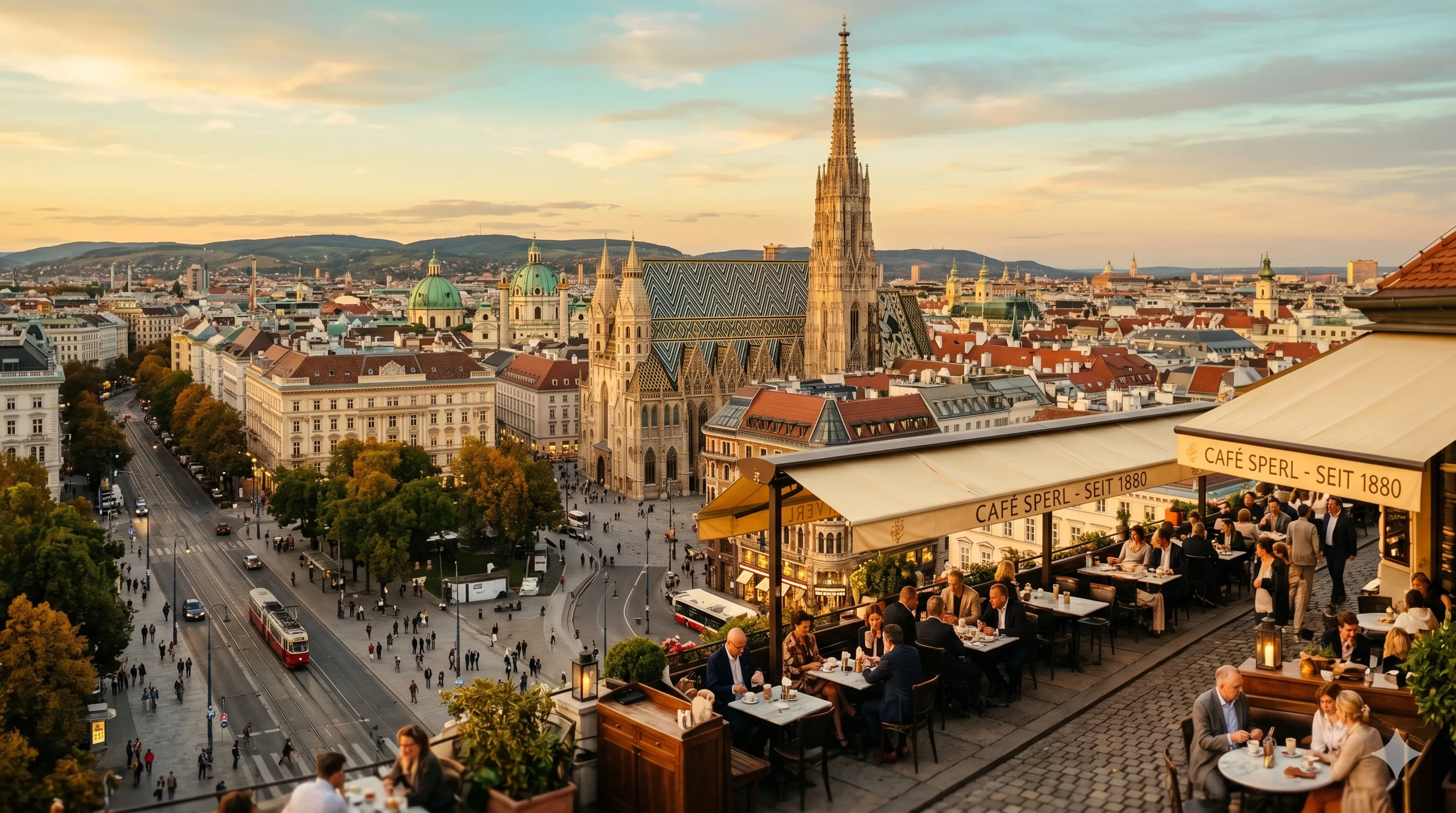
Vienna is a major European capital known for Baroque grandeur, Habsburg heritage, and traditional café culture. Here is what you need to know before traveling.
St. Stephen’s Cathedral is Vienna’s landmark and a Gothic masterpiece from the 14th–16th centuries. The distinctive multicolored roof tiles define Vienna’s skyline. Cathedral entry costs $8 (€7); ages 6–14 pay $3 (€3), and the south tower climb (343 steps) adds $7 (€6.50). Hours: Monday–Saturday 9–11:30 a.m. and 1–4:30 p.m., Sunday 1–4:30 p.m. (services may apply). Summer closing extends to 7 p.m. Avoid queues by arriving before 11 a.m. Note: no shorts or sleeveless shirts (respect for services).
Schönbrunn Palace is a Baroque masterpiece (1696–1749) and UNESCO World Heritage site. With 1,441 rooms, it was the Habsburg summer residence. State Apartments with audio guide: $30 (€28). Palace Ticket (includes secret chambers and Hall of Mirrors): $41 (€38). Gloriette viewing terrace: $8 (€7). Hours: daily 8:30 a.m.–5:30 p.m. (extended to 6 p.m. in summer). Peak waits occur 10 a.m.–3 p.m. Online tickets save time. Grounds are free.
The Kunsthistorisches Museum houses one of Europe’s largest art collections: works by Bruegel, Rubens, Rembrandt, Vermeer, Egyptian mummies, and Greek statues. Online entry: $24 (€22); regular $27 (€25). Hours: Tuesday–Sunday 10 a.m.–6 p.m., Thursday until 9 p.m. (closed Mondays). Plan for half a day minimum. Morning visits see fewer crowds.
Belvedere Palace consists of Upper and Lower Palace (built 1714–1722 as residence for Prince Eugene) housing Klimt’s “The Kiss” and Austrian Modern artworks. Entry: $18 (€17). Combination ticket (both palaces): $27 (€25). Hours: daily 10 a.m.–6 p.m., Thursday until 9 p.m. Grounds are free.
The Hofburg was the Habsburg winter palace (center of power since 1273). The Imperial Treasury displays crowns, insignia, and relics. Entry: $18 (€17); advance online booking recommended. Important: From April 1, 2026, timed-entry tickets are required — book online in advance! Hours: Tuesday–Sunday 9 a.m.–5:30 p.m. (closed Mondays).
Naschmarkt is an open-air food market (since 1780) with fruit, vegetables, cheese, cured meats, and international specialties. No entry fee. Hours: Monday–Friday 6 a.m.–7:30 p.m., Saturday 6 a.m.–5 p.m. (closed Sundays except flea markets). Best visited 8–11 a.m. for full selection.
The Giant Ferris Wheel (Riesenrad) was built in 1897 and stands 55 meters high. One ride lasts approximately 10 minutes. Entry: $16 (€15); children $8 (€7.50). Hours: daily 9 a.m.–10 p.m. (seasonal). Rainy weather brings fewer tourists.
Stephansplatz is Vienna’s heart with the cathedral as its backdrop — a tourist hub with street performers, cafés, and restaurants. Best visited early (before 10 a.m.) or after 6 p.m. (evening ambiance is exceptional).
The Danube Valley (Wachau) lies 80 km west of Vienna and is a romantic river gorge with steep banks, vineyards, and castles — UNESCO World Heritage site. Train from Vienna Westbahnhof takes 90 minutes ($11–16 / €10–15). Alternatives include boat cruises from Vienna (4 hours, approximately $43 / €40). Highlights include Melk Benedictine Monastery ($16 / €15 entry) and medieval Dürnstein with wine tastings. Day trip possible; overnight recommended.
Melk Monastery itself is a Baroque abbey (built 1702–1738) above the Danube with elaborate vaulting and frescoes. Guided entry: $16 (€15). Hours: daily 9 a.m.–5 p.m. (winter until 4 p.m.). Train journey from Vienna: 90 minutes ($11–16 / €10–15).
Hallstatt is a small alpine lake village (150 km west) — but massively crowded with 4,000+ daily tourists. Train from Vienna: 2.5 hours ($22–33 / €20–30). The reality is less romantic than postcards suggest; less crowded alternatives include Salzkammergut lakes like Attersee or Traunsee.
Salzburg (2-hour train west, $33 / €30) is Mozart’s birthplace with old town, Hohensalzburg Fortress, and historic square. A full-day trip with overnight is worthwhile. Train is more comfortable than driving.
Margareten District (5th district) is an alternative neighborhood with antiquarian bookshops, galleries, vintage stores, and authentic Viennese establishments rather than tourist venues. U6 line, Längenfeldgasse station. Not a classic sight, but genuine Vienna experience.
Augarten Park (2nd district) is one of Vienna’s oldest parks (1712) with an active porcelain manufactory. Free entry; manufactory tour: $13 (€12). Less crowded than Schönbrunn. U2 line to Augarten station.
Grinzing is a wine village north of Vienna known for Heurigen — traditional wine taverns. No village entry fee. Heuriger visit: $16–33 (€15–30) per person (wine + food). U6 to Spittelau station, then tram 38 to Grinzing. Best time: Friday/Saturday from 5 p.m. Tip: avoid touristy main-street establishments; seek smaller side streets.
Central Cemetery contains graves of Beethoven, Brahms, Strauss, and Schubert. Free entry. Hours: daily 7 a.m.–7 p.m. (winter until 5 p.m.). U6 to Central Cemetery 1st or 2nd gate. Purchase a map ($1 / €1) for navigation. A quiet, melancholic experience away from tourist crowds.
Vienna Botanical Garden (13th district) houses 12,000 plant species from worldwide sources. Free entry. Hours: daily 7:30 a.m.–6 p.m. (winter until 4:30 p.m.). U3 to Stephansplatz, then tram 71. Few tourists, peaceful atmosphere — ideal on hot summer days.
Vienna is year-round accessible, but seasons differ markedly.
March through May brings spring with temperatures of 3–23°C, blooming parks and gardens, reopening sidewalk cafés. Cultural events increase. This is optimal for unhurried sightseeing. Rain is possible but infrequent. Prices remain moderate.
June through August delivers summer with warm to hot temperatures of 16–29°C, extended daylight, Danube swimming, and open-air concerts. High season brings crowded museums, Stephansplatz congestion, and prices 20–40% above off-season. Best visited early morning before 10 a.m.
September through November offers autumn with temperatures of 4–24°C, golden light, and parks in fall colors. September is as pleasant as May without high-season crowds. October/November are cooler with clearer light and fewer tourists.
December through February brings winter with temperatures of −1 to 6°C. December is exceptional: Christmas markets (Stephansplatz, Schönbrunn, Belvedere) create festive atmosphere but are extremely crowded. January/February are quietest and cheapest months. The Opera Ball in early February is spectacular but expensive.
| Jan | Feb | Mar | Apr | May | Jun | Jul | Aug | Sep | Oct | Nov | Dec |
|---|---|---|---|---|---|---|---|---|---|---|---|
| Low | Low | Low | Sweet Spot | Sweet Spot | Peak | Peak | Peak | Sweet Spot | Sweet Spot | Low | Low |
4° -1° | 7° 0° | 12° 3° | 18° 8° | 23° 13° | 27° 16° | 29° 18° | 28° 18° | 24° 14° | 18° 9° | 11° 4° | 6° 0° |
Viennese coffeehouses are a UNESCO cultural heritage. People don’t visit for quick coffee but linger for hours — often with newspapers, chess, or friends — without pressure to leave. Order a “Kleiner Schwarzer” (espresso), “Großer Schwarzer” (double espresso), “Melange” (cappuccino-like), or “Einspänner” (coffee with cream). The Melange is the everyday standard order. Try Café Hawelka (established 1952), Café Sperl, or Café Frauenhuber.
Tipping is not mandatory but expected. Rounding up 10–15% is standard (e.g., a $47 / €43 bill → pay $54 / €50). Minimal tippers can leave small coins ($1–2 / €1–2).
“Grüß Gott” (also “Servus” among friends) is the standard greeting. Viennese are direct and sometimes blunt; this reflects a pragmatic communication style rather than rudeness. Informal address (“du”) with strangers is inappropriate; “Sie” (formal) is standard.
A Heuriger is a traditional wine tavern, often within the vineyard itself. Cuisine is simple (bread, sausage, cheese), wine local (Wiener Gemischter Satz is the typical white variety). Signs on the door indicate seasonal opening hours. Fridays and Saturdays are crowded; Monday–Thursday more relaxed.
Vienna is home to the waltz (Strauss family) and classical music (Beethoven, Mozart, Brahms, Haydn). Concert performances are ubiquitous. Golden Hall of the Musikverein or State Opera performances are bucket-list experiences but expensive ($109–327 / €100–300). Cheaper options: street-side cafés with live music, church concerts.
The Opera Ball in early February is one of Europe’s largest social events. Tickets cost $545–3,270 (€500–3,000). For typical travelers: view the opera house externally or take a more affordable guided tour ($11 / €10).
Avoid Stephansplatz during midday hours (12–3 p.m.) — it’s crowded with tourist congestion and pickpocket activity. Better times: before 10 a.m. or after 6 p.m.
U-Bahn edge cars (lines U1, U2, U3) at night and peak hours are pickpocket hotspots. Middle cars are safer.
Counterfeit currency circulates — street money changers and dubious exchanges are scam sources. Always exchange at banks or airports. Inspect 50-euro notes carefully.
Damp basement restaurants may appear authentic but hygiene standards are questionable. Stick to established venues or check current online reviews.
Unsupervised night swimming in the Danube or lakes is risky (currents, water quality, safety). Choose public bathing facilities with lifeguards.
Main shopping streets Mariahilfer Straße and Kärntner Straße are tourist-crowded with inflated prices and minimal local character. Better: small side streets or district centers.
Vienna-Schwechat Airport is 22 km southeast. Rail: S7 train reaches the main station in 25 minutes ($4 / €4 single, $8 / €7 return). City Airport Train (CAT) takes 16 minutes to the center ($13 / €12, faster but pricier). Taxi: $33–44 (€30–40) flat. Rideshare (Uber, Bolt): $16–27 (€15–25) depending on traffic. Rental car: not recommended (expensive parking, difficult old-town navigation).
Vienna has one of Europe’s best public transit networks. Five U-Bahn lines (U1–U6, running until approximately midnight, until 1 a.m. Friday/Saturday), 28 tram lines, 100+ bus lines operate as integrated system. Ticket prices (2026): single journey $3.50 (€3.20, valid for one ride without transfer), 24-hour pass $11 (€10.20), 72-hour pass $31 (€28.90), 7-day pass $31 (€28.90), monthly pass $82 (€75), annual pass $509 (€467; digital $502 / €461). Annual pass becomes cost-effective after approximately 5 weeks of daily use.
Citybike Wien is a public bike-share system with 110 stations. Online registration, first 30 minutes free, then $1 (€1) per 30 minutes. Suitable for short distances; hilly Vienna areas can be challenging.
Vienna’s inner city (district 1) is highly walkable. From Stephansplatz, Belvedere and Hofburg are approximately 1.5 km on foot.
Austria is an EU and Schengen member. German travelers need valid ID card or passport. No visa required. Passport validity must cover the stay duration. German citizens are not subject to the 3-month rule applied to non-EU travelers, though observing it is prudent.
Austria currently conducts internal border controls on borders with Germany, Czech Republic, Slovakia, and Hungary. Wait times are possible (30 minutes to 2 hours). Highways A4/A22 are typical control points. Trains typically have shorter waits.
Citizens of 59 nations (including USA, UK, Canada, Australia, Japan) receive 90 days visa-free under Schengen rules. Passport must be valid for stay duration plus minimum 3 months beyond departure. The automated Entry/Exit System (EES) has been operational since October 10, 2025, requiring biometric registration on arrival (fingerprints, photo) — automated process taking approximately 5 minutes.
Customs follows EU standards (e.g., 1 liter spirits, 200 cigarettes). Cash exceeding $10,900 (€10,000) requires declaration.
The European Health Insurance Card (EHIC) is valid — supplementary travel insurance not required but recommended as backup. Doctors speak English in tourist areas. Pharmacies are widely available.
EU citizens face no mandatory vaccinations. FSME (tick-borne encephalitis) vaccination is recommended for forest hiking and park walks. Vaccination administered pre-trip costs approximately $87–131 (€80–120), often partially reimbursed by insurance.
Vienna’s tap water is excellent — Alpine spring source, unchlorinated, meeting German quality standards. Safe to drink.
Austria ranks 5th in the Global Peace Index (after Denmark, Iceland, Ireland, New Zealand). Vienna is a secure major city. The Foreign Office warns of generalized terrorism risk (possible anywhere), but Vienna has no current elevated threat level. Pickpocketing occurs mainly in tourist zones and during peak U-Bahn times — standard precautions suffice.
Hospital care is high-quality and free or low-cost with EHIC. Emergency departments (AKH — General Hospital) operate 24/7.
Traffic follows European standards. Traffic lights and crosswalks are respected. In tourist areas especially: watch for tram rails (slippery when wet, particularly hazardous on bicycles).
Discover Europe's cities in autumn without crowds. Architectural masterpieces and hidden gems for the culturally curious traveler.
Discover Europe's best cultural museums and galleries beyond the Louvre. Essential institutions and hidden gems across London, Vienna, Amsterdam, and more.
A short trip need not be superficial. With deliberate route planning, you discover the cultural and architectural substance of Europe in three days — not merely the facades.
To truly understand a city, spend time in its markets. Street-food cultures reveal urban history, local identity, and social structures in immediate ways.