Guide
Autumn City Breaks: European Gems Away from the Crowds
Discover Europe's cities in autumn without crowds. Architectural masterpieces and hidden gems for the culturally curious traveler.
TravelFeelings Editorial Team10 min.
Austria · Central Europe
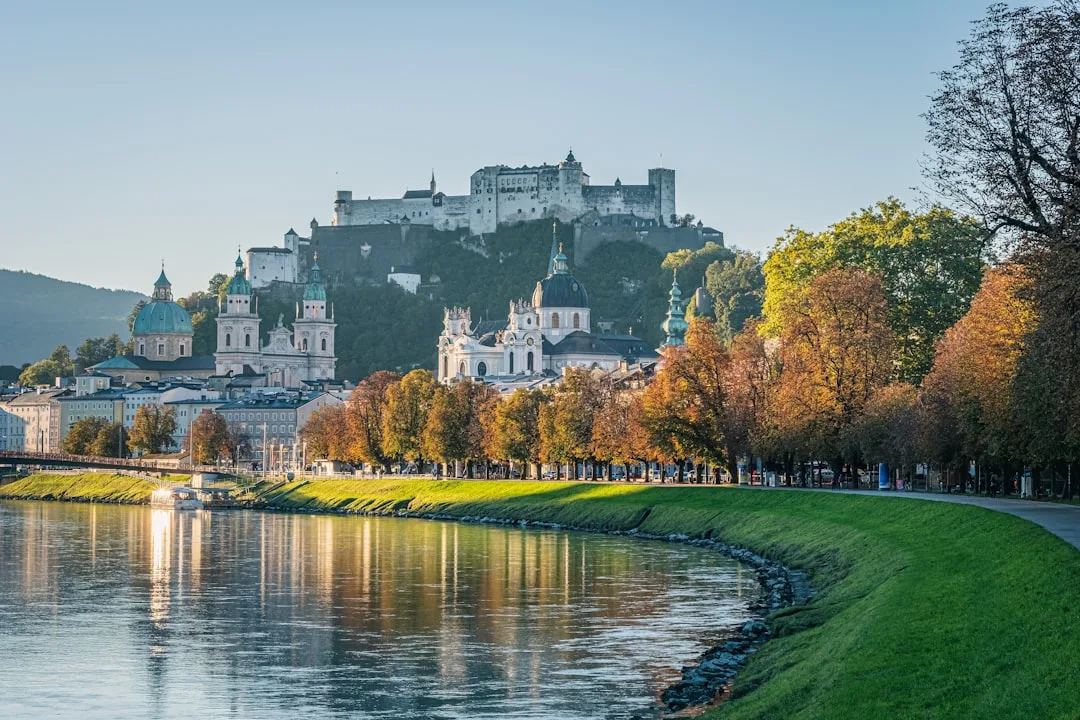
Salzburg is Mozart's birthplace, home to a UNESCO-listed Old Town, the imposing Hohensalzburg Fortress, and baroque grandeur. From December Christmas markets to the Salzburg Festival in summer, every season brings its own character.
Hohensalzburg Fortress dominates the city from atop the Festungsberg (Fortress Hill). It’s one of Europe’s largest surviving fortresses, with over 900 years of history. Access via cable car costs $11 (€10), fortress admission $16 (€15). Hours: daily 9–17:00 (seasonal extensions). Peak times: 11–14:00. Recommendation: visit early morning (9–10:00) or after 16:00. The terrace provides sweeping views of the city and Alps beyond.
Mozart’s Birthplace is located at Getreidegasse 9, serving as a museum since 1880. It houses personal belongings, manuscripts, and instruments from Mozart’s life. Admission: $13 (€12); children $5 (€5). Hours: daily 9–17:30 (extended to 21:00 in July/August). Note: Getreidegasse is narrow and touristy. Morning visits (before 10:00) are far more pleasant.
Salzburg Cathedral is a baroque masterpiece from the 17th century, featuring an impressive dome and marble interiors. Admission is free during visiting hours (avoid Mass times). Hours vary according to services. Practical tip: Visit before 11:00 or after 16:00 to avoid crowds. No shorts or sleeveless shirts permitted.
Mirabell Palace and Gardens are UNESCO World Heritage sites. The baroque gardens are free to enter and feature parterre fountains, rose gardens, and water features. The Pegasus Fountain is famous from the “Sound of Music” film. Inside, the Marble Hall (Marmorsaal) is a renowned concert and wedding venue where Mozart once performed; palace admission approximately $9 (€8). Garden hours: daily 6:00–20:00 (winter until 17:00). Recommendation: visit gardens at sunrise when tranquil.
Hellbrunn Palace lies 5 km south and is a 17th-century pleasure palace featuring ingenious water-activated trick fountains. Admission: $16 (€15); children $10 (€9). Hours: daily 9–17:30 (seasonal). Accessible via bus 25 ($3 / €2.80). Allow 2 hours for complete tour including the water-operated mechanisms, which activate every 20 minutes.
The DomQuartier comprises a museum complex of Residence, Cathedral, and St. Peter’s Cemetery. Admission: $16 (€15, combined). Hours: daily 10–17:00 (Thu until 20:00). Note: Residence tours are in German; English audio guide available for $3 (€3) additional. Duration: 2–3 hours.
Salzburg’s Old Town has been UNESCO World Heritage–protected since 1997. It encompasses the right bank of the Salzach River with narrow lanes (Getreidegasse, Judengasse), merchant houses, and small squares (Residenzplatz, Mozartplatz, Kapitelplatz, Alter Markt). Fully walkable (45 minutes corner-to-corner), but extremely crowded during peak season (June–August, 11–15:00) with 5,000+ daily visitors. Recommendation: explore off-main-routes via Imbergstrasse for a better experience.
The Salzburg Festival is a world-class opera and concert festival held July–August annually. Tickets range $22 (€20, small performances) to $330+ (€300+, opera galas). Book online well in advance — daytime tickets often sell out. The festival is formal; dark clothing is standard (no sportswear).
Hallstatt is located 80 km south and represents a postcard-perfect alpine village on Hallstatt Lake. By public transport: train Salzburg–Attnang-Puchheim (75 min), transfer to Hallstatt-Obertraun (20 min), then ferry across the lake (15 min); total 2.5–3 hours. Cost: approximately $27–33 (€25–30) roundtrip. Critical note: Hallstatt is extremely overcrowded (4,000+ daily during peak season). Tour buses arrive 11–15:00. Recommendation: visit before 10:00 or after 17:00 for a more authentic experience. Car rental ($43 / €40 per day) offers more flexibility.
The Salzkammergut is an Alpine lake district featuring multiple destinations: Wolfgangsee (60 km, 1.5 hours), Attersee (65 km, 1.5 hours), Mondsee (55 km, 1.5 hours). These are less crowded than Hallstatt and offer swimming, traditional inns, and hiking. Access via bus 150 ($11–22 / €10–20). Recommendation for hikers: St. Gilgen on Wolfgangsee features traditional chalets and mountain lift access (Zwölferhorn).
Berchtesgaden is 30 km south in Bavaria and features Königssee (pristine alpine lake) and the Eagle’s Nest (Kehlsteinhaus), a mountaintop lodge built in 1938 that now houses a restaurant with panoramic Alpine views. By car: 45 minutes. By public transport: train Salzburg–Berchtesgaden (ca. 1 hour), bus to Königssee (10 min). Königssee boat tour admission: approximately $22 (€20). Note: Germany has no motorway vignette for cars — you only need Austria’s vignette for the Austrian motorway stretches en route.
St. Peter’s Monastery is directly in Salzburg’s Old Town (Kapitelplatz). It’s the oldest Benedictine monastery in German-speaking territories (founded circa 700). Admission is free; the baroque cemetery is free to explore. Hours vary by services and Mass times. The attached St. Peter Stiftskeller restaurant is a traditional venue offering folk-music evenings (Salzburg Alpine music).
Kapuzinerberg (629 m) is a hilltop north of the Cathedral with a Capuchin monastery (founded 1602) and fortified church. The 20-minute uphill walk is steep but manageable. Views from the summit rival Hohensalzburg but draw far fewer tourists. The monastery is partially accessible (expect monastic silence). Admission: free.
The Almkanal trail is a 12th-century water-conveyance system (first documented in 1136) spanning 23 km through Salzburg and surrounding areas. An 8 km section through beech forests and alpine meadows is accessible and quiet — a world away from tour groups. Start point: south Salzburg (Anifer Straße). Admission: free. Duration: approximately 2 hours. Well-maintained; family-friendly.
Salzburg-Neustadt is an alternative quarter south of the Salzach River featuring art galleries, antique shops, second-hand stores, and young-focused establishments. Locals actually live and shop here. Museums like Rupertinum (Modern Art) charge modest admission (approximately $9 / €8). Note: The quarter livens at weekends; quieter midweek.
The Silent Night Chapel in Oberndorf (15 km north, 25 min by bus 3) is the birthplace of the famous Christmas hymn “Silent Night” (composed 1818). The original church no longer stands, but a memorial chapel occupies the site. Admission: free. Especially during Advent (December), it becomes a pilgrimage destination with a contemplative atmosphere.
| Jan | Feb | Mar | Apr | May | Jun | Jul | Aug | Sep | Oct | Nov | Dec |
|---|---|---|---|---|---|---|---|---|---|---|---|
| Low | Low | Low | Sweet Spot | Sweet Spot | Peak | Peak | Peak | Sweet Spot | Sweet Spot | Low | Low |
4° -2° | 7° -1° | 12° 1° | 18° 6° | 23° 11° | 26° 14° | 28° 16° | 27° 16° | 23° 12° | 17° 7° | 10° 2° | 5° -1° |
Salzburg is accessible year-round, though seasons differ significantly in weather, pricing, and tourist volume.
March through May brings spring with temperatures of 6–23°C. Days lengthen, spring blossoms appear in gardens and parks. Tourist numbers are moderate; prices run 20–30% below peak season. Drawback: occasional rainy days. Recommendation: April and May are optimal—stable, pleasant, and invigorating.
June through August is peak season with temperatures of 26–28°C. The Salzburg Festival (July–August) draws international audiences and top-tier artists. Museum hours extend. Drawback: the city is extremely crowded (Residenzplatz 11–15:00 is a sea of tourists). Prices run 40–60% above shoulder seasons. Afternoon thunderstorms occasionally occur but are brief. Tip: Festival booking requires 3–6 months advance notice.
September through October brings autumn with temperatures of 7–23°C. Tourist masses have departed, prices decline, yet weather remains pleasant. Alpine autumn foliage is visually striking. Recommendation: October is among the best months—mild, quiet, and economical.
November through December marks Advent season. Salzburg hosts multiple Christmas markets: the main Residenzplatz market (operating continuously since the 15th century, Nov 19–Jan 1, 2027), Mirabell Square market, and Stern Market. Temperatures drop to 0–10°C; December snow is common (rooftops turn white, though snow on the roads requires care). Advent carols, holiday singing events, and mulled-wine stalls define the atmosphere. Prices run 20–30% above normal November rates. December is romantic but crowded and cold. Recommendation: November (pre-December rush) remains pleasant.
January through February is winter. Temperatures fall to -2 to +7°C; snowfall is frequent. Surrounding Alps are snow-capped (scenic backdrop). Advantage: the city becomes very quiet and economical (30–50% below peak season). Museums empty out, restaurants have capacity. Drawback: some minor attractions have reduced hours. Winter hiking requires appropriate gear. Recommendation: culture-focused visitors can exploit the quiet for museum-focused itineraries.
Mozart permeates Salzburg to this day. The city sells “Mozartkugel” (confection of marzipan, nougat, chocolate; approximately $3 / €3 per box) everywhere. Concerts of Mozart’s works occur daily in churches and concert halls (Salzburg Marionette Theater, Amadeus Concert Hall). Mozart was born here in 1756, and his family remains central to local identity. In 2026, Salzburg celebrates Mozart’s 270th birthday with special exhibitions (through December 1) and festival concerts.
The Salzburg Festival has operated since 1920 as an arts festival featuring opera, classical concerts, theater, and dance. Artists like Maria Callas and Herbert von Karajan shaped its prestige. The festival is formal and international; dark attire is standard (no casual dress). Tickets are expensive ($22–330+ / €20–300+). The Festival brand has made Salzburg internationally synonymous with high culture.
Traditional costume (Dirndl, leather pants) remains everyday wear in Salzburg and the Salzburg region. Traditional restaurants and inns employ staff in traditional dress. This reflects everyday regional culture. Visitors wearing costume draw raised eyebrows.
Salzburger Nockerl is a sweet soufflé dessert — fluffy, baked meringue mounds dusted with icing sugar, shaped to evoke the hills around the city. Served in traditional restaurants ($13–19 / €12–18) and usually large enough to share. Authentic renditions appear in older establishments.
The Silent Night connection is culturally significant. “Silent Night, Holy Night” was composed in 1818 in nearby Oberndorf and is now sung worldwide. Salzburg claims partial ownership of the legacy (though composition technically occurred outside the city). The Oberndorf chapel becomes a pilgrimage site during Christmas.
Salzburg beers and fruit schnapps are regional specialties. Stiegl beer is the iconic local brew. Fruit schnapps (pear, apricot, and plum varieties, for instance) are popular souvenirs. Note: schnapps quality varies considerably.
Photography inside churches without permission is forbidden and actively prevented by clergy. This includes the Cathedral, St. Peter, and Residence chapels. Asking permission is costless and appreciated.
Getreidegasse during peak season (June–August, 11–15:00) becomes a tourist crush. The narrow lane fills with overpriced shops and restaurants. Avoid: midday hours. Recommendation: explore it before 10:00 or after 17:00.
Hallstatt visits via organized bus tours defeat the purpose. The village is inundated with daily tour groups (4,000+ tourists). Photography is compromised by crowds. Avoid: 11–15:00, weekends. Recommendation: solo visits at off-peak times.
Sound of Music fixation annoys locals. The city is not Hollywood scenery. Avoid: repeatedly framing conversations around the film.
Card payment at older traditional inns is not universal. Some family-run “Heurigen” and old-style restaurants accept cash only. Note: ATMs are ubiquitous (Raiffeisenbank, Sparkasse); cash withdrawal is straightforward.
Unplanned parking in the Old Town is futile. The Old Town is largely pedestrianized. Public parking (Altstadt Garage, Neustadt Garage) costs $16–28/day (€15–25). Public transit or taxi is more cost-effective and stress-free.
By air: Salzburg Airport is 5 km northwest. City bus W3 reaches downtown (30 min, $3 / €2.80, approx. every 20 min). Taxi costs $16–22 (€15–20). Car rental (Hertz, Europcar, Budget) from $33/day (€30). Alternative: Munich Airport (1.5 hours by car or train from Munich Central Station to Salzburg, $22–54 / €20–50 by train).
By rail: ÖBB (Austrian Federal Railways) connects Salzburg to Vienna (2.5–3 hours, $32–108 / €30–100), Munich (1.5–2 hours, $22–54 / €20–50), Innsbruck (2–3 hours). Book via oebb.at. Train travel is comfortable and often cheaper than car rental for solo visitors.
Salzburg is compact and walkable. The Old Town is navigable corner-to-corner in 45 minutes. Public transport: Salzburg Transport Company (SVB) operates buses and trams (tram line 6 runs from Central Station to Old Town, 5 min). Single ticket: $3 (€2.80), day pass: $8 (€7). No underground system exists. Most tourist sites require 1–2 bus rides.
Bike rental: Nextbike stations at Central Station and citywide (approximately $11 / €10 per day). The Old Town is too narrow for bikes; cycling infrastructure is better outside the center.
Car rental: Hertz, Europcar at airport and city center. Day trips to Hallstatt, Salzkammergut lakes, or Berchtesgaden are practical by car (1.5–2 hours’ drive). Note: Austria vignette required (10-day approx. €12, 1-day approx. €9.60; available digitally or at petrol stations). Winter tires mandatory Nov–April (fine: $5,400+ / €5,000+ without).
Taxi: Salzburg Taxi (book via app or call 661 1 11). Tariff: approximately $3–6 (€3–5) per km. Important: confirm meter operation before departure if no visible meter.
German citizens: Valid ID card or passport required. No visa needed (Schengen area). Stay length: up to 90 days within any 180-day period without authorization.
EU/EEA citizens: ID card or passport sufficient. No visa required.
Non-EU citizens: Schengen visa required ($98 / €90, 15–45 days processing, apply at Austrian embassy online). Passport must remain valid for 3+ months beyond departure.
Duty-free allowances: Alcohol (max. 1 liter spirits OR 2 liters wine per person), tobacco (max. 200 cigarettes), personal items duty-free. EU goods: no customs controls between EU states. Important: cash exceeding $11,000 (€10,000) must be declared.
Vignette (highway toll sticker) required (10-day approx. €12, 1-day approx. €9.60). Winter tires (Nov–April) mandatory. Insurance: green card (International Motor Insurance Certificate) required or verify German insurer covers Austria. TÜV/vehicle inspection must be current.
Travel insurance is not mandatory but recommended, and required for Schengen visa applications (minimum $33,000 / €30,000 medical coverage). Car liability insurance is compulsory.
Euro (EUR) is official currency. ATMs widespread (Raiffeisenbank, Sparkasse). Card payments (Visa, Mastercard) nearly universal. Cash withdrawal is typically fee-free with German debit cards at most ATMs. Note: Traditional establishments and markets may accept cash only.
Mandatory vaccinations: None. Recommended: tetanus/diphtheria (standard), Hepatitis A (if vaccination is outdated). FSME vaccination (tick-borne encephalitis) is advisable for outdoor activities in forested areas (tick season April–October, particularly in woodlands). Malaria: not relevant.
Travel kit: pain relievers, digestive aids, plasters, sunscreen. Salzburg pharmacies (emergency pharmacy marked on pharmacy door in red) are well-stocked.
Tap water is high-quality alpine spring water and entirely safe. Occasional post-construction cloudiness may occur; in such cases, boil or buy bottled water.
Food: hygiene standards are high. Markets and restaurants undergo regular inspection. Raw dairy products are pasteurized.
Overall: Very safe. Salzburg ranks among Europe’s safest cities, requiring only normal everyday precautions.
Crime: Petty theft occurs in tourist areas (Residenzplatz, Getreidegasse, tram line 6). Violent crime is rare. Precaution: avoid displaying valuables; carry rucksacks in front.
Terrorism: Austria maintains an elevated terrorism alert (level 4 of 5, set by Austrian authorities/DSN as of July 2026). However: no current specific threats to Salzburg. The alert is generalized. During large events (Festival, Christmas markets), standard vigilance is appropriate.
Natural hazards: Avalanches and alpine dangers in surrounding mountains (Nov–April). Standard marked hiking routes are safe. Avoid: off-piste skiing without expert local guides.
Emergency: 112 (police, ambulance, fire). Medical emergencies: Salzburg State Hospital (Müllner Hauptstraße 48, +43 662 4482-0). German Embassy: Vienna (+43 1 7137 1000; Salzburg coordinated via Vienna). German Foreign Office Hotline: +49 30 18172000 (from abroad).
Discover Europe's cities in autumn without crowds. Architectural masterpieces and hidden gems for the culturally curious traveler.
Discover Europe's best cultural museums and galleries beyond the Louvre. Essential institutions and hidden gems across London, Vienna, Amsterdam, and more.
A short trip need not be superficial. With deliberate route planning, you discover the cultural and architectural substance of Europe in three days — not merely the facades.
To truly understand a city, spend time in its markets. Street-food cultures reveal urban history, local identity, and social structures in immediate ways.