Sustainable City Travel in Berlin, Rome, and Barcelona
How mass tourism transforms European cities – and what visitors truly need to understand to travel with foresight.
TravelFeelings Editorial Team
When one speaks of Rome’s Trevi Fountain, the first thoughts do not typically turn to the city’s water infrastructure or the strain on its systems. The idea of travel remains intimate and personal: a moment before a monument, a photograph, the notion of culture and history. The problem with this image lies not in the longing for beauty, but in the blindness to what that private moment costs a city as a whole.
Mass tourism has fundamentally transformed major European cities over the past fifteen years. The issue extends beyond mere crowding, though crowding is certainly part of it. It concerns power: who belongs in a city, who gets displaced, how space is distributed. Sustainable city travel is therefore not simply a matter of better habits—carrying less plastic, using public transit. It is a matter of understanding the conflict lines that run beneath the surface of every tourist metropolis.
Berlin: The Palimpsest Under Pressure
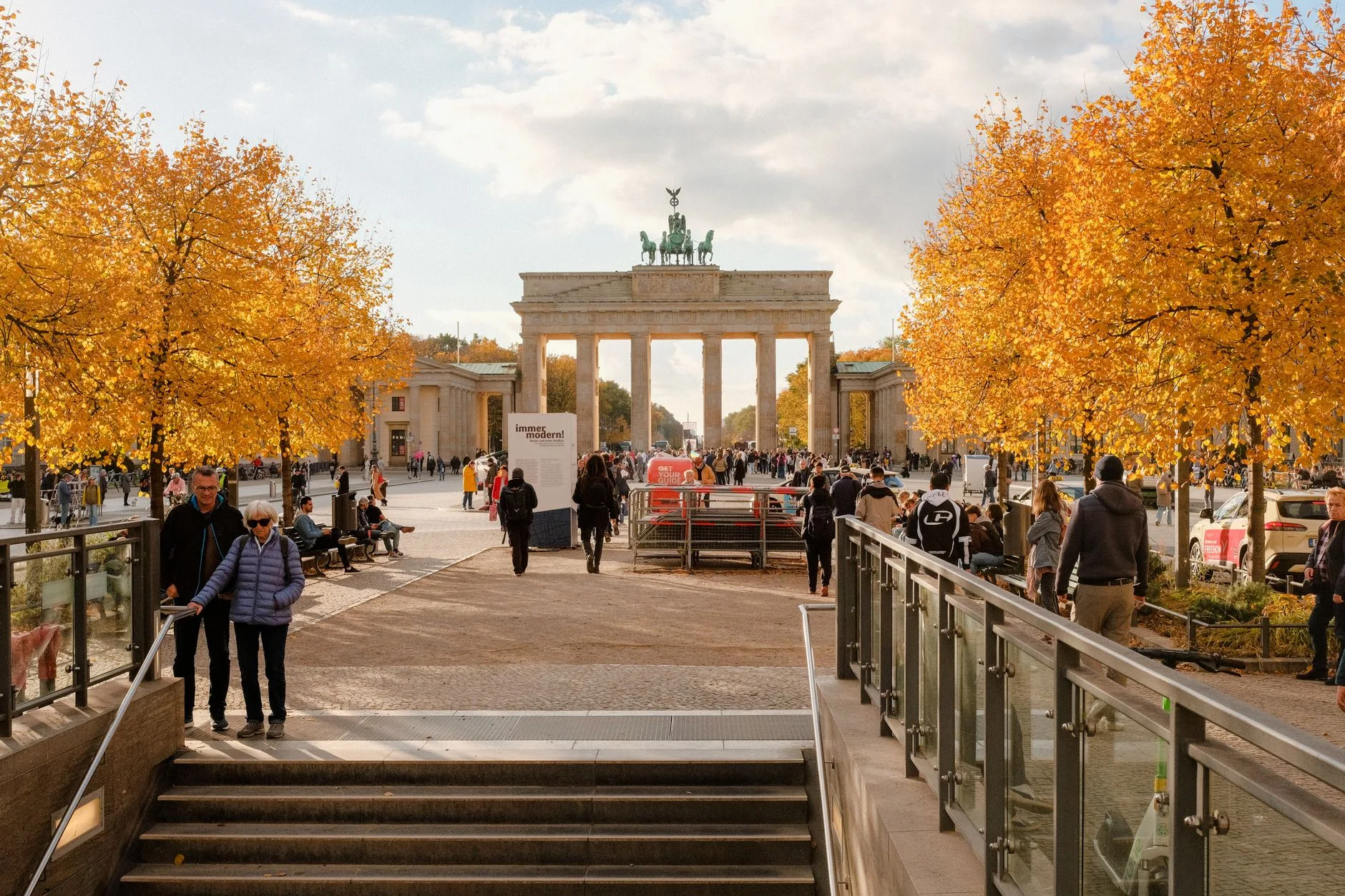
Berlin exemplifies the dilemma of a city perpetually rewriting itself. The city is a layered construction: Prussian monuments, Berliner Klassizismus, destruction by war, partition, reconstruction in East and West, then reunification. Each layer speaks to political configurations, to power and reclamation.
The problem is precisely that this layering attracts. Tourists come for its fragmented history, for Ostkreuz and street art, for subcultural spaces. Nights in clubs housed in former industrial buildings—now cultural centers—feel authentic. Yet their authenticity has become a selling point, which undermines the authenticity itself.
Berlin illustrates a specific aspect of the overtourism phenomenon: cultural free spaces (squatter communities, underground clubs, off-the-grid venues) become commercialized or displaced through tourist interest. The Kiez tourism of the 2010s already transformed Kreuzberg and Friedrichshain. What travelers perceive as “authentic Berlin alternative” is often already a second-order consumer product—a replica of counterculture, not counterculture itself.
The visitor who approaches Berlin sustainably should understand that staying for a shorter time here does not necessarily serve the purpose well. Berlin is large enough for several weeks if one wishes to engage meaningfully. The Alstadt, the Museum Island, the Reichstag visits form the baseline. What extends beyond—a reckoning with the layers, a history of East and West not reduced to tourist spectacle—requires time and cultural rigor. This stands opposed to merely passing through: intensity through duration.
Rome: Infrastructure and Its Limits
Rome predates the modern concept of architecture itself. Its settlement history spans nearly three thousand years. The city is not simply built; it is also geological—the Tiber valley structures everything. Across this long history, ancient ruins, sacred architecture, Renaissance palaces, and baroque piazzas are layered so densely that the city itself resembles a museum.
This is precisely what makes Rome overwhelming for tourists and problematic for the city itself. In 2024, more than 20 million people visited Rome—in comparison, the city has approximately 2.8 million residents. These ratios lead not only to crowding at canonical sites (Trevi Fountain, Colosseum, Pantheon) but also to a subtler shift: the city center becomes an open-air museum without local life.
Rome has responded to this crisis. Since 2024, restrictions on short-term rentals in the historic center have been reinforced; dynamic pricing for the most visited archaeological sites has been introduced. Yet here an architectural and urban-sociological problem emerges that regulation alone cannot solve: Rome is spatially finite. Its monuments cannot simply be enlarged. The city’s physical boundaries are fixed.
The visitor approaching Rome sustainably must reckon with this finitude. It means not checking off every sight in six days. It means consciously seeking places beyond the golden-circle circuit—the Baths of Caracalla, San Clemente with its strata from antiquity to the medieval, the lesser-known streets of Borgo. It also means acknowledging that tourist arrivals could and should be regulated. To love Rome is to bear responsibility that the city does not become entirely a copy of itself.
Barcelona: Urban Politics Becomes Visible
Barcelona represents a case where the conflict between tourism and local society is openly declared. In the past five years, tensions have escalated: protests against tourist saturation, demands for restrictions on Airbnb rentals, debates about city branding versus local needs.
The city possesses a specific architectural identity that has itself been commodified: Gaudí and Modernisme—particularly the Sagrada Familia, Park Güell. These are significant urban works, but they are also magnets for crowds. In Barcelona, this tension is made a conscious subject of debate.
In 2025, the city launched a participatory observatory developed with local organizations to monitor the economic and social impacts of tourism. This is not a tourist innovation—it is urban politics. It means the city renegotiates who benefits from it. The infrastructure question becomes entangled with a question of justice.
The visitor who approaches Barcelona sustainably should understand that their arrival is part of this political negotiation. It sounds harsh, but it is honest. Barcelona no longer wishes to be perceived merely as a consumer product, but as a city with residents who possess a right to their home. Sustainable travel here means: not renting an Airbnb in the historic center (this intensifies displacement pressure) but consciously staying in neighborhoods less saturated with tourism—allowing those funds to flow where they strengthen local economies rather than fragment them.
What “Sustainability” in City Travel Can Actually Mean
All of this leads to an uncomfortable truth: sustainable city travel is not primarily a matter of individual behavioral change. It is a matter of market power and willingness to accept constraints.
The person who carries their trash rather than disposing of it on a Roman street is not necessarily practicing sustainability. The person who understands that overtourism is not only an environmental question but a question of urban right and local sovereignty—that person contributes to a different understanding.
Sustainable city travel could mean: fewer places, more time. Trains instead of flights not only for their lower emissions but because the rhythm of rail travel is slower and permits different behavior. Accommodation outside city centers, not from altruism but because centers already labor under pressure. A willingness to accept that some places might eventually impose access restrictions—and to understand this as protective, not as grievance.
A city’s architecture is not mere decoration; it is condensed history and infrastructure. The visitor who grasps this distinction becomes a different traveler. Not because they have adopted better habits, but because they no longer read the city as a text to consume quickly, but as a space where people live, and which one must enter with respect.