Family Holiday in the Algarve: Planning for Parents
Family holiday in the Algarve, Portugal: flights from the US, best regions by child age, travel timing, and practical planning tips for stress-free family travel.
TravelFeelings Editorial Team
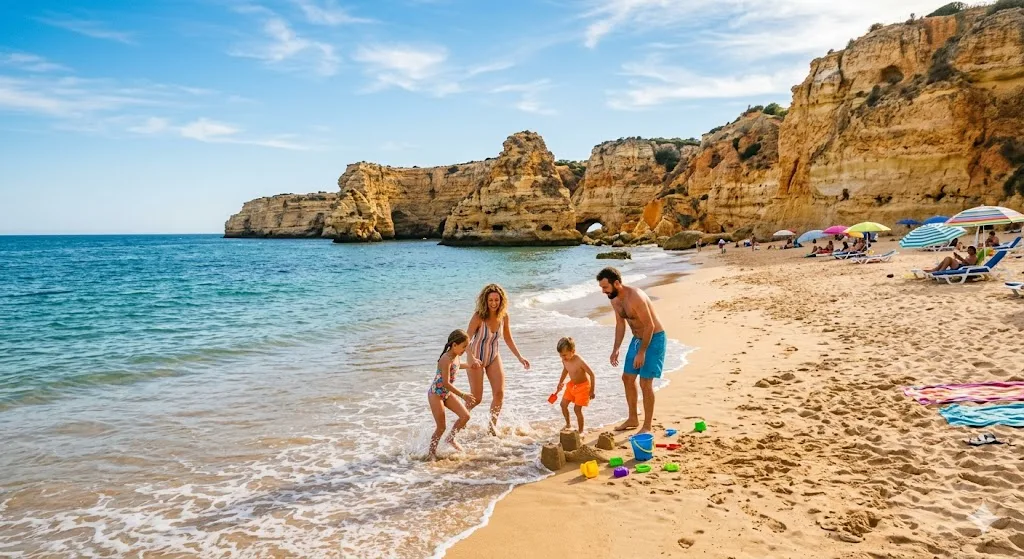
The Algarve is the classic destination for a family holiday in Portugal. Reliable weather, a genuinely child-friendly atmosphere, and infrastructure that actually supports families — not in theory, but in practice. Few European destinations are more predictable for school holidays.
But saying “the Algarve is great for families” misses the real question: Which part of the Algarve fits your children? What age groups do you find where? And how do you plan the arrival so that the flight and first day don’t exhaust everyone before the holiday even starts?
That’s what this guide answers directly.
Where should we stay for the best family holidays in the Algarve?
The Algarve isn’t one thing. The region divides into zones with very different suitability depending on your children’s ages.
Lagos: Dramatic Cliffs for School-Age Children and Adventurers
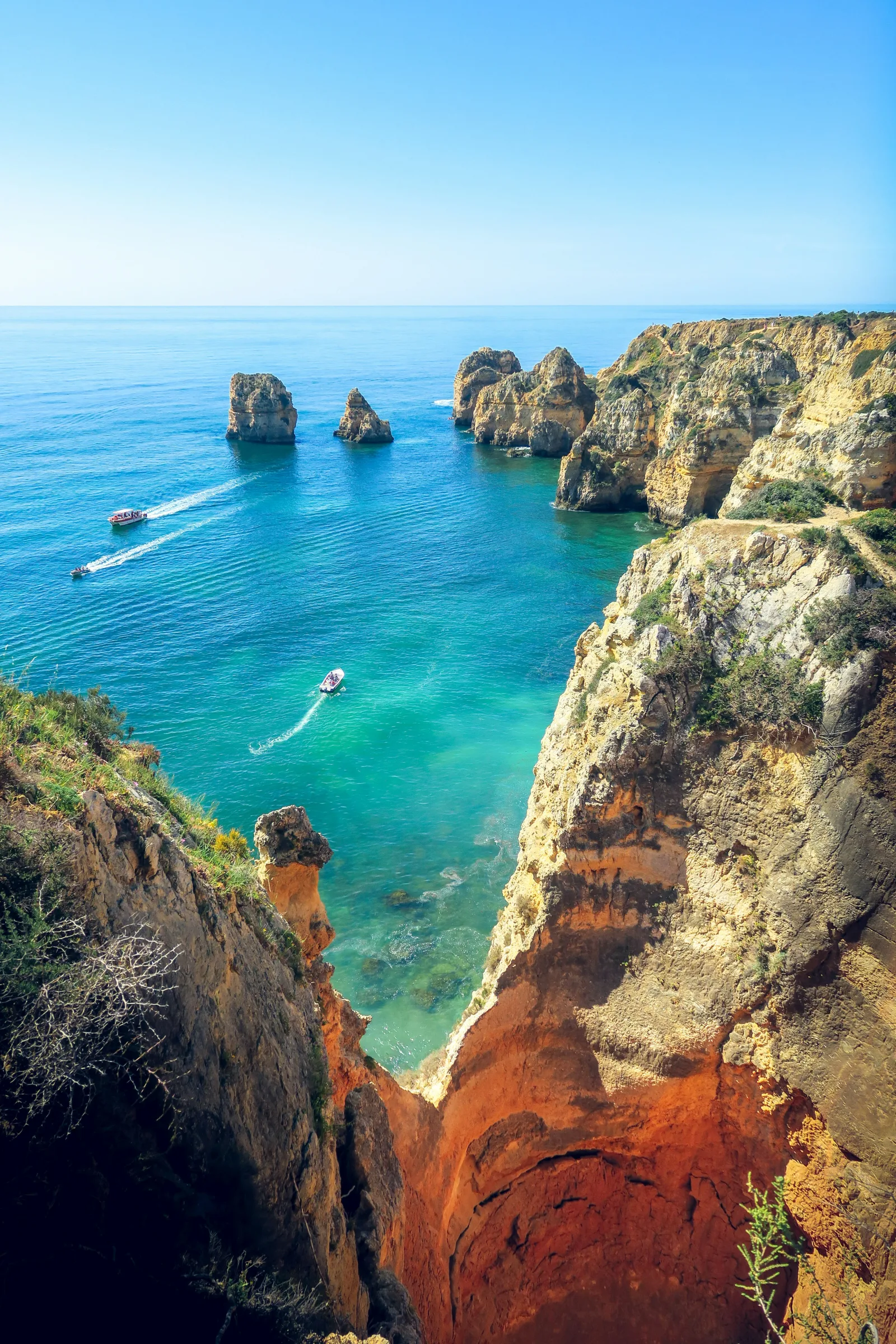
Lagos in the west sits dramatically between rock formations — Ponta da Piedade is the iconic image. That means the beaches are genuinely spectacular, but not simple to access. Rocks, stairs down, sometimes chain ladders. With younger children (under 6), that gets tedious quickly. With school-age children from 7 on, it works well. The town itself is charming, historic, restaurants welcome families, and boat tours to Benagil Cave leave from here — a major draw for primary school kids and a worthwhile excursion.
Realistically: avoid it with very young children, but it’s a top choice for older kids or teenagers.
Albufeira: The Standard for Mid-Range Families and Built-In Entertainment
Albufeira isn’t romantic. It’s touristly organized. But that’s exactly the point: long, wide sandy beaches with shallow entry to the water, loungers and umbrellas everywhere, child-friendly restaurants right on the sand, animation programs in resorts. You’re there for the beach, not the old town.
Here’s the truth: Albufeira works for families with toddlers (from age 2) and school-age children until about 12. Teenagers find it uncool fast. The beaches are safe, uniformed officers are visible, the water is calmer than elsewhere.
Realistically: Albufeira isn’t an adventure, but it’s the safest adventure for young families.
Tavira: The Quiet Option for a Few Days
Tavira is smaller, more historic, less touristy. It sits on the Ria Formosa lagoon, not directly on the ocean. That sounds less appealing, but often isn’t. The Praia do Barril on the nearby island is flat and quiet — you either take a small train or walk over a wooden boardwalk. That’s a genuine adventure for kids without the stress.
The town has history (castle), narrow streets, good restaurants, fewer crowds than Albufeira. Perfect if you want more than just beach, but also land and culture for a few days.
Realistically: Tavira for 3–4 days alongside a longer coastal stay — not as your main base for two weeks of beach holidays.
Sagres: The Adventure for Nature-Loving Families
Sagres at the southwestern corner is dramatic — cliffs, lighthouses, rough seas. The Praia do Martinhal nearby is child-friendly (golden, shallow), but Sagres overall is wilder. Ideal for families who like hiking, climbing, experiencing nature. Tough with very young children, but fantastic with kids 8 and up.
Realistically: For active families and children who don’t need animation every day.
Which part of Portugal is best for families?
This is the comparison question. Many parents wonder whether the Algarve is really the best choice or whether Lisbon, Porto, or the Douro Valley might be better.
Here’s the honest answer: it depends on what you want.
Lisbon is a great city break with children — Tram 28, historic elevators, the Oceanário, pastéis de nata in a café. But Lisbon is steep. With a stroller, it’s exhausting. With school-age children, it works. The advantage: cultural variety, real urban experience, history. The downside: you’re building Lisbon hours, not beach days.
Porto and the Douro Valley are wonderfully scenic. Boat trips on the Douro, historic train routes, green hills. That’s fantastic for families with elementary-age kids. But: less infrastructure than the Algarve, fewer activity programs, more “figure it out yourself.”
The Algarve is the beach destination. Long strands, safe, shallow entries in many coves, water parks (Slide & Splash, Zoomarine), good hotels and rental apartments, infrastructure specifically built for families. That’s the difference: the Algarve does the logistics for you.
The honest answer: Algarve for two weeks of classic beach holidays. If you have six to eight days, combine them: four to five days in the Algarve, two to three days in Lisbon — it works distance-wise (three hours driving), and your kids get real variety. For more on family travel in general, check out our guide.
When is the best time to visit Portugal and the Algarve?
This is the practical question that brings together school schedules, weather, and costs.
May and June: Air temps 72–79°F, water 64–70°F, school breaks don’t align everywhere. Hotels are cheaper than July–August. Beaches are warm enough for swimming but not crowded. The best choice for families without fixed school holidays.
July and August: Peak season. Air temps 82–90°F (too hot for some families with young children), water 72–75°F, overcrowded beaches, double hotel prices. Advantage: all schools have breaks at the same time. Disadvantage: that’s why it’s so crowded.
September: Often overlooked. Water still warm (70–72°F), air pleasant (75–81°F), many school breaks are over, hotels cheaper. Book September whenever possible.
October: Still swimmable, but rain risk rises. Not ideal for beach holidays, but workable for combined trips (beaches plus culture).
November to March: Winter in the Algarve is mild (59°F air, 59–61°F water). Great for escaping northern cold, but not for classic beach holidays.
Practical guidance by situation:
| Situation | Best Months | Why |
|---|---|---|
| Fixed school breaks, budget-conscious | September | Weather, fewer crowds, lower prices |
| Flexible dates, budget flexible | May/June | Perfect weather without the heat stress |
| Locked into summer breaks (July-August) | July/August | No alternative, school calendar |
| Combined Algarve + Lisbon trip | June or September | Weather and culture mix well |
Is the Algarve good for children?
This is less a geography question than a safety and comfort one. To be direct:
Safety: Yes. The Algarve is safe for families. Crime against tourists is low. Infrastructure is dense. Police presence is visible. Children can safely go to beach activities on their own here — something that wouldn’t feel safe in many other southern European countries. It works here.
Water and swimming: Atlantic water isn’t Mediterranean warm, but it’s swimmable. May through October: 64–75°F, comfortable after three to four minutes in the water. Neoprene suits for very young kids help. Currents exist, but beaches are monitored. Use caution with very small toddlers (under 2) — the Atlantic’s force requires close attention.
Medical care: Excellent. German standards. Pharmacies everywhere, English-speaking doctors, dentists too. For summer stomach troubles or respiratory infections, you can see a doctor during business hours — it runs smoothly.
Practical infrastructure: Restaurants offer children’s tables, coloring pages, kid-sized portions. This isn’t performed; it’s culturally embedded. Childcare facilities and hotels have changing tables. Baby food and diapers are everywhere, not pricier than the US.
What do kids actually do there? The major attractions:
- Zoomarine Albufeira: zoo-park with aquarium, dolphin shows, water slides. Interesting from age 4, teenagers find it passable.
- Slide & Splash Lagoa: water park with different difficulty levels. Works for everyone from age 3.
- Ria Formosa: boat tours through a nature reserve, salt ponds, bird watching. Quieter, better with older kids.
- Benagil Cave: by kayak or boat tour. A highlight for school-age kids, but younger children need strong parental nerves because of tight spaces.
- Cliff walks: many easy trails with big wow-factor views. For kids 6 and up.
Here’s the reality: the Algarve is more “safe and weather-reliable and gradually exhausts your patience” than “magical and unforgettable.” Your kids won’t scream with joy every day. But they’ll swim safely, spend time in the sun, have new experiences, and be tired by evening — that’s solid family time. That matters more than romantic myths about family travel.
Getting There: Flights from the US to the Algarve
Getting there makes or breaks the start of your trip. A rough flight with kids can damage the entire holiday.
Flight options: Few if any US airports offer direct flights to Faro; most routes connect through a European hub. Major hubs like Dallas, Chicago, Boston, and others connect through European carriers or with one stop. Expect one or more connections for most routes.
Flight duration: 8–10 hours with a connection, or 9–11 hours with a transatlantic leg plus a connection. That’s a commitment — plan accordingly. You’re better off with one good connection than trying to find a rare direct route.
Flight prices (June 2026): Roundtrip flights typically range from $700–$1,500+ from major US cities to Faro on carriers like United, Lufthansa, or TAP Air Portugal. Peak summer pricing is steep — book 8–12 weeks ahead, not last-minute.
Tips for flying with children:
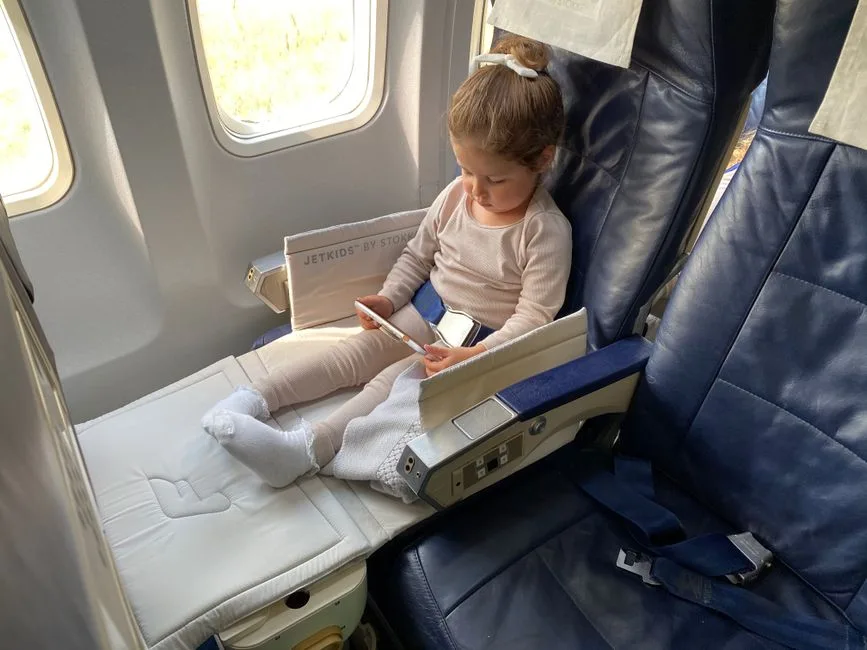
- A daytime flight beats red-eyes with kids. The jetlag hits either way; at least daytime arrival lets you stay awake until evening local time.
- One connection is okay; two or more kills everyone’s mood.
- Choose airlines with decent meal service and seat width — budget carriers mean cramped, hangry kids.
- Bring a large notebook, good headphones, and a surprise box of unknown small toys. That works better than screens.
For more detailed advice on flying with small children — ear pressure, meal timing, sleep strategies — our dedicated guide covers the full picture.
On the ground: Car rental from Faro is standard and reasonable (from $25/day). Book ahead. Faro is about 40 minutes east of Albufeira (roughly 23 miles), about 1 hour from Lagos.
Rental Apartment or Hotel?
This matters more than you’d think for the whole trip’s quality.
For family holidays, a rental apartment with a small kitchen beats a hotel. Why? You make breakfast yourselves (faster, cheaper, fewer arguments about cereal), pack lunches when the kids are tired, have a washing machine for swimsuits. You’re not organized around hotel service times.
A good hotel with childcare is convenient but expensive. A solid rental apartment costs $900–1,400/week (June); an equivalent 4-star hotel costs double. Over two weeks, that difference is real money.
Where to look by region: in Albufeira, the Oura strip has proximity to the beach but can be noisy at night — look for apartments in the quieter western side or near Praia de São Rafael. In Tavira, apartments in the town center give you walking access to restaurants and the ferry to Barril beach. Book at least 10–12 weeks ahead for July and August; May and September allow much shorter lead times.
A note on arriving at Faro Airport with children: the airport is small and manageable. Passport control has family lanes during peak hours. There’s a children’s play area past security. Car rental desks are directly at arrivals — book ahead and avoid the walk-up counters, which are slower. Driving from Faro into the central Algarve takes 30–45 minutes, with a smooth modern motorway. Don’t attempt public transport with children and luggage — car rental is the right call.
Who the Algarve Is Right For
Book the Algarve if you need:
- Safe infrastructure and genuinely family-friendly atmosphere
- A beach holiday with children in mind
- Ability to travel May–October
- Acceptance of 8–10+ hours of flight time
- Some flexibility with school breaks (May, June, September beat July–August)
For a family beach holiday, the Algarve delivers what matters: children safe in the water, reliable sun, everyone tired but content by evening. That predictability counts for more than the promise of magical moments.