Working Holiday Visas: Reality Beyond the Myths
Australia, Canada, Japan: Working Holiday visas enable long-term travel through work. But the myths are persistent – here's the honest reality.
TravelFeelings Editorial Team

Long-term travel on a shoestring budget? Yes – but not the way most people think. A Working Holiday visa opens doors that standard tourist visas don’t. You can work, earn, take your time. Sounds magical. In reality, the rules are tight, the age limit is firm, and insurance costs more than you’d expect.
The first snag hits early: you get the Australian Working Holiday visa, land in Cairns, pick oranges – and quickly learn that “working” doesn’t always mean actual profit. The reality of work and travel looks nothing like the brochures claim. Here’s what actually works and where you need to watch your step.
What Is a Working Holiday Visa, Really?
No magic, no loopholes. A Working Holiday visa is a bilateral agreement between two countries: you get up to 12 months in-country to both work and travel. That’s the deal. You’re no longer a tourist, but you’re also not a standard migrant worker. You exist in a legal gray zone that each country defines differently.
The visa only exists for people aged 18 to 30 (some countries up to 35 – but here’s the catch: you must meet the age requirement at the time you apply — your age on arrival doesn’t count). One day too old? You’re out. The rule is applied without discretion.
The difference from a standard tourist visa: on a normal tourist visa, you can’t work – not even freelance, not even remote work for a German client. On a Working Holiday visa, you can work, but under conditions: maximum six months with the same employer (Australia, Hong Kong), no illegal status, no tax violations.
Volunteering is different. It’s unpaid work for an NGO, often covered under a separate volunteer visa. It’s less restrictive than a Working Holiday visa. Some countries allow volunteering on a tourist visa.
The Main Destinations: Australia, New Zealand, Canada, Japan, South Korea, Ireland
Not every country has a Working Holiday agreement with Germany. Australia and New Zealand lead the pack. Canada joins in but with more barriers. Japan and South Korea are tougher. Here’s what you need to know:
Australia (Subclass 417/462)
The classic destination. For Germans, Working Holiday visa is Subclass 417 – straightforward to apply for, quick processing (2–3 weeks). The cost is about $550 USD (ca. 475 EUR). You get 12 months, and you can work for any single employer for a maximum of six months.
Jobs available: fruit picking down south (Victoria, SA), bar work on the coast, farm labor in the Outback. Pay? Farm picking runs typically $23–45 USD per hour (ca. 20–41 EUR/hour) – gross, depending on season and farm. Bar work pays $28–40 USD/hour (ca. 25–36 EUR/hour) plus tips. Sounds good until you realize: earnings are wildly seasonal. Off-season, you find nothing. You end up in a village with 50 other backpackers waiting for harvest.
Daily budget: realistic $40–68 USD per day (ca. 36–62 EUR) for accommodation, food, transport, fun. Add travel insurance: $115–172 USD monthly (ca. 100–150 EUR) minimum for a proper Work & Travel policy. Without it, you can technically travel, but medical costs are brutal – a dental emergency runs $570 USD (ca. 500 EUR), hospital nights multiply that.
Australia’s biggest advantage: the scene is established. Jobs are relatively easy to find, backpacker networks are solid, nobody looks at you strange. Downside: because of that, it’s pricier and more crowded than it was ten years ago.
New Zealand
The underrated Australia. Working Holiday for Germans works here too, subclass varies, but the principle’s the same. Visa costs roughly $230 USD (ca. 200 EUR). The country does demand proof of at least ca. 2,400 EUR in savings – that’s your first filter.
Jobs mirror Australia: fruit picking, but also adventure tourism (guides, kayak tours). Wage range: $23–40 USD/hour (ca. 20–36 EUR/hour). New Zealand is pricier than Australia day-to-day, yet jobs pay similar or less. Budget ca. 26–80 USD daily (ca. 23–73 EUR). Insurance you need here too – not legally mandatory, but you’d be foolish not to have it.
New Zealand’s advantage: less crowded, tighter networks, nature is striking (if that matters to you – though a Working Holiday is about work, not chasing Instagram content). Downside: because it’s less hyped, you need local connections for jobs. The hostel network isn’t as fluid as Australia’s.
Canada
It gets trickier. Canada has a Working Holiday agreement with Germany, but the application is more involved – lottery system, not automatic approval. Plus: health insurance isn’t just advised, it’s legally required and checked at entry. Costs an extra $170–230 USD monthly (ca. 150–200 EUR).
Pay’s better: ca. $13–27 USD/hour (ca. 12–24 EUR/hour) is standard. Sounds promising until you clock that Canada’s expensive. A meal costs ca. $13 USD (ca. 12 EUR), accommodation $55–115 USD nightly (ca. 50–105 EUR). That’s pricey for backpacking. Budget ca. $55–115 USD daily (ca. 50–105 EUR).
Canada’s advantage: jobs are formal, labor rights are protected, infrastructure is reliable. Downside: it’s expensive, and you genuinely need savings to start. Minimum $4,600–5,700 USD (ca. 4,000–5,000 EUR) should be there before you land.
Japan
The toughest country on this list. Working Holiday for Japan is more restrictive: application’s formal, quota’s small (only a few hundred Germans per year), selection criteria are strict (age 18–30, no prior work contracts with Japan, English proficiency required). Wait time can be 2–4 months.
Work: English teaching is the standard. $1,700–2,850 USD monthly (ca. 1,500–2,500 EUR) is doable, but usually only with a TEFL certificate (another $1,700–2,300 USD / ca. 1,500–2,000 EUR in costs). Schools are demanding: contracts, formalities, cultural expectations. Hostel work exists too, but pays just accommodation plus $55–115 USD (ca. 50–100 EUR).
Daily budget is surprisingly moderate: $34–57 USD daily (ca. 30–50 EUR) is possible in Japan if you eat at chain restaurants and live cheaply. Insurance you’ll need – international travel policies with Japan coverage run $90–135 USD monthly (ca. 80–120 EUR).
Japan’s advantage: safe, reliable, cultural immersion intrigues many. Downside: bureaucracy is opaque, job hunting is hard without a network, and emotional toll is real – lots of backpackers in Japan report isolation and overwork.
South Korea
Similar to Japan, but smaller scene, slightly more flexible. English teaching pays $1,400–2,300 USD monthly (ca. 1,200–2,000 EUR). Visa application’s faster. Daily budget: $28–46 USD (ca. 25–40 EUR). Expensive for tourism, cheap if you live local.
Ireland
A hidden gem for EU citizens (still – post-Brexit it’s complicated for Brits). Working Holiday for Ireland is formal, pays well ($2,300–3,400 USD monthly as bar work / ca. 2,000–3,000 EUR), but cost of living’s high too. It’s not a budget option — better suited for those who want reliability.
Typical Jobs – and What the Reality Is
The romantic backpacker picture: you lounge on a beach, pick up casual work, fund your adventures. Reality’s far less glossy.
Farm Work / Fruit Picking
The classic Work & Travel job. Harvesting fruit, gathering veg, sometimes livestock. The truth: it’s physically brutal. Your back aches, your hands bleed, you start at 5 a.m. Pay’s often piecework – pick more, earn more. Sounds fair, except: when your stamina drops, so does your paycheck.
Farm work pays between $23–45 USD/hour in Australia (ca. 20–41 EUR/hour), depending on region and season. Forty hours weekly means roughly $920–1,840 USD gross (ca. 800–1,600 EUR). Minus accommodation (if the farm provides, often $55–170 USD weekly / ca. 50–150 EUR), minus food, minus insurance – you keep $230–345 USD weekly (ca. 200–300 EUR). Possible, yes, but this is grueling physical labor with little romance to it.
Hostel Work
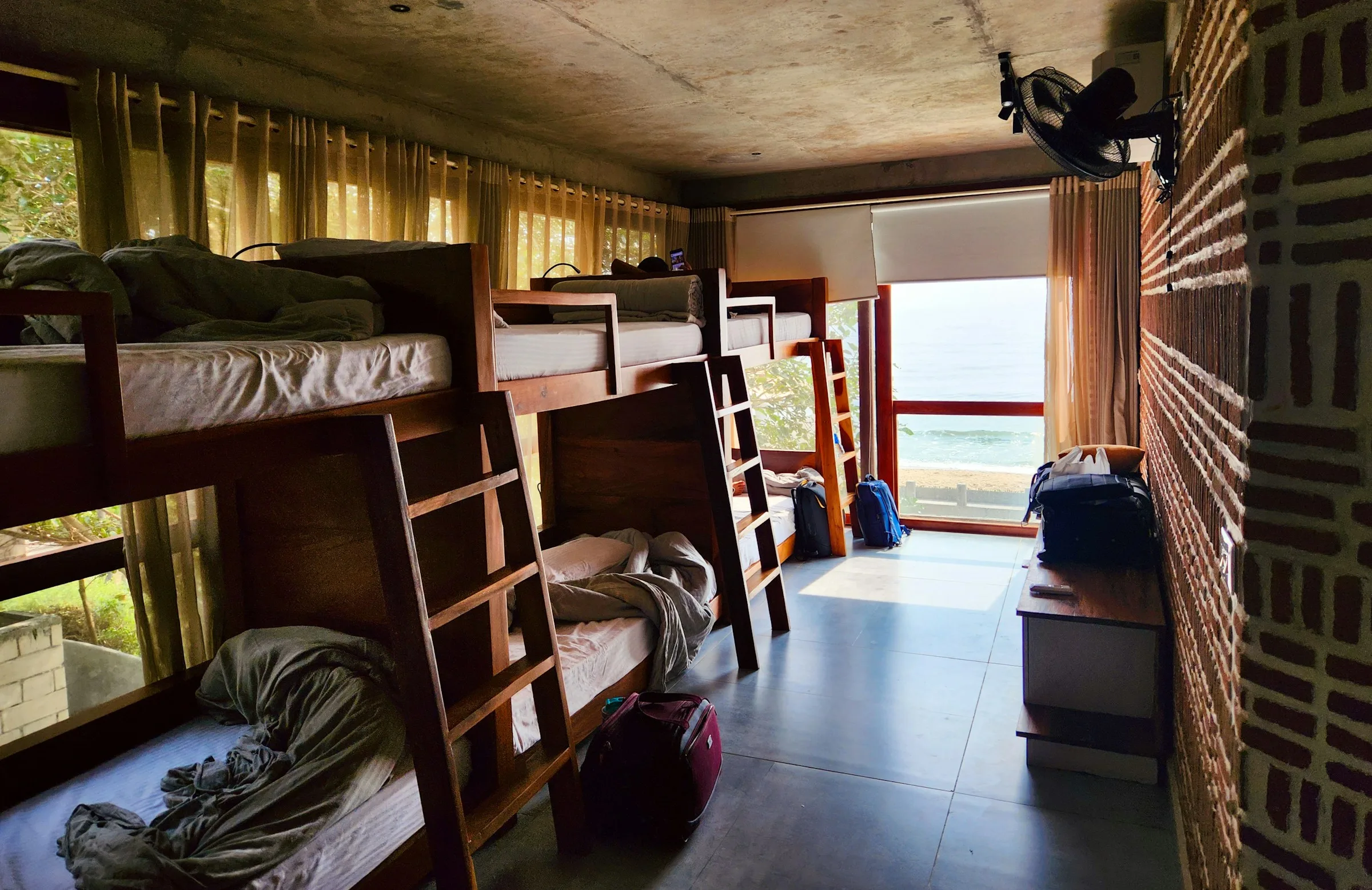
“Labor for accommodation and pocket money” – that’s the arrangement. You work 4–5 hours daily (front desk, cleaning, kitchen) and get a bed plus breakfast free. That accommodation’s worth $345–460 USD monthly (ca. 300–400 EUR) in expensive cities (Sydney, Melbourne), $170–290 USD (ca. 150–250 EUR) smaller towns.
The catch: minimal actual cash. $115–230 USD monthly pocket money from hostels is standard (ca. 100–200 EUR). Not enough to fund travel — it covers beer and food, nothing more. To actually travel, you need a second real job – farm work, bar gigs – or financial buffer.
Bar and Hospitality Work
Pays better: $28–40 USD/hour in Australia (ca. 25–36 EUR/hour), plus tips. A bar shift (4–6 hours) nets you $115–170 USD plus tips (ca. 100–150 EUR). That’s $690–1,035 USD weekly gross (ca. 600–900 EUR). But: bar work’s nights, you sleep days, your social rhythm collapses. And it’s seasonal – peak (December–March in Australia) is solid, off-season you luck out.
TEFL / English Teaching
The professional route. With a TEFL certificate (Teaching English as a Foreign Language, costs $1,700–2,300 USD / ca. 1,500–2,000 EUR), you teach English. Pays $1,400–2,850 USD monthly (ca. 1,200–2,500 EUR), depending on country and experience. Japan, Korea, Thailand, China – all need English teachers.
Honest warning here: many of these jobs aren’t formally legal under a Working Holiday visa. Thailand, for instance, has no Working Holiday agreement with Germany – if you want to work there, you need a proper work visa — a tourist visa won’t cover it. Plenty of people work under the radar and hope they don’t get caught. Risk: fines, deportation, country ban.
Digital Nomad and Remote Work
Here’s the trap: you think remote work for your German employer or as a freelancer is fine under Working Holiday. No, not really. Technically you can work, but tax status is murky: who files taxes? You or your employer? Many countries eye remote work with suspicion – not explicitly allowed, not explicitly banned. It’s a gray zone worth steering clear of. Too much risk.
Realistic Financial Planning: Myths vs. Facts
This is the critical part: the numbers.
The Myth: “Working Holiday Is Cheaper Travel”
It sounds logical: if you can work, you’ll save more than as a tourist. But do the math:
Daily expenses in Australia: $40–68 USD (ca. 36–62 EUR) for bed, food, transport, leisure. Add Work & Travel insurance: $115–172 USD monthly (ca. 100–150 EUR), roughly $4–6 USD daily (ca. 3–5 EUR). Then add working hours – you travel less, work more. And if you take two weeks off, you earn zero.
Comparison: a regular backpacker with $34 USD daily budget (ca. 30 EUR) does the math: $34 × 30 days = $1,020 USD monthly (ca. 900 EUR). A Work & Travel backpacker might net $460 USD monthly (ca. 400 EUR) after insurance and costs – and they’re working 40% of the time. The money just gets redirected. You earn money, but less stays in your pocket than you hoped.
The Myth: “I Can Do It at 31”
No. The age cap is firm: 18–30 (some countries to 35, but: you must meet it at application time, not arrival or while there). Meaning: if you’re 30 years, 11 months when you apply – fine. At 31? Denied, finished, plan differently next time.
This is hard law. No exceptions.
The Myth: “My German Travel Insurance Covers Everything”
Many assume their German travel insurance handles it all. It doesn’t. Standard German policies cover tourism – not long-term work abroad. And some countries (Australia, Canada) explicitly mandate a Work & Travel policy.
Cost? $90–172 USD monthly is realistic (ca. 80–150 EUR). A dental emergency without insurance runs $570–1,140 USD (ca. 500–1,000 EUR). Hospital stays multiply that. Insurance is non-negotiable; it’s your survival net.
The Myth: “I Can Arrive With Little Money”
Some countries demand proof of savings at entry. New Zealand: ca. 2,400 EUR. Non-negotiable, checked at the border. No proof, no entry.
Even when it’s not required, insist on it: at least $3,400–5,700 USD (ca. 3,000–5,000 EUR) before you fly. That’s your landing buffer: first week’s accommodation, job hunting, emergencies, ticket home if it implodes. Show up with $575 USD? You’re betting everything on luck.
The Five Major Myths – and Why They’re Wrong
These myths circulate endlessly. Here’s reality:
Myth 1: “I Can Only Do Farm Work”
False. You can take any job – bar, restaurant, office, retail, even English teaching (cautiously). The only restriction: in Australia and Hong Kong, you can work for the same employer max six months. That’s a rotation rule that says nothing about the type of job you take.
The actual problem: farm work’s easy to find (hostels have hookups), normal jobs are hard (employers distrust young WHV-holders – too short a commitment, too high turnover risk). So most backpackers start in farms – the path of least resistance, not a requirement.
Myth 2: “Working Holiday Is Cheaper Than Regular Travel”
Already unpacked above. No. The math doesn’t work. Insurance plus work hours plus seasonal dips mean your net income is smaller than expected, and you travel way less. It’s a different model that isn’t necessarily cheaper.
Myth 3: “Maybe I Can Do It at 31”
No. Full stop. Age limit is age limit. Zero exceptions, zero discretion. People have been turned down a week after their cutoff – bureaucratic reasons, no wiggle room.
Myth 4: “Visa Fraud Pays Off – Others Do It”
In 2021, twelve Irish backpackers got deported from Australia for visa fraud. They’d bought fake farm employment letters (about $575 USD / ca. 500 EUR) to apply for or extend their Working Holiday visa. Consequence: deportation, fines, Australia ban for years. Risk-reward is terrible.
The fraud market exists, but so do the consequences. Don’t.
Myth 5: “Remote Work Is Working Holiday – Free Money”
No. Remote work for a German employer under Working Holiday is a minefield. Tax status unclear, visa compliance unclear, insurance coverage unclear. Countries watch it skeptically because you’re working in their economy but not paying local taxes.
The advice: if you want remote work, get a visa that explicitly allows it (Digital Nomad Visa, like Estonia’s). Don’t skirt the rules on a Working Holiday.
Insurance – The Most Critical Topic
This one is central: without health insurance, you’re exposed. One accident, food poisoning, tooth infection – and you owe thousands.
In Australia, a dental emergency costs $650–1,150 USD (ca. 575–1,000 EUR). Hospital stay: minimum $575 USD daily (ca. 500 EUR). Helicopter rescue (Outback) can run $5,750+ USD (ca. 5,000+ EUR). You pay it yourself without insurance.
Work & Travel insurance covers these. Costs $115–172 USD monthly (ca. 100–150 EUR) and is your safety net. Not all policies are equal – make sure Repatriation (emergency flight home after serious injury) is covered.
Standard German “vacation” insurance doesn’t cover extended work stays abroad. You need a proper Work & Travel policy.
Pitfalls at Entry and During Stay
The obvious ones:
Proof of Funds missing – Denial of Entry.
New Zealand, for example, demands ca. 2,400 EUR proof. Can’t show it? No entry. Bank statement, traveler’s checks, cash – something. “Forgot it”? Your flight money’s gone.
Wrong Job Mentioned – Visa Cancelled.
You apply for WHV and tell the officer: “I’ll be working remotely for my agency.” Red flag. Officer digs, finds it’s not allowed – visa gets cancelled or denied. At entry, you’re stopped.
Working Without a Visa – Fine, Possibly Deportation.
Entered as a tourist, working under the table? Illegal in most places. Fines $1,150–5,750 USD (ca. 1,000–5,000 EUR), deportation, possible country ban. Risk doesn’t pay.
Visa Fraud: The Twelve Irish.
See the twelve Irish backpackers case above.
Who Should Do This?
Honestly: very few people.
Work & Travel works if:
- You’re 18–30 years old (or 35 depending on the country).
- You have $3,400–5,700 USD savings (ca. 3,000–5,000 EUR) as a cushion to fall back on, kept separate from what you earn.
- Physical or manual labor doesn’t scare you.
- You can handle isolation (lots of Work & Travel phases are solitary and unglamorous).
- You have a career waiting after (you don’t think this visa IS your career).
- You’re medically sound (chronic conditions complicate things).
Work & Travel doesn’t work if:
- You’re over 30 (age ceiling).
- You’re arriving with under $1,150 USD (ca. 1,000 EUR).
- You have rigid career plans and can’t lose 12 months.
- You’re psychologically fragile or isolation hits hard.
- You won’t pay for health insurance.
Here’s the honest assessment: it’s an option for young people with patience, physical toughness, and a financial cushion. It won’t suit everyone, it’s not permanent, and it’s no shortcut to cheap travel.
Under 30 and have time? Try it. Over 30? Save your energy, find a different visa.
What You’re Actually Signing Up For
The Working Holiday visa is a formal program with clear rules, limits, and penalties for breaking them. The myths persist because reality is less sexy than the story.
The reality: you earn more than a tourist does, you travel way less, your boundaries are tighter, insurance costs more, and your risk is real. It’s simply a different deal than what the brochures promise.
If you accept that and you’re ready: go for it. The experience is worth something.