Hiking with Kids: Adventure Over Views, Snacks Rule
How to really motivate children to hike — not through scenic views, but through games, snacks, and adventure.
TravelFeelings Editorial Team
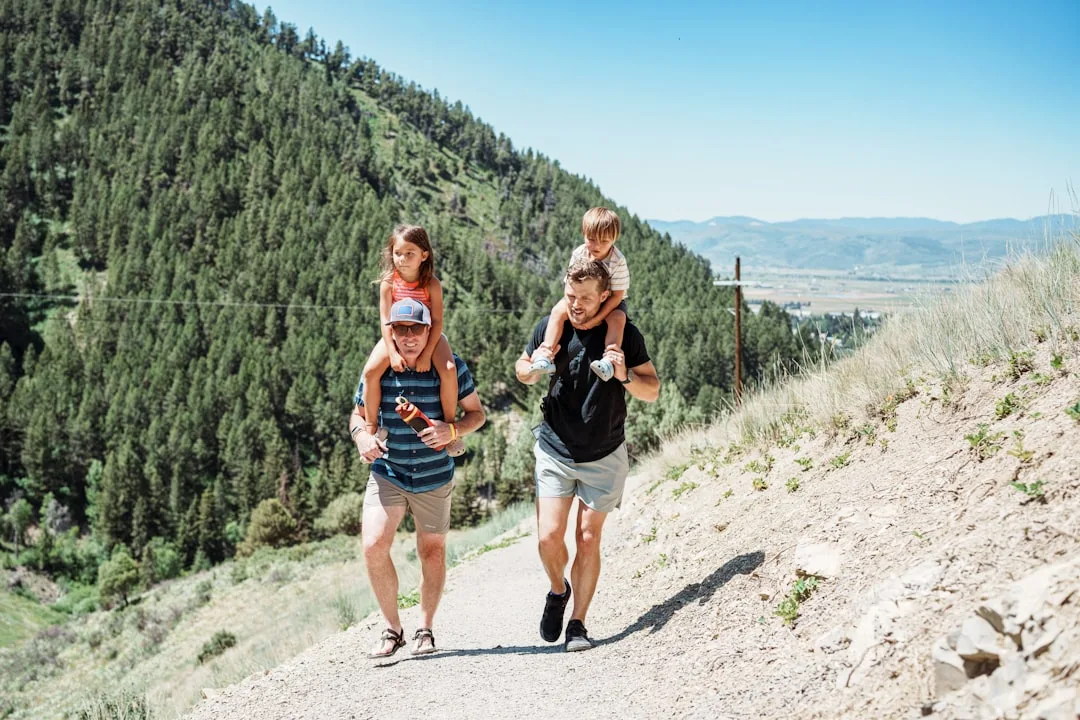
Hiking with children depends less on parental fitness and more on the right expectations and approach. The traditional “mountain experience” mindset falls flat here; what carries a family hike is adventure, games, and small rewards. Parents who understand these principles will discover that children keep up easily, and often genuinely enjoy the hiking.
Age-Appropriate Routes: Choosing the Right Trail
The first and most important decision is selecting a trail matched to your child’s age and abilities. The German Hiking Institute offers a proven rule of thumb: the maximum daily distance equals the child’s age multiplied by 1.5. A 4-year-old can manage about 4 miles, a 6-year-old about 5.5 miles, and an 8-year-old about 7.5 miles.
Treat this formula as a starting point, since distance is only part of the equation. What matters as much is elevation gain. As a general guideline, 300 feet of elevation gain is equivalent to about a mile of flat terrain in terms of effort. An 8-mile flat walk is entirely doable for a 6-year-old, but a 3-mile route with 1,000 feet of climbing might be exhausting.
More important than the numbers is the question of highlights along the way. As Klaus Erber from Germany’s hiking training institute puts it: “Something must happen along the way — only then is it exciting.” Children don’t hike for the sake of movement. A 2.5-mile route with waterfalls, stream crossings, and a playground will be hiked with far more enthusiasm than a 4-mile march with nothing special to see.
What makes a successful kids’ hike?
Good family hiking routes share certain characteristics:
The landscape varies throughout the route — sections through forest, across open meadows, near water. Streams and lakes hold almost magnetic appeal for children. Many successful family trails intentionally include water features because they capture attention and make rest stops more engaging.
There are intermediate destinations or milestones to work toward. This might be a mountain hut serving traditional food, a viewpoint with binoculars, an old tower, or simply a particularly large tree. These give structure to the hike and a tangible goal beyond just the next bend in the trail.
The route has multiple entry and exit points. This flexibility is essential — if a child grows tired, you can bail out early rather than forcing an exhausted, frustrated kid to the end. Sometimes ending early is the right call; it’s better than a negative memory that prevents future hiking.
The Greatest Motivation Myth: The View
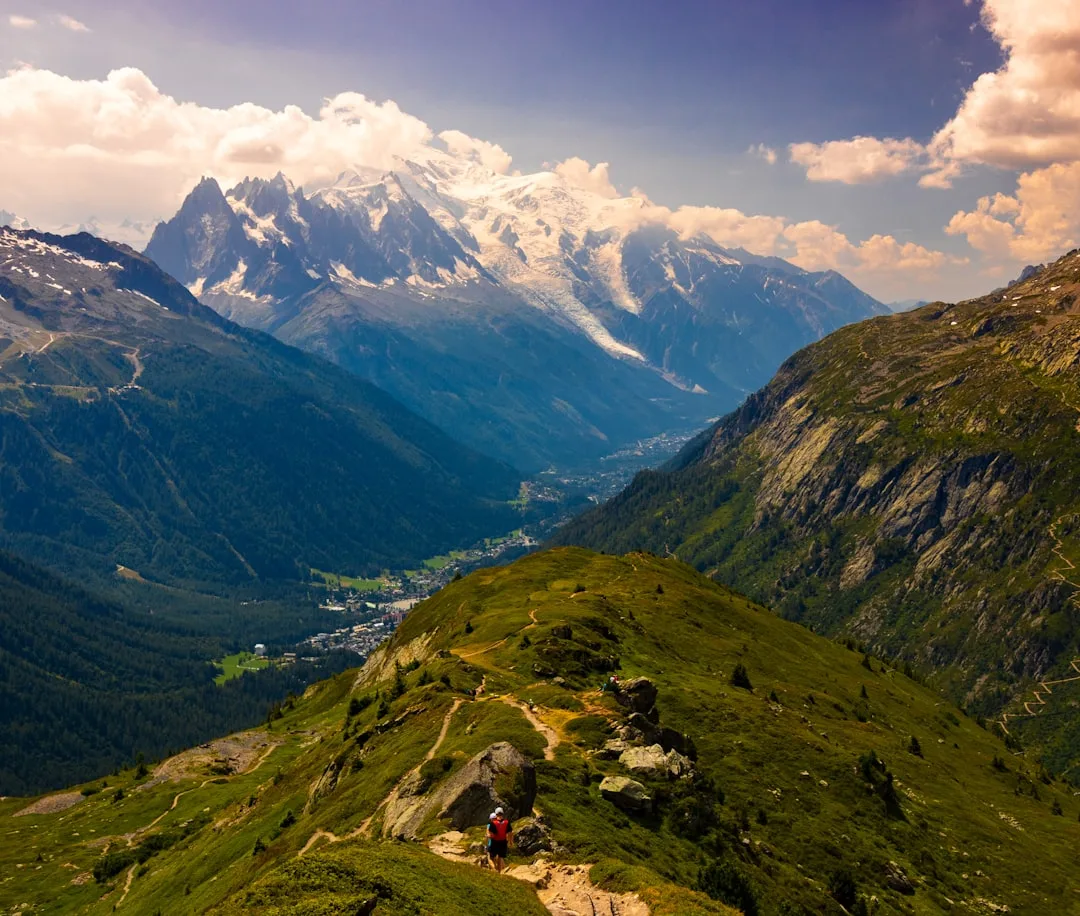
Here’s the uncomfortable truth: most children care very little about panoramic vistas. Even the most dramatic mountain view will earn a bored “that’s okay.” This is normal, and no cause for discouragement — children simply respond to different motivators than adults.
What genuinely motivates kids is concrete and immediate. Ice cream at the destination, a playground along the route, good friends in the group — these are real motivators. Parents who try to inspire their children with landscape descriptions are working against biology. Better to accept reality and work intentionally with incentives that actually work.
Incentives that actually work
Social factors: One of the biggest motivators is the presence of peers. Children hike much more willingly and persistently with friends than alone with parents. The shared activity is more fun, and the natural competition (“who’s faster?”) subtly supports endurance. Many families strategically plan hikes with other families for exactly this reason.
Snacks and small rewards: A chocolate square after 15 minutes, pretzels at the hut, a lollipop at the summit — these minor motivators work reliably. They serve double duty: physically providing energy and psychologically providing a goal to reach.
Adventure framing: Language matters significantly. “We’re going on an adventure” sounds more exciting than “We’re hiking to the peak.” Weaving stories into the route (“The dragon lives in the castle up there, we have to go rescue the princess”) transforms an ordinary walk into imaginative play.
Participation: Let children choose the route. “Do you want the waterfall trail or the forest path?” This small choice increases their sense of ownership and investment in reaching the destination they selected themselves.
Practical activities for the trail
The most important defense against boredom is games and activities. These don’t need to be complex — often the simplest ideas work best.
Games to play while hiking
Geocaching: This is modern-day treasure hunting via GPS or smartphone app. Hidden caches are scattered worldwide, and you locate them using an app. Your child has concrete targets to hike toward. Often, there are caches positioned exactly along popular family hiking routes.
I Spy: This classic observation game never gets old. One person describes something they see, others guess. It sharpens attention and turns a simple walk into active engagement.
Twenty Questions: One person thinks of an animal or object; others get 20 yes-or-no questions to figure it out. Perfect for longer sections without much to see.
Role-play: “We’re wilderness explorers on a dangerous expedition” or “We’re dinosaurs on the hunt” — children’s imagination is a powerful engine. Many families spend 20 minutes building a “home” in the forest rather than simply walking through.
Collection missions: “Who can find the prettiest pinecone?” or “Let’s collect different leaf shapes” — this gives the walk a research mission.
Role reversal: Let the child lead
One particularly effective strategy is having the child be the trail guide. They walk ahead, decide direction, and lead the “expedition.” This builds confidence dramatically and transforms a child from a passive passenger into an active co-leader. Of course, you stay nearby to ensure they don’t take wrong turns, but the illusion of responsibility is powerful.
Gear and logistics for young hikers
Practical preparation contributes significantly to success.
Carrying systems for younger children: Kids under 4 or 5 cannot walk continuously for 4-6 miles. For this age, a quality child carrier or backpack is standard gear you plan around from the start. Good models are ergonomic for adults while providing proper support for the child.
A backpack for the child: Even small children enjoy carrying their own backpack. It should be lightweight, ergonomic, and brightly colored. Fill it with favorite toys, a collecting item, or a water bottle. The feeling of “carrying something themselves” is surprisingly motivating.
Snack and water strategy: Plan snacks as a structural element of the hike, not optional extras. Lightweight, energy-dense snacks like raisins, jerky, granola bars, or trail mix are ideal. Adequate water is essential — dehydrated kids quickly become grumpy.
Cooling down on hot days: A small spray bottle with water or even water from a cool mountain stream is a hit with many children and provides genuine relief on warm days.
Common mistakes and how to avoid them
Many well-intentioned adult hikes fail due to avoidable mistakes.
Distances that are too long: This is the classic error. Parents plan a “nice route” by adult standards and ignore the age formula. The result is an exhausted, frustrated child with no desire to hike again. Better approach: shorter routes with better highlights.
Insufficient breaks: Children need breaks more frequently than adults. Every 30-45 minutes, you should stop to play, explore, and eat. These pauses are the essence of hiking with children.
No intermediate goals: A hike without specific targets becomes pure physical exertion. A goal — a hut, a lake, a castle — gives the hike meaning and direction.
The wrong tone: Phrases like “Let’s go, hurry up” or “We need to keep moving” create stress and negative associations with hiking. Better to be patient and adopt the tone of an explorer enjoying the moment. Drop the efficiency-manager habit of ticking off miles.
Setting realistic expectations
Hiking with children is fundamentally different from hiking with adults. It’s slower, has more stops, and is less goal-focused. This is a different quality of experience, and a valid one. Children experience nature differently — more intensely, more curiously, less accustomed to its beauty. Many families pair hiking days with family beach vacations and other destinations to create broader travel memories.
The real marker of success: a child who says at day’s end, “That was awesome — can we go hiking again next weekend?”
Get the route and the incentives right, and hiking turns into something kids actually ask for again.