Hostels as Community Hubs: How Backpackers Connect
Modern hostels are less about budget beds and more about digital community hubs. Explore how backpacker culture has evolved and why choosing the right hostel often means choosing your next travel companions.
TravelFeelings Editorial Team
Back in 2015, watching people in a Thai hostel coordinate their routes through posts in a Facebook group still felt novel. Today? Standard practice. The difference between then and now is profound — and if you want to understand how backpacking actually works, you need to grasp this shift.
Hostels aren’t mere budget beds anymore. They’re nodes in a global network of people organizing their travels around each other, with places as backdrop. The numbers tell the story: 85 percent of hostel bookings now come through social community platforms. That sounds like corporate jargon. What it actually means is that 80 percent of your hostel experience is already decided on arrival day — based on who’s already there and who’s arriving in the next two days.
The Global Hostel Infrastructure
Backpacking is big business. The market was worth approximately $9.2 billion USD in 2023. Projections are bullish: by 2032, analysts expect the market to reach over $24 billion USD. Around 45 million backpacking trips happen annually. That’s a city larger than Tokyo — except this city moves constantly.
The demographics are striking: two-thirds of backpackers fall between 20 and 25 years old. Among solo travelers, the picture is even more pronounced — roughly 80 percent identify as female. This shifts the hostel dynamic entirely. The energy differs fundamentally from five years ago. The scene now runs on mutual support, network-building, and solidarity against isolation, with far less of the old party focus.
Average trip duration sits at 41 days — much shorter than the romantic ideal of the year-long world traveler. Reality check: many backpackers take multiple short trips staggered throughout their lives, or combine three-month journeys with normal life in between. The typical budget for such a trip runs around $3,250 USD. That breaks down to roughly $79 per day. About 69 percent of expenses happen on-destination — accommodation, food, and activities — flights aside.
The Community Shift
The mentality, more than the infrastructure, is what makes modern hostel culture remarkable. Years ago you booked a hostel because it was cheap and in the right city. Done. Today you build your entire route based on hostel reviews centered on who’s currently staying there, beds secondary.
Here’s how it works in practice: you ask the Hostelworld community which hostel in Chiang Mai is currently full of people wanting to trek. Or which one in Vang Vieng has the best vibe. Or which Phnom Penh hostel attracts people interested in teaching English while traveling.
In-app chat functions became the nervous system. Travelers don’t just message the reception — they coordinate directly with other guests. Before arrival. During the stay. After leaving, many remain in group chats, organizing subsequent meetings or maintaining friendships long-distance.
Hostelworld documented this perfectly: in the first half of 2025 alone, users sent 42 percent more messages than in the equivalent period the previous year. This goes well beyond small talk: travel coordination, job tips, medical referrals, safety warnings, restaurant recommendations. An informal support network growing daily.
How Modern Hostels Are Designed
Hostel operators caught on quickly. Classic hostel design was essentially a grid of rooms with minimal common space. That’s shifted dramatically.
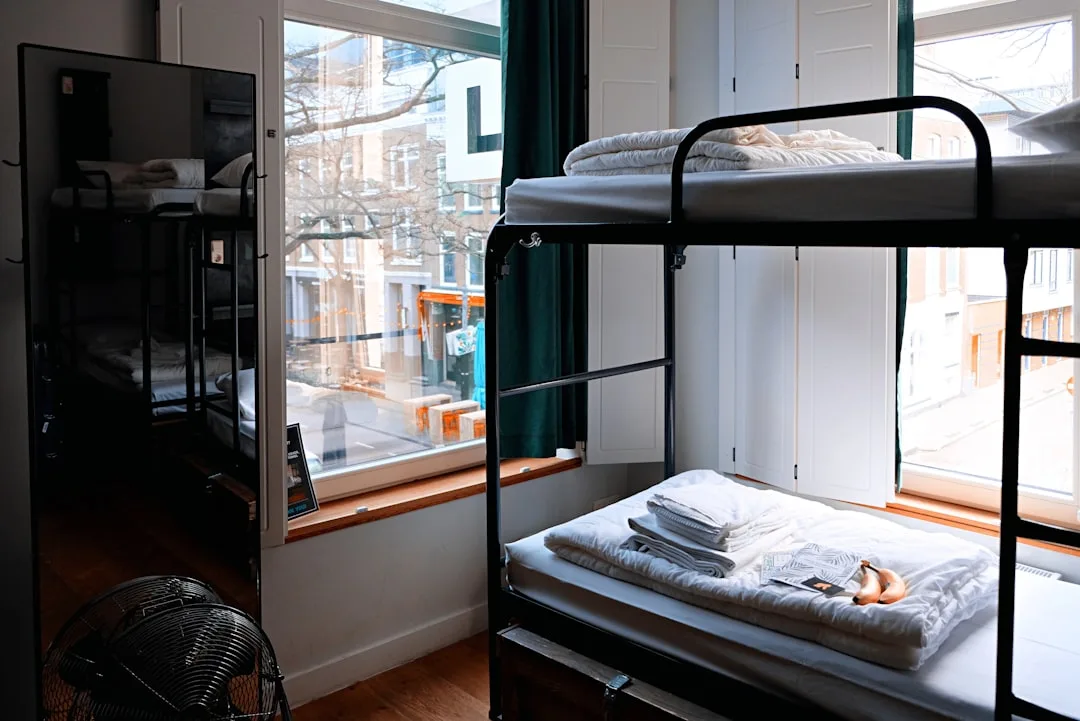
Contemporary hostels embrace what designers call “Social Architecture” — rooftop decks with seating, communal kitchens serving actual function (with real function, beyond a single stove burner), large shared tables for 15, replacing tiny two-person surfaces. These are deliberate design choices ensuring strangers naturally converge. Some hostels go further, providing infrastructure for guests to organize their own events, beyond the official ones.
A frequently cited example: Stamps Backpackers in Chiang Mai. It’s modest and small, yet the common areas are laid out so you practically can’t avoid talking to other travelers. Result: stable community, longer stays than planned. Two nights becoming ten is common.
Popular Backpacker Routes
Classic backpacker infrastructure remains where it always was, just more networked: Southeast Asia (Vietnam, Bali, Indonesia, Thailand, Cambodia, Laos) remains uncontested number one. For good reasons: budgets stretch further. Hostel infrastructure is reliable. And diversity exists — you can alternate between major hubs or explore smaller places.
Nana Backpackers in Vang Vieng, Laos frequently ranks high: huge pool, basic gym, decent restaurant, roughly $9-11 USD nightly. Pragmatic and reliable. Perfect for travelers wanting predictable costs plus community.
Latin America ranks second: Mexico, Peru — anywhere transportation networks function and living costs stay low. The dynamic differs: fewer party-focused vibes, more sustained collaboration. Many digital nomads and freelancers use hostels there as co-working spaces.
Europe costs more and operates with different hostel culture. Equally lively but geared toward shorter stays — days or weeks, typically. For first-time backpackers, Southeast Asia remains the optimal starting point.
What Actually Determines a Good Hostel
Across dozens of hostels visited during extended backpacking trips, three factors determine hostel quality: location, price, and resident community at your arrival moment. You control location and price poorly. Community? That’s partly your choice through selecting hostels with genuine community infrastructure.
Practically speaking: Don’t evaluate hostels by “how clean are the rooms.” Assess them on atmosphere. Check hostel apps. Chat with current guests before booking. Ask questions like “what’s everyone doing this weekend?” That’s no longer unusual. It’s standard now.
Backpacker culture has matured. Community management has become more professional, and the romance has faded. That’s genuinely positive — more safety for solo travelers (especially women), better information, fewer surprises. And yes, still the genuine possibility of lifelong friendships. Just more intentional.