Guide
Sustainable Luxury – Stylish Hotels Without Compromise
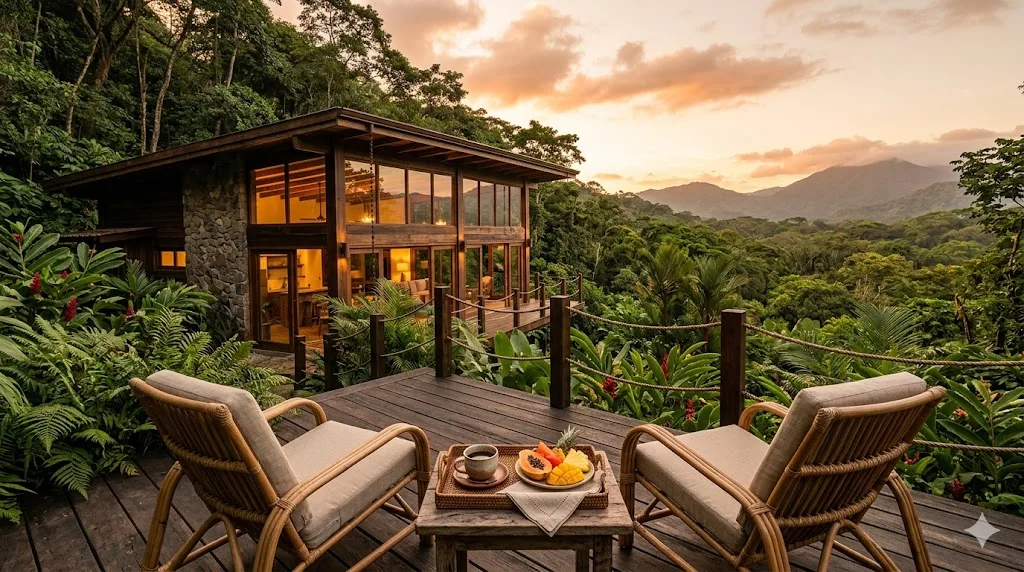
How to find genuine luxury hotels with sustainability certification — and not just greenwashing.
TravelFeelings Editorial Team8 min.
Costa Rica · Central America
Costa Rica's reputation as an ecotourism pioneer is partly earned—but hotly contested. Know the real trade-offs before you book your trip.
Monteverde Cloud Forest Reserve is a 1,400-hectare protected cloud forest at 1,500 meters elevation, about 140 km northwest of San José (a 3.5-to-4.5-hour drive). The landscape is eerie: trees grow twisted from constant wind, moss blankets everything, biodiversity is extreme. Entrance $16 USD (approx. 8,500 CRC). The site draws 70,000 visitors annually—which causes erosion and forest degradation on hiking trails. Forest health has measurably declined. The managing NGO attempts recovery through visitor caps but faces economic pressure to maximize revenue.
Manuel Antonio National Park merges Pacific beaches with rainforest. Monkeys, sloths, birds. 160 km south of San José, 3-hour drive. $16 entrance fee. Annual visitation: 500,000 on 680 hectares—chronic overtourism, a challenge shared by other popular destinations like Bali. Beaches are unbearable during peak season. Local guides report animal habituation from tourist feeding.
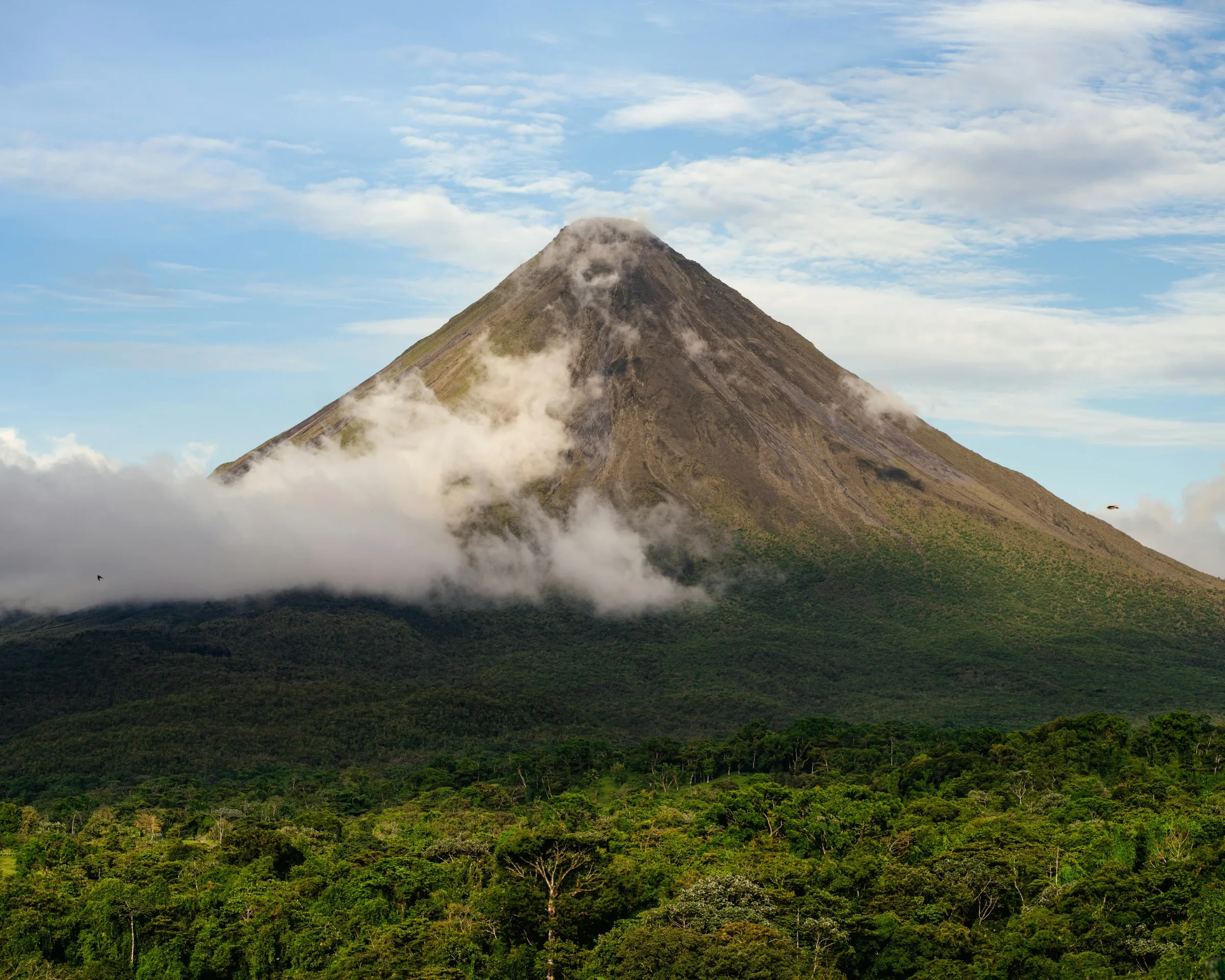
Arenal Volcano & National Park is an active 1,633-meter cone (last major eruption 2010) surrounded by a 12,100-hectare park, 140 km north of San José. $15 entrance. Hot springs (Tabacón) are popular but chemically manipulated for temperature. Nature remains impressive—less crowded than Monteverde.
Tortuguero National Park sits on the Caribbean coast, accessible only by boat (2-day minimum excursion). Channels cut through rainforest like Venice. Sea turtles nest June–October. 30,000 visitors annually in an ecologically sensitive area—boat noise and light pollution harm turtle navigation.
La Paz Waterfall Gardens comprises five falls in cloud forest, 45 minutes from San José. $24 including botanical garden and bird park. More accessible and busier than Monteverde. Beginner-friendly.
The central question at every site: How much visitor traffic can an ecosystem absorb? Costa Rica hasn’t answered convincingly yet.
From La Fortuna (Arenal base), visit Tabacón Hot Springs ($10 USD, approx. 5,300 CRC)—natural thermal pools in landscaped gardens. Or Arenal Hanging Bridges ($30)—canopy walkways 80 meters high, roughly 2-hour hike. Full day potential.
Quepos, 20 km from Manuel Antonio, offers local craft markets and restaurants. Day trip or 2-night extension.
Puerto Viejo de Limón on the Caribbean coast is 80 km south of San José, 2-hour drive. Laid-back coastal town, reggae culture, arepa restaurants, black sand beach—similarly relaxed to some coastal zones in Mexico. Day or overnight option.
Rincón de la Vieja National Park (60 km north of San José) has hot springs, mud baths, and hiking trails. Less touristy than Arenal. $15 entrance.
Corcovado National Park on the Osa Peninsula is pristine wilderness (pumas, jaguars, tapirs) but 6–8 hours from San José and expensive. Better as multi-day adventure for serious nature enthusiasts.
San Isidro de El General in the southern highlands is a long bus ride from San José (5 hours), but worthwhile. Waterfall hikes, coffee plantations, mountain air, minimal tourism. Stay in small family-run lodges.
Selva Bananito Lodge in the Limón region operates as a private reserve with field research programs. Not mass-market—it straddles science and ecotourism.
Río Celeste is a vivid turquoise, located in Tenorio Volcano area southwest of Arenal. Swimming holes, waterfalls. Less crowded than classic Arenal sites. $10 entrance.
Nosara Region on the Pacific coast is a surfer hub but also a yoga-retreat and slow-travel community. Less party scene than Jaco, more intentional tourism.
Cahuita National Park on the Caribbean coast offers reef snorkeling with local guides (coral-safe, black sand beach), tapir sightings. Lesser-known than Tortuguero, cheaper. $5 entrance.
Costa Rica splits into two seasons: the dry season December–April (verano) and the rainy season May–November (invierno). Dry season brings stable conditions, daytime temps 28–33 °C, clear skies ideal for volcano watching. March and April are peak dry-season months nationwide without December/January tourist saturation.
Rainy season is the opposite extreme: daily rainfall (mornings/evenings mostly, daytime breaks), but intense wildlife activity. Animals are more active. Waterfalls roar. Hotels cost 30–50 % less. Tourist pressure is smaller. The trade-off is mud on trails and occasional bus cancellations during extreme downpours (September/October).
November and May are shoulder months with declining rain and lower prices than June–October. Mountain regions like Monteverde are cool and misty year-round (15–20 °C). The Pacific coast stays reliably dry December–April.
| Jan | Feb | Mar | Apr | May | Jun | Jul | Aug | Sep | Oct | Nov | Dec |
|---|---|---|---|---|---|---|---|---|---|---|---|
| Low | Low | Low | Low | Peak | Peak | Peak | Peak | Peak | Peak | Low | Low |
30° 15° | 31° 16° | 32° 17° | 33° 18° | 30° 19° | 29° 18° | 29° 18° | 29° 18° | 28° 18° | 27° 17° | 28° 16° | 29° 15° |
Costa Rican society is shaped by informality, family-centeredness, and a philosophy often labeled Pura Vida. Locals mean it sincerely rather than as tourist kitsch. Slowness is valued, family comes before career, nature connection is cultural norm. Ticos (self-identifier) use diminutive suffixes in Spanish that convey familiarity and humor.
Gallo Pinto—black beans and rice—is the national breakfast. It’s cheap, nutritious, and emblematic: simple, effective, sustaining.
Spanish is the working language. English is stronger on the Caribbean coast (historical British influence in Limón) and weaker on the Pacific side. Locals genuinely appreciate tourists attempting Spanish—even basic sentences. Arrogant English-only tourists face coldness, not from meanness but cultural resistance.
Safety awareness shapes daily interaction. Ticos are friendly but low-key about wealth. Flashing expensive watches or open wallets reads as rude. Fair negotiation is normal; aggressive haggling seems unfriendly.
Costa Rica is predominantly Catholic but secularly practiced—less churchy than Guatemala or Nicaragua. Religion is private.
Voluntourism traps: Orphanages, schools, and “child protection” projects get swarmed by tourists seeking selfies. NGOs document real psychological harm to children from constant visitor turnover—a phenomenon discussed in depth in Travel Trends 2026. If you want to help, fund established local organizations—don’t visit orphanages.
Wildlife abuse: Luring monkeys/turtles at night for flash photography harms animals and violates park law. Use only certified, licensed guides.
Sketchy zip-line and hanging-bridge tours: Many commercial operators lack regulation. Require certification and insurance. Safety here is non-negotiable.
All-inclusive resorts: Money flows to multinationals, barely to local Ticos. Deliberately book local hotels and restaurants—that’s real economic support.
Rushing through too much: The abundance of attractions tempts over-scheduling. Ecosystems suffer from relentless visitor pressure. Less is more.
Waterfalls without local guide: Flood risk during rainy season (May–November) is genuine. Ignoring local guidelines costs lives.
“Guaranteed” wildlife sightings: Anyone promising jaguar encounters is either bribing animals or lying. Wilderness stays wild.
Domestic flights: SANSA and Skyway connect San José to Manuel Antonio, Arenal, Puerto Jiménez (45 min., $50–100 USD one-way). Fast but carbon-intensive—use sparingly.
Long-distance buses: Inter-Bus and Tica Bus link San José to Nicaragua/Panama ($20–40 USD, 6–10 hours). Budget-friendly, adventurous.
Local buses: $1–5 USD per ride, crammed, schedules unreliable. Authentic and budget-friendly.
Car rental: $30–60 USD/day, essential for independent travelers. 4WD required in rainy season. Vehicle mechanics often questionable—inspect before accepting. International license and credit card needed.
Shared shuttles: Private van transfers $30–80 USD for small groups, more reliable than buses, faster than shuttle services.
In-town taxis: No meters—negotiate price beforehand. Use hotel-recommended firms for night trips. Uber/Bolt unavailable in many areas.
San José Airport (SJO): Shuttle bus (Grayline, Interbus) $10–15 USD, or taxi $25–35 USD, 30–45 min depending on traffic.
EU citizens need no visa for stays up to 180 days, but immigration officers decide discretionally—you have no automatic entitlement to the full duration. A return ticket and proof of funds (minimum $100 USD per month) are mandatory. Without these, you’ll be refused entry.
Passport requirement: Valid on entry day plus 1 day (formally minimal). Six months validity is prudent for onward travel.
Yellow fever vaccination: Required only if arriving from an endemic country (Peru, Colombia, Ecuador). Direct flight from the EU: not mandatory, but CDC and German travel medicine often recommend it for remote rainforest areas. Consult before departure.
COVID/other vaccines: No mandatory proof since 2023.
Customs: Alcohol (1 liter), cigarettes (5 packs), perfume (500 ml) are duty-free. Prescription medications: bring doctor’s letter and prescription copy. Many Western standard meds are OTC in Costa Rica, but don’t assume.
Return to your home country: No tests/quarantine. Standard luggage limits apply.
Currency declarations: Over $10,000 USD in cash → declaration required.
No mandatory vaccinations for direct entry from the EU. Travel clinics often recommend Hepatitis A/B, typhoid, and yellow fever for remote/rainforest stays—it’s worth discussing individually rather than doing everything.
Tap water: Drinkable in San José and major cities. In rural areas, boil or buy bottled water. Not universally dangerous, but caution is cheap.
Dengue and Zika: Mosquito season May–November is intense. DEET 30 % repellent is essential in rainforest and near water.
Safety: Costa Rica is generally safe for organized tourists. Petty theft in buses and markets is real—minimize valuables. Avoid downtown San José at night. Crime rates are lower than neighboring countries but not zero. Certain barrios have gang activity—tourists naturally stay clear.
Driving: Costa Rica has Central America’s highest accident rate. Defensive driving is non-optional. Avoid night driving.
Travel insurance: Medical costs are high. Insurance with evacuation coverage is essential—as critical as for remote travel to Peru or other Amazon destinations. Emergency patients are routinely denied treatment without cost guarantees.
Natural hazards: Flood risk in rainy season (May–November), especially at waterfalls. Ocean rip currents on Pacific beaches regularly drown swimmers. Respect warning signs and local advice.
How to find genuine luxury hotels with sustainability certification — and not just greenwashing.
Albania blends Balkan mountains, Adriatic shoreline, and urban culture into an underrated European destination. Here's what to know before you book.
Canada is pure outdoor adventure: national parks, trekking, northern lights, and wilderness instead of city breaks. Summer (June–September) for hiking and lakes; winter (December–March) for skiing and the Aurora Borealis.
Italy weaves prehistoric limestone cliffs with Renaissance architecture, Roman ruins with Alpine peaks, street food with wine culture. A country overview for travelers seeking authenticity beyond mass tourism.