Dubai Travel Guide 2026: Top Attractions, Budget & Tips
From must-see landmarks to a realistic 7-day budget and hidden gems: your complete 2026 guide to Dubai.
TravelFeelings Editorial Team
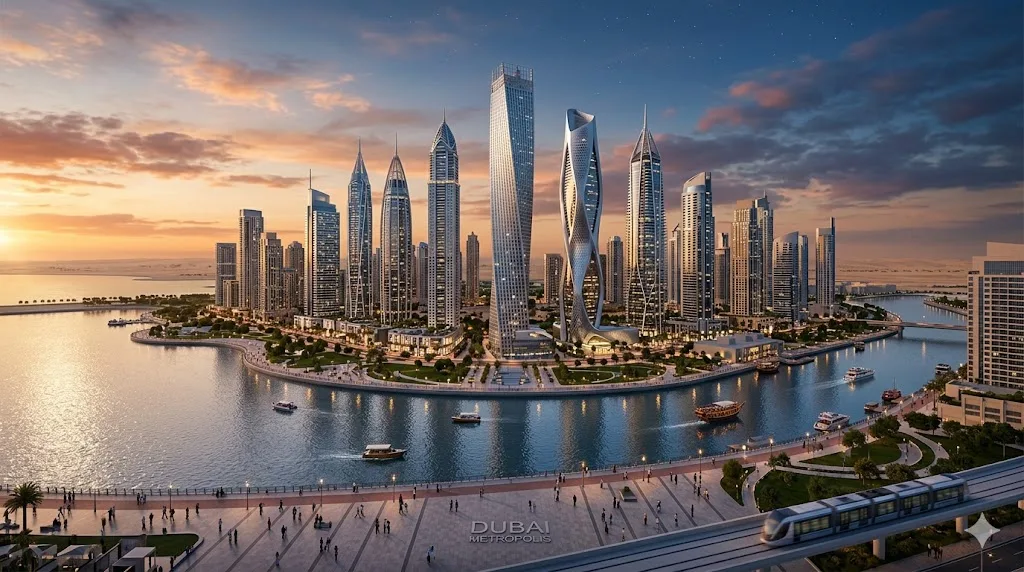
Dubai operates on a clear premise: spectacle as infrastructure. The city engineered itself into a global destination through calculated investment in superlatives—the world’s tallest building, the largest shopping mall, artificial islands built at scale. For travelers, this means predictability in some domains (safety, cleanliness, service standards) and careful attention to local regulations in others. This guide covers what you actually need to know before booking.
Top Attractions
The Key Sights at a Glance
The Burj Khalifa dominates Dubai’s skyline and its visitor economy. Standing 828 meters tall, it functions as both monument and practical observation point. Entry costs approximately $44 (160 AED) for standard access to the 124th floor; the “At the Top” experience with higher floors reaches roughly $66 (240 AED). These prices fluctuate seasonally. From the observation deck, you look out over urban sprawl in precise geometry rather than natural landscape. Visit either before 11 a.m. or after 4 p.m. to avoid midday crowds. Booking online eliminates queue delays.
The Dubai Mall, located directly beneath the Burj Khalifa, ranks among the world’s largest shopping centers by total area. It functions simultaneously as shopping destination, climate-controlled refuge, and tourist attraction. The Dubai Fountain—choreographed water jets set to music—operates every 30 minutes from 1 p.m. onward. Viewing is free from the mall’s terrace or the surrounding plaza. Do not expect fountain performances to feel intimate; 2,000 spectators standing at prescribed angles is standard.
The Dubai Frame, completed in 2018, offers a conceptually simpler attraction: a 150-meter-high rectangular structure with observation decks on the 48th floor. Entry costs roughly $13 (48 AED). The frame literally frames views of both “old Dubai” (Deira’s traditional districts) and the modern skyline. For travelers who want to understand the city’s geography, this may prove more useful than the Burj Khalifa.
The Burj Al Arab—the sail-shaped hotel on a man-made island—serves primarily as a resort property. External visits are not standard; access typically requires booking a meal or overnight stay. However, the exterior is striking and visible from Jumeirah Beach, making it accessible photographically without admission.
The Museum of the Future opened in 2022 as a curved, skeletal structure with futuristic exhibits about biotechnology, artificial intelligence, and urban design. Standard admission costs approximately $41 (149 AED). The building itself is architecturally significant. The interior experience varies in depth depending on your engagement with speculative design. Adults with technical interests find it substantive; families with young children may find it abstract.
The Ain Dubai (Dubai Eye) is a 210-meter observation wheel, taller than the London Eye. A 38-minute rotation costs approximately $40 (145 AED) and up, depending on ticket tier. Unlike many observation wheels, it rotates continuously without stopping—entry occurs via moving cabin access while it keeps turning. The viewing pod holds up to 15 people. Waits vary seasonally; summer afternoon waits are minimal, while evening slots can reach 60 minutes.
Desert Safari ranks among Dubai’s most heavily marketed experiences. Tours typically include transportation from your hotel, dune driving, camel riding, and a desert camp dinner with traditional entertainment. Prices range from $41 to $109 (150–400 AED), depending on vehicle class (economy vehicles versus four-wheel-drive excursions) and meal quality. Departure is typically 4 p.m., returning around 10 p.m. The experience is well-organized, occasionally resembling assembly-line tourism. Expectations calibration is essential: you will see sand and sunset, but you will share the experience with 50 other tourists.
Palm Jumeirah, the artificial palm-shaped island, is primarily residential. Public beach access exists at nearby Jumeirah Beach, where the Palm is visible. There is no requirement to tour the island’s interior; external viewing suffices for photographic purposes.
The Gold Souk in Deira and the Spice Souk represent two of Dubai’s oldest marketplaces, predating the modern skyline by decades. These narrow-passage bazaars operate on negotiation and proximity—shopkeepers expect haggling, and jewelry pricing can shift substantially. The Gold Souk specializes in 22-karat gold at weight-based pricing plus markup; the Spice Souk sells dried goods, saffron, and incense. Neither requires purchase; they merit a visit purely to experience commerce at a different scale than the Dubai Mall’s climate-controlled boutiques. Opening hours are typically 10 a.m. to 1 p.m., then 4 p.m. to 10 p.m., accounting for midday closure. Friday morning closures are standard.
More Things to See in Dubai
Dubai Creek, the historic waterway dividing Deira and Bur Dubai, functions as the city’s original commercial artery. Water taxis (abra) cross the creek for approximately 1 AED ($0.27). The crossing provides an affordable perspective on traditional trading activity and creek-side architecture.
Al Fahidi Historical Neighbourhood (also called Bastakiya Quarter) preserves 19th-century wind-tower architecture designed for passive cooling. Galleries, small museums, and boutique cafés now occupy the restored buildings. Free to enter; individual galleries charge $5–14 (20–50 AED).
Dubai Opera, which opened in 2016, houses a dhow-shaped auditorium hosting opera, ballet, theater, and concerts. Performance tickets range from approximately $27 to $109 (100–400 AED) depending on the event.
Jumeirah Mosque is the only functioning mosque in Dubai offering regular guided tours for non-Muslim visitors. Entry costs approximately $11 (40 AED). Tours operate mornings and early afternoons; conservative dress is required.
Dubai Aquarium & Underwater Zoo, housed inside the Dubai Mall, operates as a standalone attraction with separate ticketing. Entry costs approximately $38 (140 AED). The underwater tunnel section provides close-range observation of sharks and rays.
Dubai Marina Walk is a free pedestrian promenade flanking the man-made marina’s waterfront. Restaurants and cafés line the walkway. No admission fee; open 24/7.
Kite Beach and La Mer are public beaches in the Jumeirah district with free access. Kite Beach serves watersports enthusiasts; La Mer is a newer beach-club complex with additional facilities. Lifeguards are present during daylight hours.
Green Planet Dubai is a tropical indoor biodome featuring three climate zones. Entry costs approximately $23 (85 AED). Useful on days of extreme summer heat.
Dubai Miracle Garden blooms seasonally from October to May, displaying over 150 flower varieties across 73,000 square meters. Entry costs approximately $14 (50 AED). Closed during summer months.
Global Village operates seasonally from October to April as a festival-style marketplace featuring 90-country pavilions. Entry costs approximately $7 (25 AED). Commercial density is high; crowds are substantial.
IMG Worlds of Adventure is one of the world’s largest indoor theme parks. Entry costs approximately $40 (148 AED). The facility targets families with children; 20+ attractions across themed zones.
Expo City Dubai repurposes the Expo 2020 site into a permanent mixed-use complex. Individual museums and attractions require separate tickets ($14–27, or 50–100 AED). No blanket admission fee applies.
Ras Al Khor Wildlife Sanctuary is a flamingo reserve within city limits, surrounded by highways and development. Admission is free; observation hides with binoculars are provided. Best visited early morning (7–9 a.m.).
Dubai Hills Park is a large public park in the newer hills district. Entry is free. Walking trails, picnic areas, and playgrounds; primarily used by residents.
Where Are Most of Dubai’s Attractions Located?
For efficient sightseeing, cluster your days around these neighborhoods.
Downtown Dubai
Burj Khalifa, Dubai Mall, Dubai Fountain, Dubai Opera, Museum of the Future. The district is compact and walkable; metro access is excellent (station: Burj Khalifa/Dubai Mall).
Old Dubai / Deira / Bur Dubai
Gold Souk, Spice Souk, Dubai Creek, Al Fahidi Historical Neighbourhood, Dubai Frame, Dubai Museum. Atmosphere is denser and less polished than Downtown. Metro stations: Al Fahidi and Union.
Jumeirah
Burj Al Arab, Kite Beach, La Mer, Jumeirah Mosque. No metro connection; access by taxi or ride-share only.
Dubai Marina / JBR
Ain Dubai, Dubai Marina Walk, JBR beach. Metro station: DAMAC Properties.
Outer Areas (20–40 minutes driving)
Palm Jumeirah, Global Village, Dubai Miracle Garden, Expo City, IMG Worlds of Adventure, Ras Al Khor. These destinations require dedicated trips and cannot be combined easily with central sightseeing.
Day Trips and Hidden Gems
Abu Dhabi, 140 kilometers south, is accessible via car rental or organized tour (approximately 90 minutes driving; allow up to 2 hours in peak traffic). The Sheikh Zayed Grand Mosque is architecturally significant and free to enter for non-Muslim visitors; conservative dress is required (shoulders and knees covered). Opening hours are generally 9 a.m. to 10 p.m., closed to tourists during prayer times. The marble courtyard, hand-woven carpets, and interior geometry repay careful observation. This represents the type of cultural-heritage experience that has gained momentum in this year’s travel trends. Ferrari World Abu Dhabi is a theme park focused on automotive simulation—useful if you travel with children, less so for adult travelers prioritizing cultural content.
Hatta Dam and Mountains lie approximately 80 kilometers inland from Dubai, accessible by car (90-minute drive). The location offers a substantial shift in geography: rocky terrain, mountain views, and the dam’s reservoir. The settlement is small and genuinely undeveloped compared to Dubai’s constructed landscape. Hiking trails exist; water sports (kayaking) are available. This destination appeals primarily to travelers seeking geographical variety. For similar mountain-based experiences in the broader region, Oman’s mountain and desert landscapes offer comparable hiking and oasis exploration at less commercialized intensity.
Desert camping represents an alternative to packaged safari experiences. Several operators offer night camping in the desert without structured entertainment. These experiences align better with independent travelers seeking quieter alternatives, though advance booking is essential.
Deira, the historic district directly north of downtown, is accessible via Metro. Deira is a functioning Arab trading hub where commerce, haggling, and social density operate at frequencies substantially higher than in sanitized tourist areas. It is among the few places in Dubai where you can observe architectural continuity beyond the last 40 years.
Alserkal Avenue in the Al Quoz industrial district houses over 50 contemporary art galleries in former warehouse buildings. The contrast between the surrounding logistics infrastructure and the gallery interiors is deliberate and striking. Entry to most galleries is free; the district operates Tuesday through Saturday, 10 a.m. to 6 p.m. This area attracts a resident art community more than tourist crowds—traffic stays proportionally lower.
Ras Al Khor Wildlife Sanctuary offers a genuinely unexpected experience: a functioning flamingo habitat located 15 minutes by car from Downtown Dubai, surrounded by motorways and warehouses. The sanctuary provides public observation hides with fixed binoculars at no charge. Populations of 3,000–4,000 greater flamingos occupy the tidal wetland during winter months (October–March). Arrival before 8 a.m. produces better bird activity and lower crowds.
Best Time to Visit
November through March constitutes Dubai’s high season. Temperatures range from 16 to 26 degrees Celsius (61–79 Fahrenheit), humidity is lower, and rainfall is minimal. This is premium pricing season. Hotel rates double compared to summer. Flight availability decreases, particularly December and January. The pricing differential between seasons—a hallmark of market-driven tourism—exemplifies broader seasonal pricing trends visible across global destinations in 2026.
Ramadan (March 2026, February 2027, January 2028 in forward years) presents a complex travel period. Fasting Muslims observe dietary restriction during daylight hours. Many restaurants close during daylight; alcohol becomes difficult to procure outside hotel establishments. Working hours at government offices and shops compress. However, these restrictions do not apply to tourists universally—hotel restaurants operate normally, and tourist-focused establishments maintain standard hours. Evening life intensifies, as meals occur after sunset. If you travel during Ramadan unintentionally, expect reduced business hours and altered meal timing — tourism infrastructure keeps running.
April through October represents the low season. Temperatures exceed 40 degrees Celsius (104 Fahrenheit) regularly, reaching 45–50 degrees Celsius (113–122 Fahrenheit) peak hours in July and August. Humidity is high. Most residents and tourists avoid these months deliberately. Hotel prices decline substantially—occupancy in summer can be 30 percent of winter occupancy. If heat tolerance is high and crowd aversion is strong, summer travel offers financial advantage alongside challenging physical conditions.
Culture and Local Customs
Dubai’s cultural foundation is Arab trading history spanning centuries. Before oil revenue (which now constitutes less than 1 percent of Dubai’s GDP), the economy centered on pearl diving and maritime trade. The shift from pearl diving to oil (mid-20th century) to tourism and financial services (present day) has occurred within living memory. This historical trajectory shapes how the city presents itself: as a mercantile hub operating at scale.
Contemporary Dubai’s population is 85 percent expatriate. This demographic reality produces a multi-layered society where Arabic operates in formal contexts and English functions as commercial lingua franca. Cultural expectations are consequently cosmopolitan by regional standards, though distinct local protocols remain.
Dress codes exist primarily in religious and formal settings. Western casual dress—shorts, light shirts—is acceptable throughout tourist areas, shopping districts, and restaurants. Mosques require conservative dress: shoulders and knees must be covered. Women’s hair covering is expected in mosques but not enforced by law for non-Muslims in secular spaces. Public displays of intoxication are prohibited and subject to penalties; alcohol consumption is limited to licensed establishments (hotels, restaurants, bars).
Photography protocol: photographing military installations, government buildings, and individuals without consent is prohibited and can result in detention for questioning. Respectful photography in public spaces is standard; always ask before photographing people.
The three-finger gesture—index, middle, and ring finger raised simultaneously—is an official national symbol introduced by Sheikh Mohammed bin Rashid Al Maktoum at the UAE Government Summit in February 2013. The three fingers represent “W,” “V,” and “L” in sign language, interpreted as Win, Victory, and Love. The gesture serves as a patriotic expression equivalent to displaying the national flag. Avoid mimicking it flippantly or using it in contexts that could be perceived as mockery; it carries genuine patriotic weight for UAE citizens. Other common social protocols: avoid gesturing with the left hand for eating or greeting (traditional hygiene convention, though not strictly enforced with foreigners); remove shoes before entering a home when invited; accept offered refreshment (dates, coffee) as a courtesy norm.
Things to Avoid
Controlled substances carry severe penalties. This category includes not only narcotics traditionally understood as illegal substances, but also CBD products, THC-containing e-cigarettes, and cannabis products in any form. Penalties for possession include imprisonment (2–4 years minimum), substantial fines, and deportation. The UAE does not recognize distinctions between jurisdictions where such substances may be legal. Multiple documented cases of travelers detained for possessing items legal in their home country exist. Exercise zero tolerance on this regulation.
Public intoxication is prohibited. Drunken behavior in public space, disorderly conduct, or driving under influence faces criminal penalties including jail time and fines.
Immodest dress in religious contexts is culturally inappropriate. Bare midriffs, short shorts, and transparent clothing should be avoided in mosques and traditional districts. In tourist and commercial spaces, casual Western dress is standard.
Overstay fines have recently increased. As of April 2026, the penalty is 50 AED per day. Previous regulation assessed lower daily fines; the April 2026 increase represents a substantial change. For a 10-day overstay, the fine reaches 500 AED ($136). For a 30-day overstay, it reaches 1,500 AED ($409).
Disrespectful comments regarding the rulers or the state can result in legal consequences under UAE defamation laws. This regulation is enforced selectively and primarily targets social media content or public statements.
Getting Around
The Dubai Metro operates on automated driverless trains serving two lines: the Red Line (commercial districts) and the Green Line (residential areas). A Nol Card (rechargeable smartcard) costs 25 AED ($7) for the card itself plus loaded credit. Single journeys cost 2–9 AED ($0.55–$2.45) depending on distance. A daily cap means spending more than 14 AED daily generates no additional charges. Metro hours are 5:59 a.m. to 1:00 a.m. daily. Women-only cars operate during all hours, located at the center of trains. Weekend hours (Friday–Saturday) begin later, accommodating prayer schedules.
Taxis are metered and reliable. Base fare is 4 AED ($1.09); per-kilometer cost is 2.19 AED ($0.60) within Dubai. Traffic congestion is substantial, particularly 7–10 a.m. and 4–7 p.m. Surge pricing (“waiting time”) applies during congestion. Ride-sharing applications (Careem and Uber) operate and typically offer fixed pricing, reducing fare uncertainty. Both require a local phone number or international registration via app.
Car rental is practical for day trips (e.g., to Abu Dhabi, Hatta). International driving permit is advisable alongside your home-country license. Vehicle hire costs approximately $30–$60 daily for economy cars. Petrol is inexpensive (approximately 2.3 AED per liter, or $0.63/liter). Traffic regulations are enforced via automated camera systems; speeding and red-light violations generate automatic fines. The fine for speeding 20–30 km/h over the limit reaches 600 AED ($163). Speed cameras are marked with visible signage.
Public bus network exists but is primarily used by resident workers; routes are complex and English signage limited. Tourist usage is not recommended without detailed planning.
How Much Money Do You Need for 7 Days in Dubai?
Dubai is expensive by regional standards and moderately expensive by Western European standards. Costs vary sharply depending on accommodation category and dining choices. The table below reflects realistic daily spending per person, excluding international flights.
| Category | Per Day | 7 Days |
|---|---|---|
| Budget (hostel, street food, metro) | $70–$100 | $490–$700 |
| Mid-range (3-star hotel, restaurants, taxi) | $200–$330 | $1,400–$2,300 |
| Premium (5-star hotel, fine dining, tours) | $550+ | $3,850–$7,700+ |
The budget category is achievable: dorm beds in established hostels run $25–$40 per night; the metro covers most tourist zones for under $3 per day; local restaurants in Deira (Al Dhiyafah Road area) offer meals for $5–$10.
Mid-range costs rise quickly with hotel choice. A standard 3-star hotel in a tourist-proximate location costs $80–$150 per night. Add one desert safari ($54–$109), daily taxi use ($25–$40), and two restaurant meals ($50–$80), and $200+ daily is realistic.
Cost-reduction strategies: use the metro rather than taxis for downtown movement; eat at Deira’s Al Dhiyafah Road rather than Downtown restaurants; book top attractions during daytime slots (cheaper than evening rates); visit Global Village and Ras Al Khor (low or zero entry fees) rather than only paying attractions.
Entry Requirements
German and EU citizens receive complimentary tourist visas upon arrival, valid for 90 days. US citizens also receive 90 days (within any 180-day period, non-renewable). Effective April 2026, new entry requirements mandate:
- Return ticket or onward travel confirmation
- Hotel booking confirmation or accommodation address
- Active travel insurance (strongly recommended; requirement enforced inconsistently at immigration)
Passport validity must extend at least 6 months beyond your intended departure date. Immigration officers conduct rudimentary spot-checks of these documents.
Overstay beyond 30 days incurs a fine of 50 AED per day since April 2026 (previous fines were lower). A visa extension can be applied for via the General Directorate of Residency and Foreigners Affairs, though this process is bureaucratic and designed primarily for residents, not tourists.
Work visas (employment-based residence) require employer sponsorship and are not accessible to tourists.
Health and Safety
Heat exposure is the primary health risk, particularly May through September. Temperatures exceeding 40 degrees Celsius (104 Fahrenheit) produce rapid dehydration. Hydration protocol: carry 1.5–2 liters of bottled water daily; consume water regardless of perceived thirst. Tap water is potable in hotels and modern districts but bottled water is inexpensive (approximately 1–3 AED per liter, $0.27–$0.82). For detailed guidance on sun protection and heat management strategies applicable to hot-climate travel, review the beach vacation planning checklist, which covers sun safety in detail.
Travel insurance is advisable, particularly for coverage of emergency evacuation in remote desert contexts (Hatta, interior regions). Standard medical care in Dubai is high-quality and available 24/7; costs are substantial without insurance (emergency room visit: $300–$500 minimum).
Dubai ranks among the world’s safest cities by crime metrics. Violent crime is extremely rare. Pickpocketing and bag snatching occur in crowded areas (souks, shopping districts) at low frequency but at non-zero rates. Standard urban precautions apply: avoid carrying large cash amounts, secure valuables, maintain awareness in crowds.
Dubai itself remained stable and accessible as of June 2026. However, the broader Gulf region experienced intermittent tensions in early 2026. Before finalizing your booking, check the current travel advisory from your government—German travelers: Auswärtiges Amt (auswaertiges-amt.de); US travelers: US State Department travel.state.gov. These advisories reflect real-time conditions more accurately than any static guide.
Emergency contacts: ambulance/police, dial 999. Tourist police operate 24/7 for non-emergency assistance.
Practical Information
Currency exchange: As of June 2026, 1 USD = 3.67 AED. Exchange rates are fixed by the UAE Central Bank and do not fluctuate. Credit cards (Visa, Mastercard) are widely accepted at hotels, restaurants, and retail establishments. ATMs are prevalent throughout the city and dispense AED at favorable rates (lower markup than manual exchange). Carry some cash for small purchases in souks and taxis, where card payment is less reliable.
Clothing varies by context. In tourist areas, Western casual dress is standard. In mosques and traditional districts, conservative dress (shoulders and knees covered) is expected. Women should carry a headscarf for mosque visits; many mosques provide loaner scarves. Swimming wear is acceptable at beaches and hotel pools; full-body coverage (wetsuits, burkinis) is increasingly available for cultural preference or sun protection but is not required.
Electricity: The UAE uses 220V at 50Hz. Type G plugs (British three-rectangular-pin configuration) are standard. Adapters are inexpensive and available at airports and electrical shops.
Mobile networks: eSIM services are available through local providers (Etisalat, Du). eSIM activation is straightforward and typically occurs within 2–4 hours. Local SIM cards are equally functional and cost approximately 50 AED ($13.65) with modest credit included. Mobile data is fast (4G/LTE standard, some 5G availability). Roaming rates from international providers are expensive; local SIM or eSIM purchase is financially rational.
Alcohol is available exclusively in licensed establishments (hotels, restaurants, bars). Purchase or consumption outside these venues is prohibited. Licensed retailers do not exist; you cannot purchase alcohol in stores for personal consumption. This regulation is enforced.
Banking and currency transfer: ACH transfers and international money transfer services function normally. Bank hours are typically 8 a.m. to 2 p.m. Saturday through Wednesday, reduced Thursday morning only. Friday is the Islamic day of rest, and banks are closed.
This information is current as of June 2026. Travel circumstances, visa requirements, and safety conditions evolve. Verify details with official sources (UAE Ministry of Tourism, your country’s embassy) immediately before traveling.
Dubai rewards preparation. The infrastructure is reliable and the rules are transparent, though they are also enforced without much flexibility—overstay fines, licensed-only alcohol, zero tolerance on controlled substances. Read the current entry requirements and check your government’s travel advisory before you book. The logistics take care of themselves once you know the constraints.